Stonemasonry and stone carving:
Stonemasonry & Carving
Stone replacement, hand carving and new building in stone, by our own masons
Stonemasonry is at the heart of our business. Our masons are skilled in everything from stone carving to masonry building, stone cladding, and more, using traditional techniques so our work blends seamlessly with the original structures. That means the whole of the trade, done by our own people: surveying and scheduling the stone that has failed, templating and dressing the replacements on the banker, carving the finials, crockets, capitals and lettering that give a building its character, and building new walls, arches and whole chapels in stone and lime. From the crown of King's College Chapel to a Highland loch-side chapel built from scratch in granite, the work is the same: good stone, well cut, properly bedded, and fixed so that it lasts.
Stone by stone: survey, schedule, template
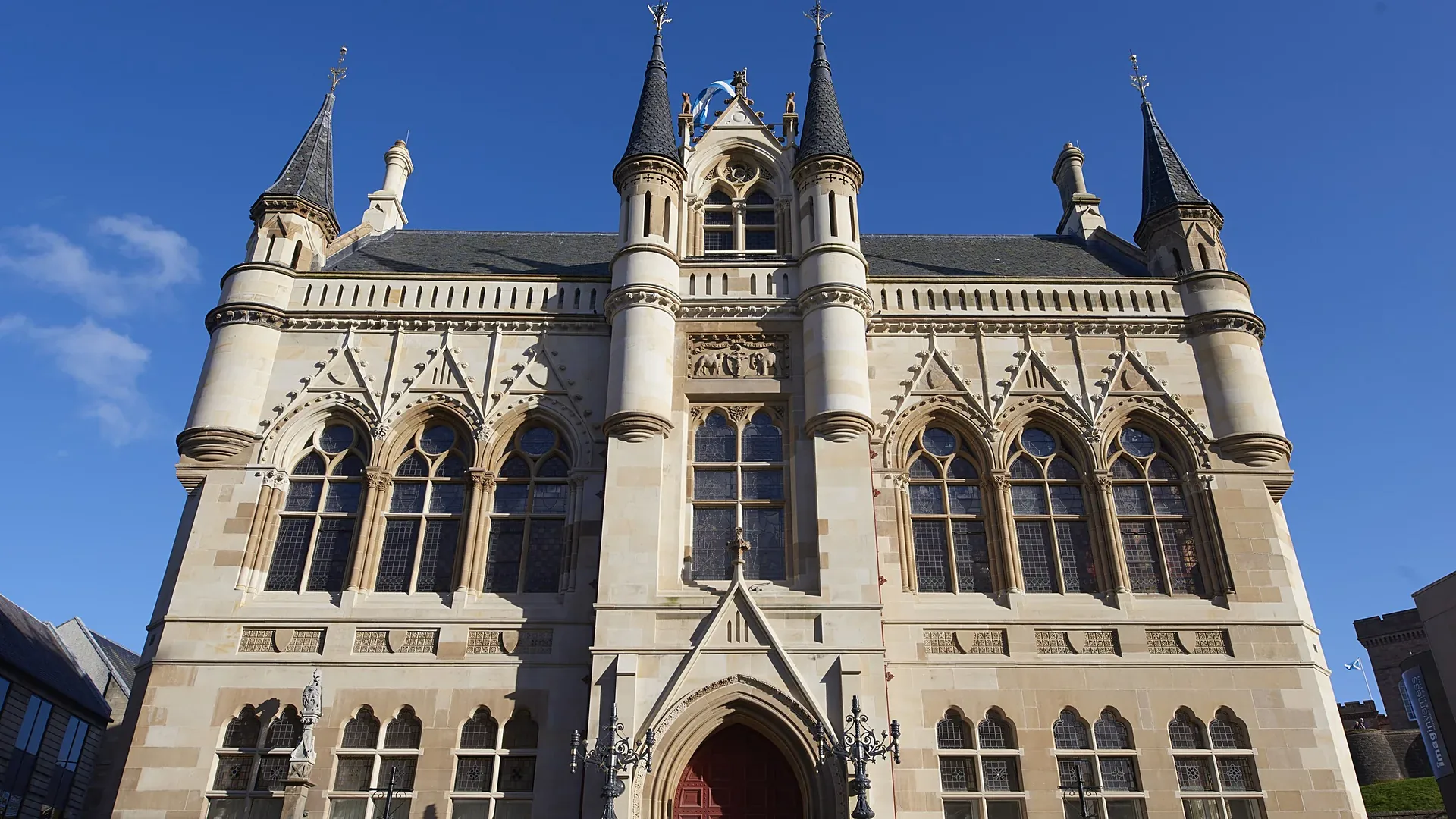
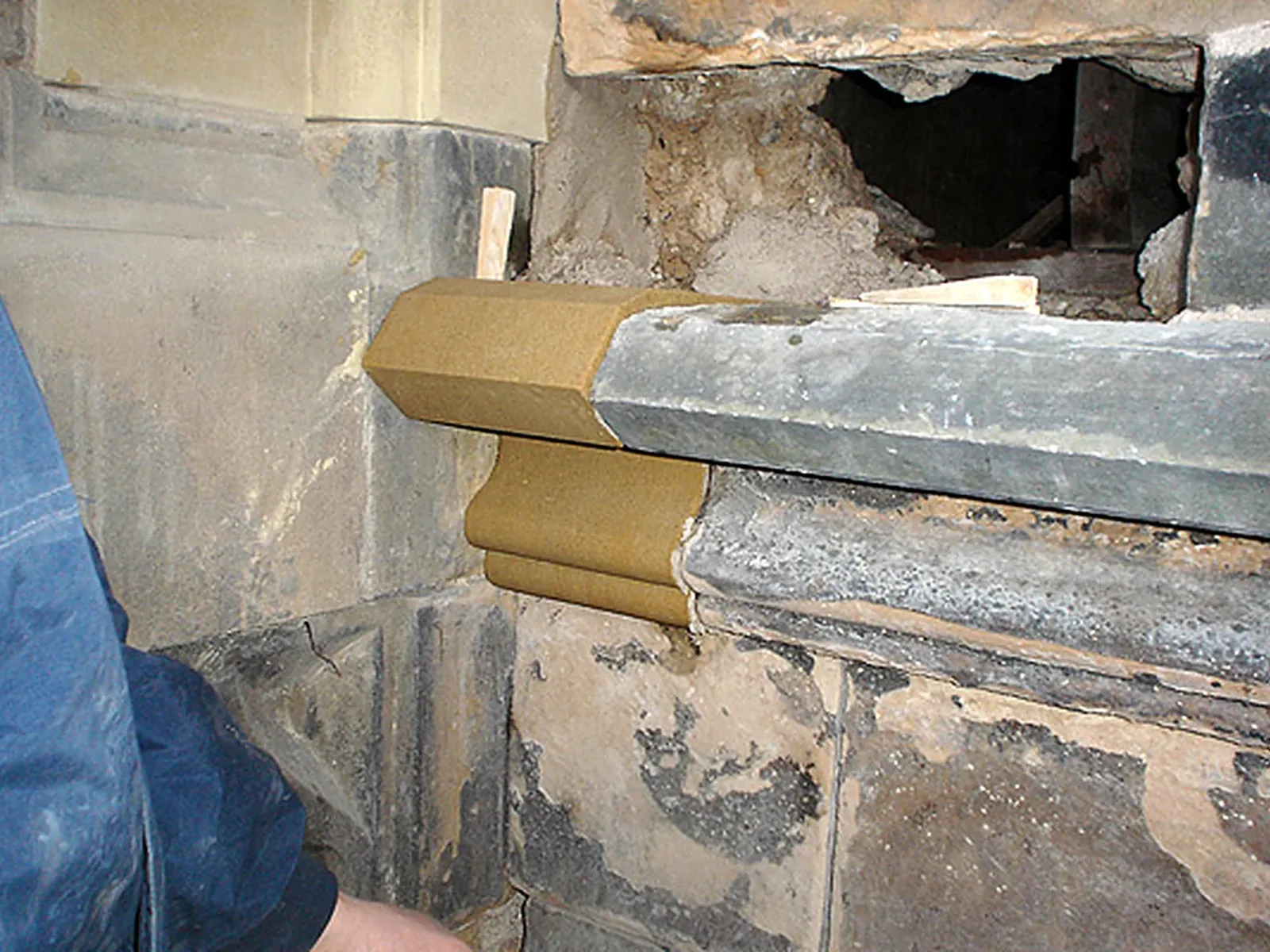
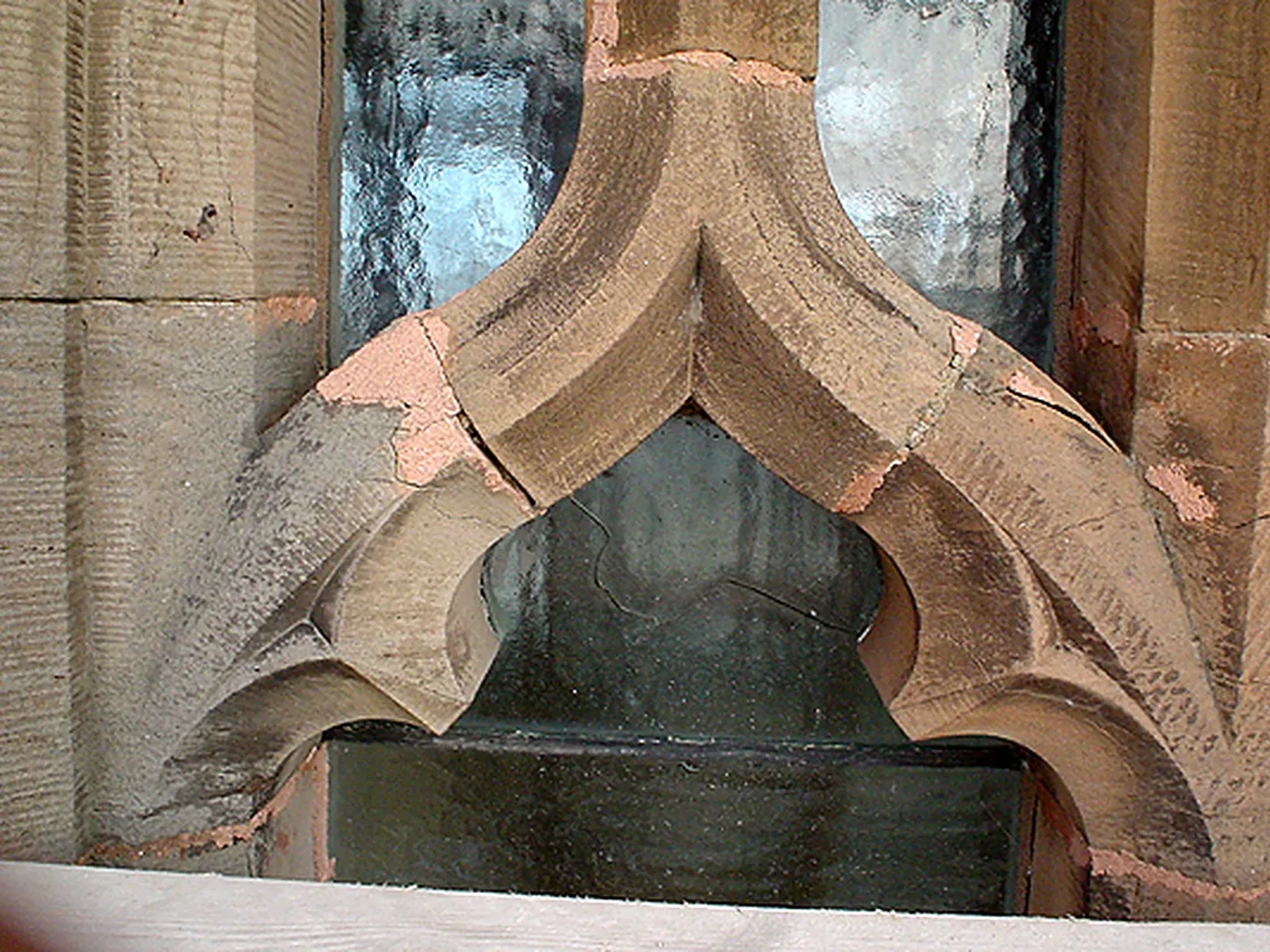
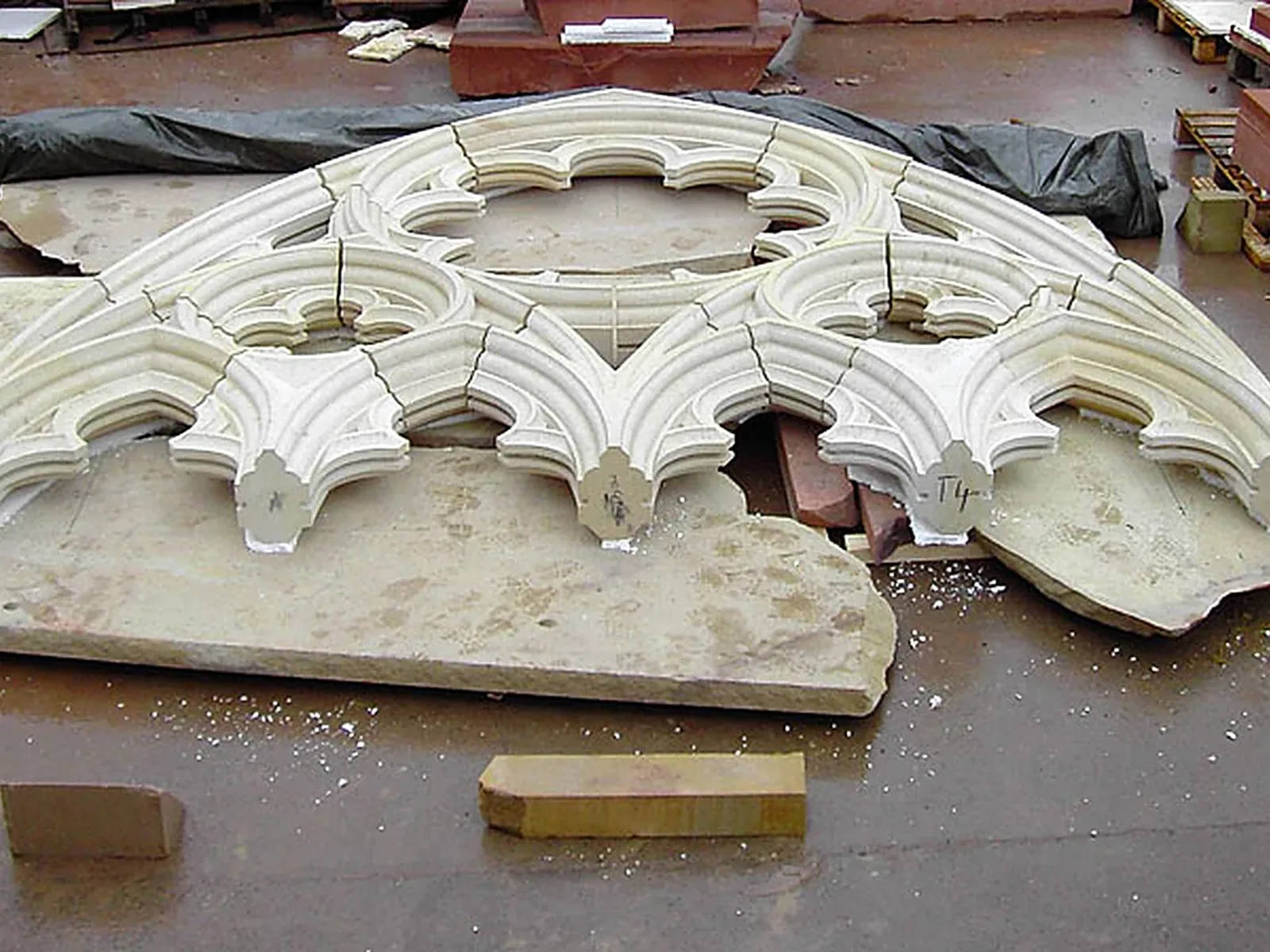
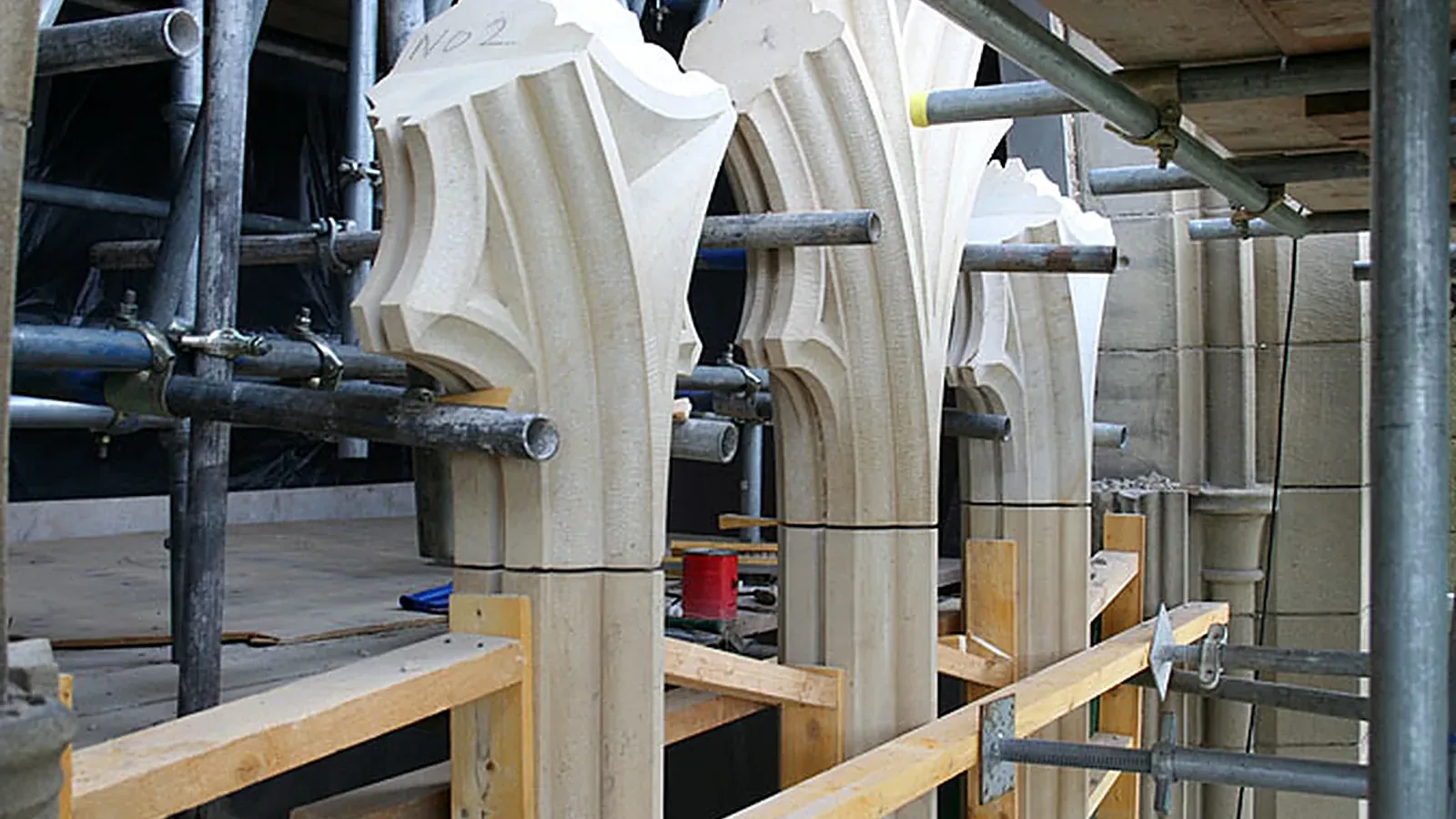
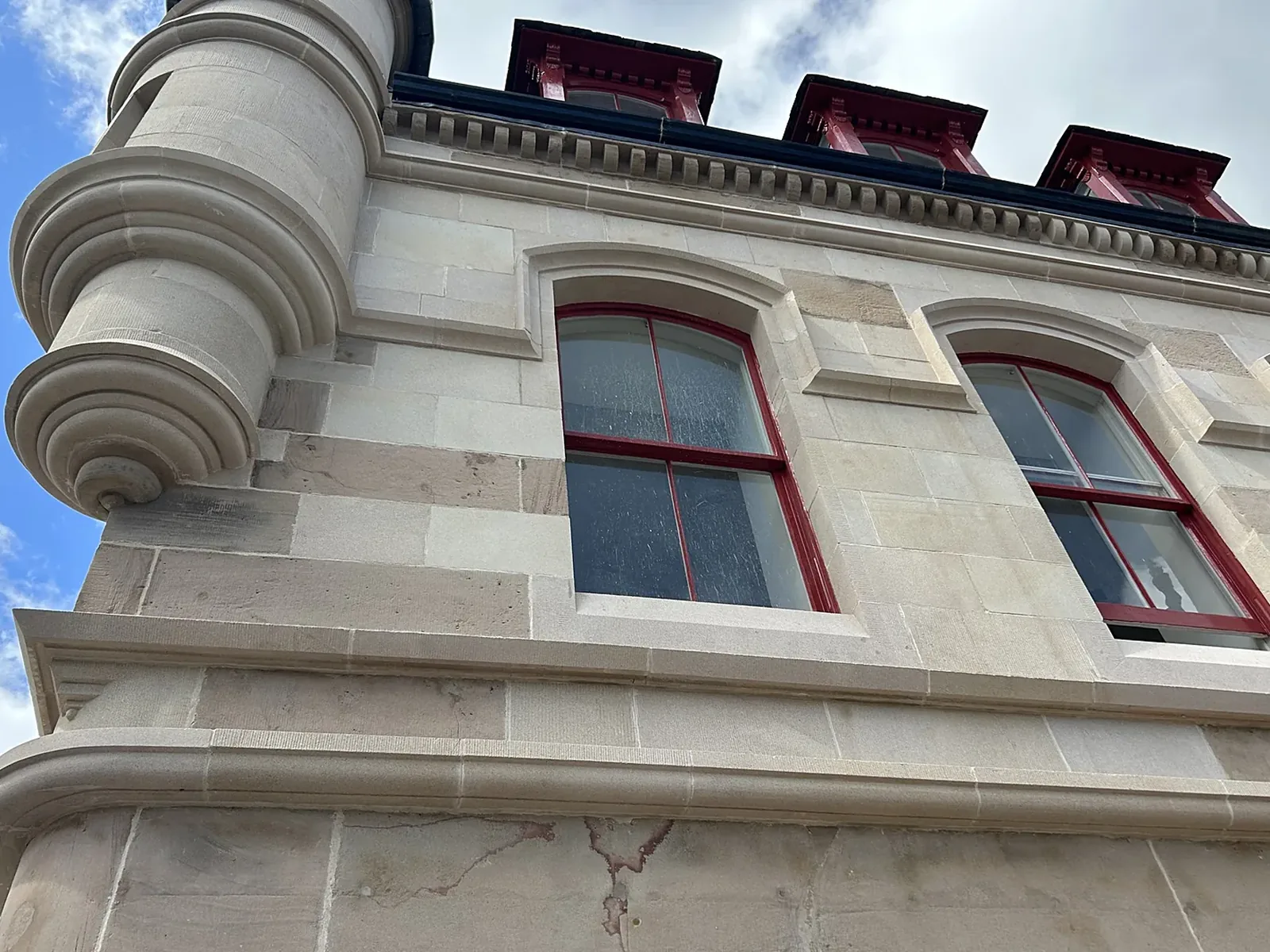
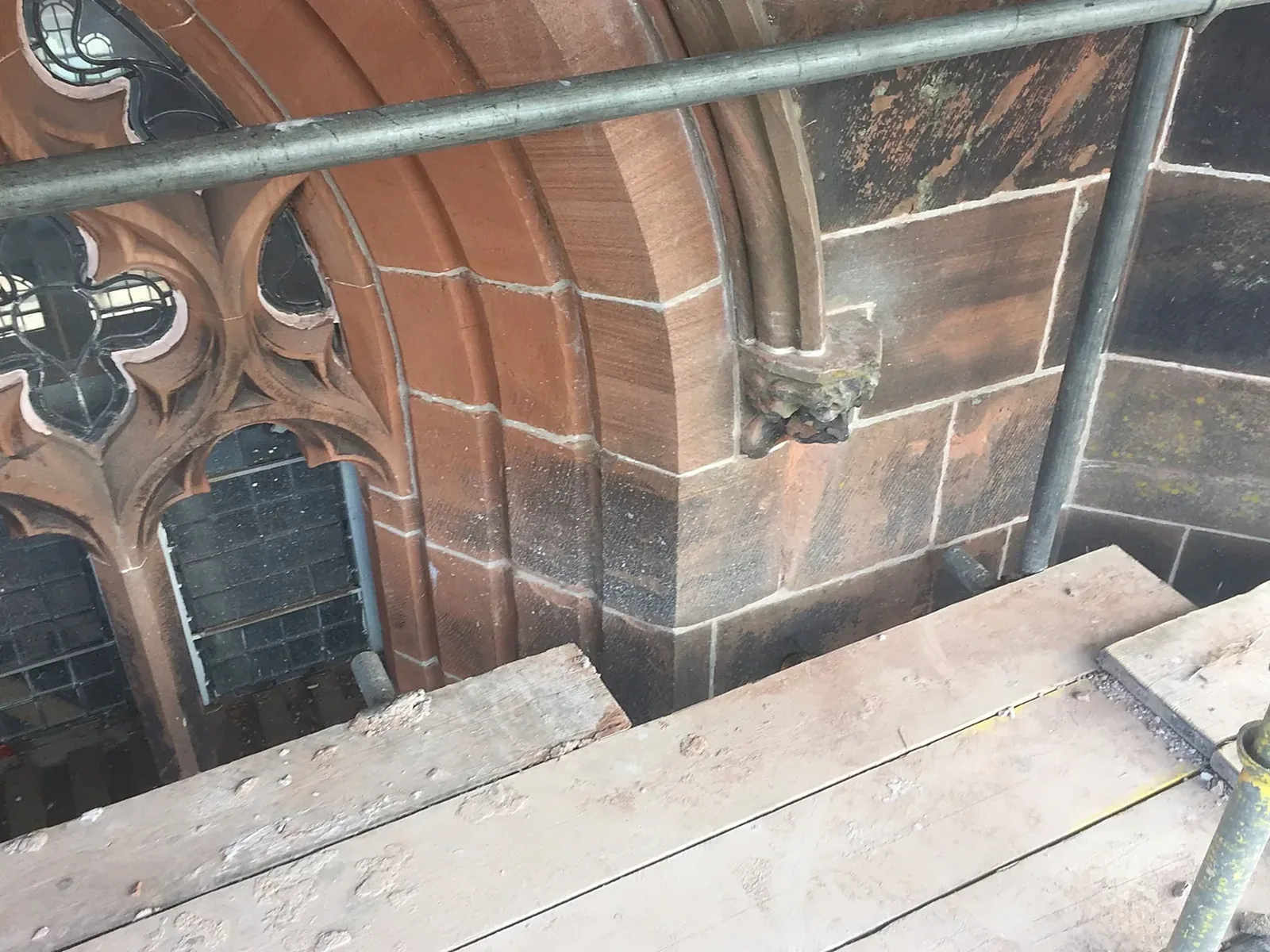
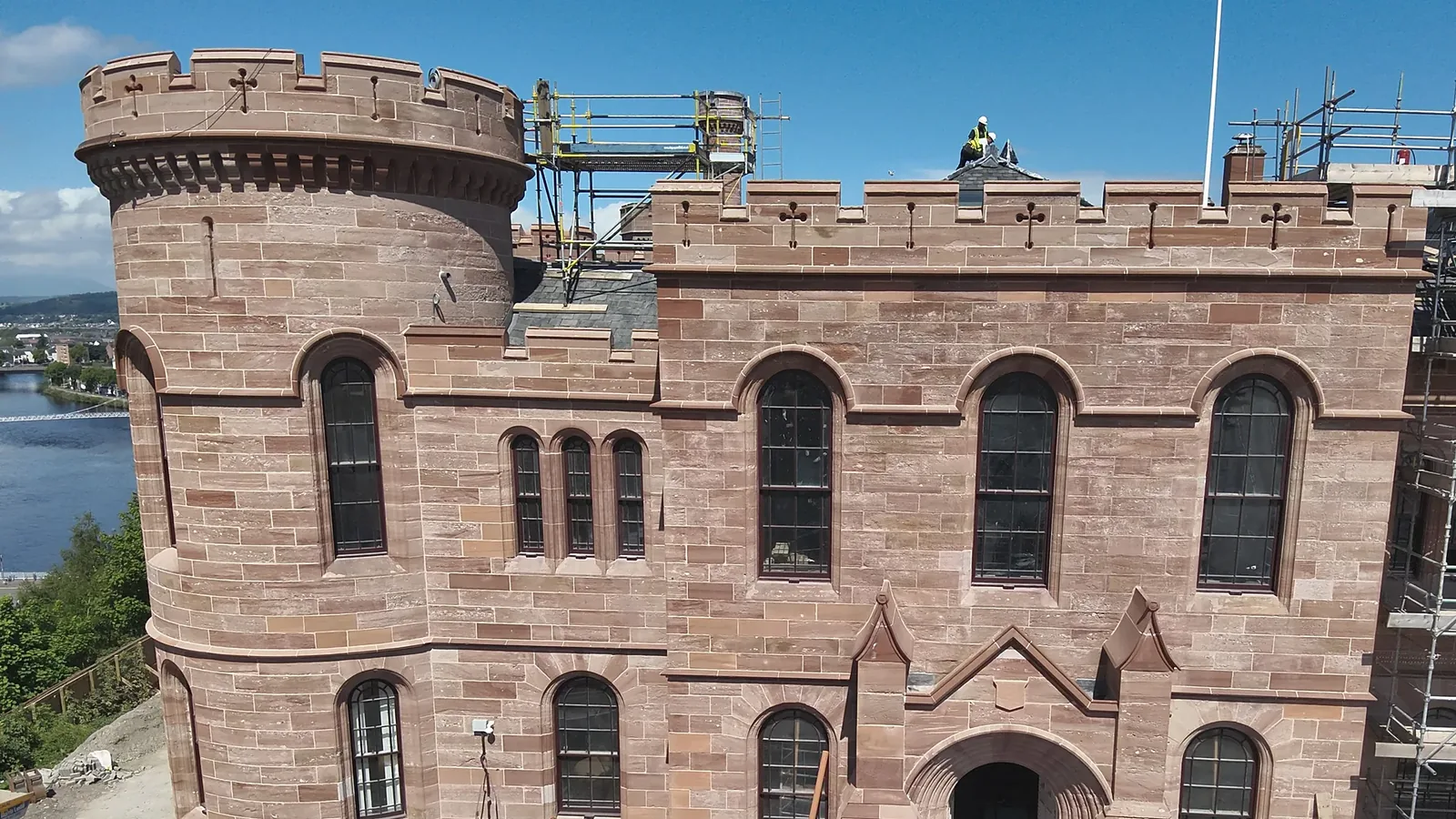
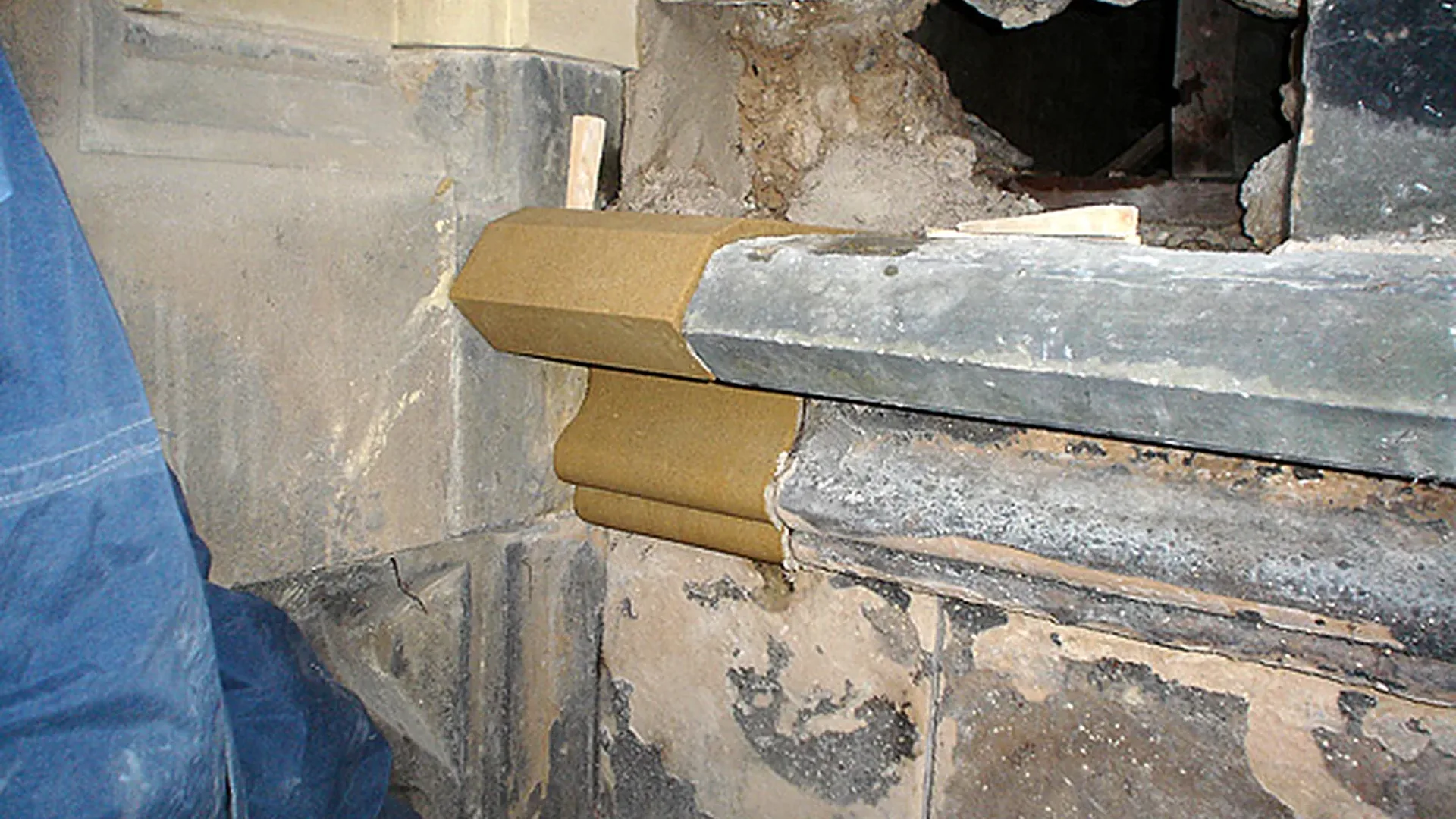
Replacement starts long before a chisel touches the wall. From the scaffold our masons survey every elevation and tag each stone that has failed, so that the client, the architect and the contractor agree the schedule before any stone is ordered. At Inverness Town House the Category A listed building stayed in use while we replaced and conserved its carved stone over two phases; the stone dressed off site in our workshop and built in with lime mortar, with new cornice and string course sections and a partial facade rebuild on Castle Street; at Lerwick Town Hall every window was surveyed and templated on site, the defective stones cut out in sequence from the top down and new dressed cills, rybats, arch stones and tracery cut in our workshop and bedded in lime. At Sir Walter Scott Courthouse in Selkirk the 30 metre steeple was renewed stone by stone in Hazeldean and Darney sandstone, the indents cramped across their beds with stainless threaded rod and grouted in with lime. At Glasgow University's Victorian Gothic buildings plain, dressed and moulded indents were tooled on the face and returns to match the existing, including the moulded gable members and a stone ridge to the main roof. Templates, cutting lists and numbered stones are the discipline that lets a facade come apart and go back together.
Carved by hand, to match what was there
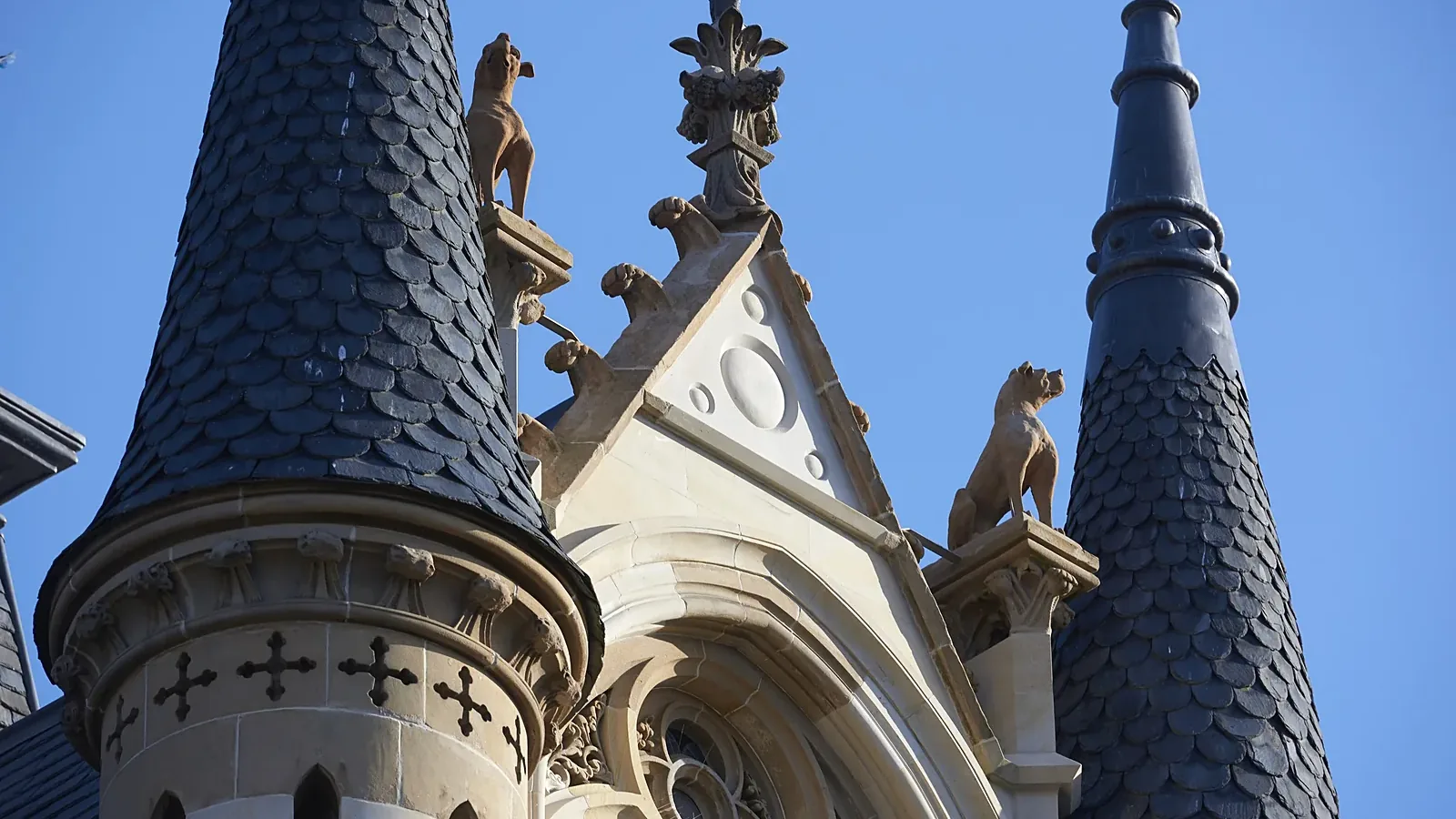
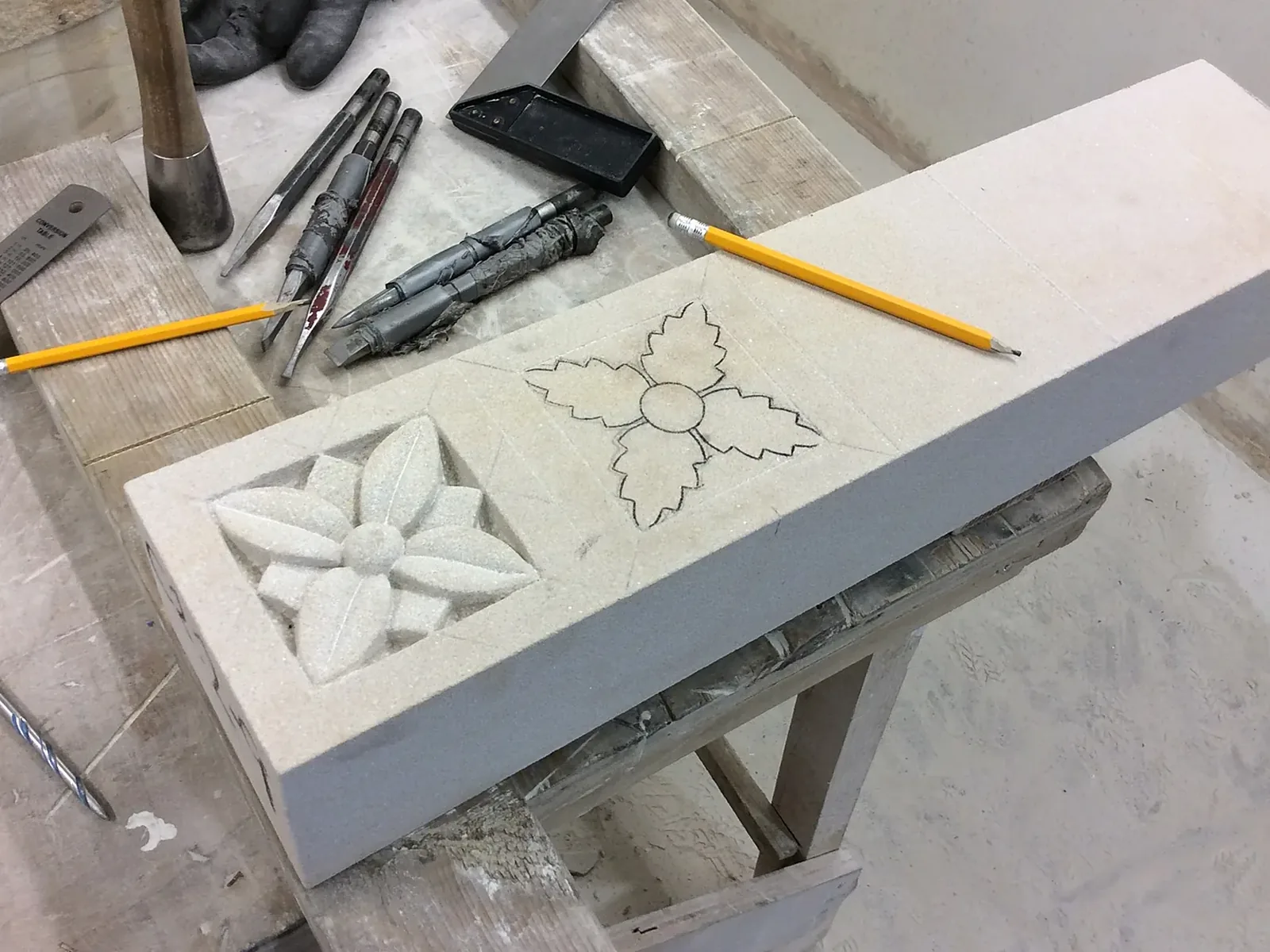
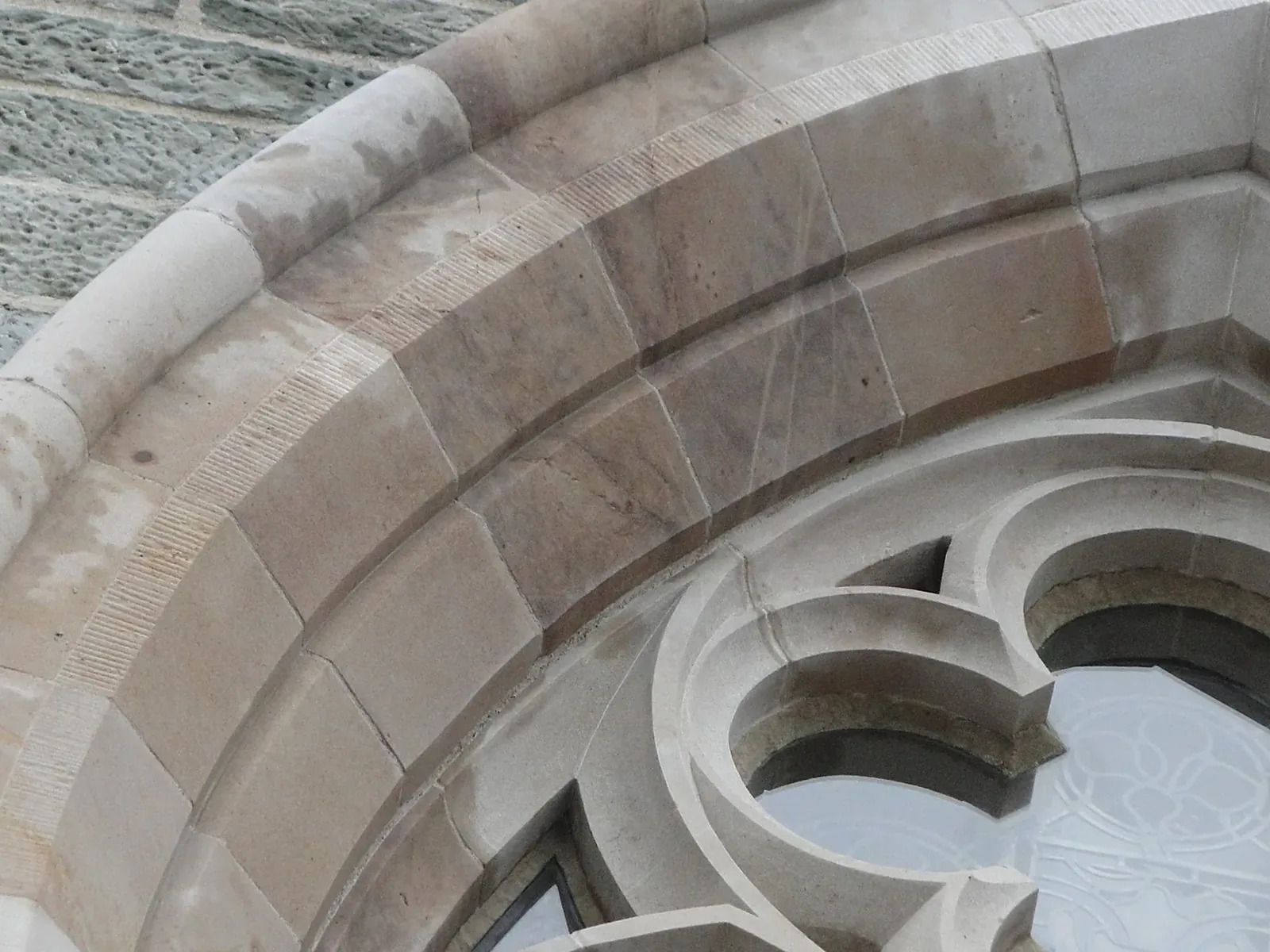
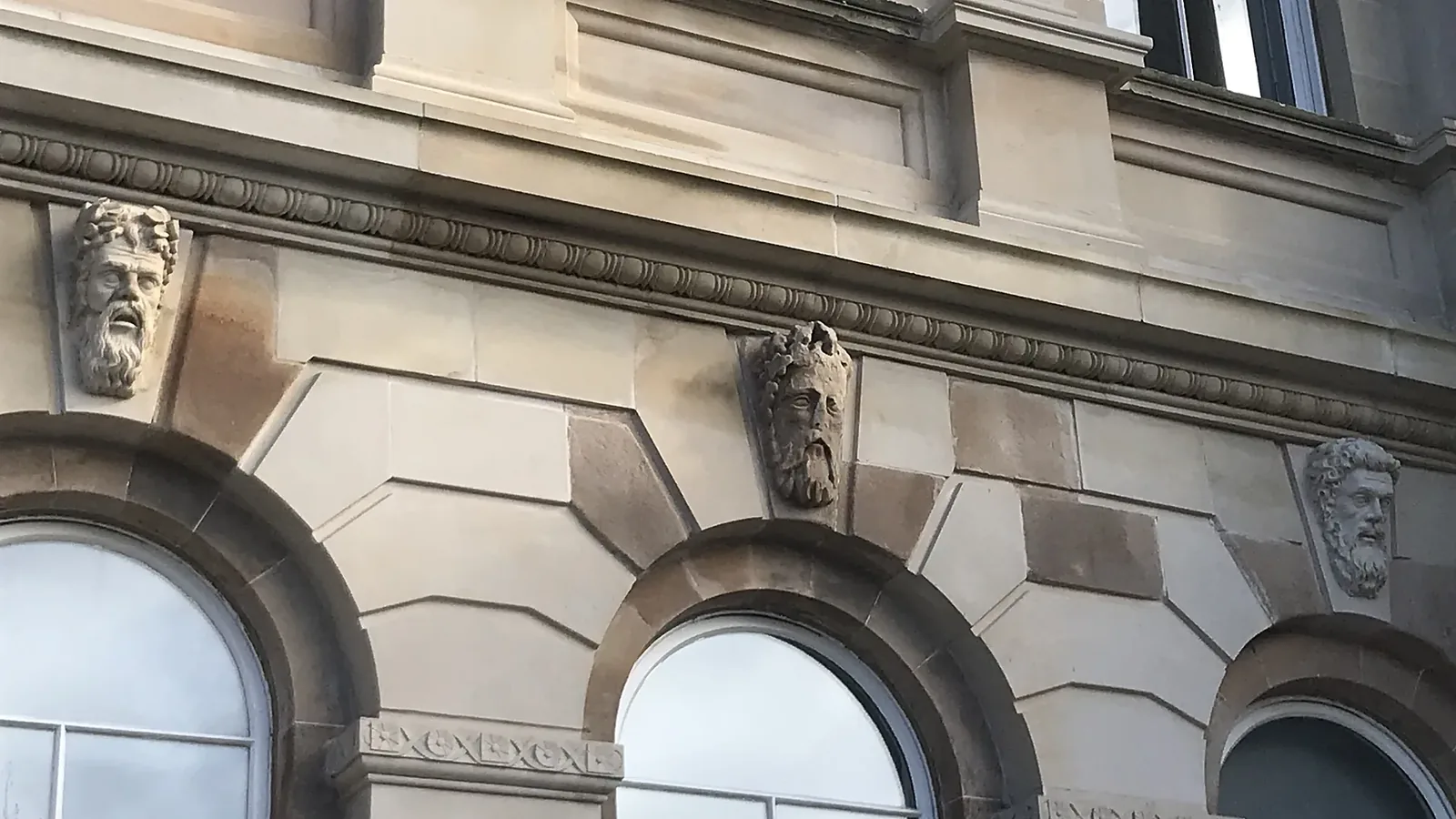
Carving is where a mason's eye shows. At Alexander Scott's Hospital in Huntly we recorded every stone on the 1901 tower by location and condition, worked with the British Geological Survey to match the Auchindoir freestone, then hand-carved new finials, crockets, string courses and decorative flowers to replicate the originals, and won a Gold Green Apple Award for it. At King's College Chapel in Old Aberdeen replacement stone was cut, dressed and carved in a banker shop we set up on site, and the Imperial Crown itself was repaired and reinstated, commended at the Natural Stone Awards. At Irvine Town House around 90 cubic metres of replacement sandstone was worked in our own workshop from one to one templates taken on site, including seven carved face masks modelled on the sculpture of another building by the same architect, and the portico was taken down stone by stone and rebuilt largely in new stone with a spider crane. At Craiglockhart Church in Edinburgh the Locharbriggs replacements included a carved pinnacle and a new carved head stop; at Kilcairney House half the volutes of the Ionic porch capitals were replaced with newly carved stone; and at Larbert East Church a complete new sandstone tracery window was cut and fixed. Where a profile survives we take it; where it has gone we work from photographs, drawings and the mouldings that remain.
Building new in stone
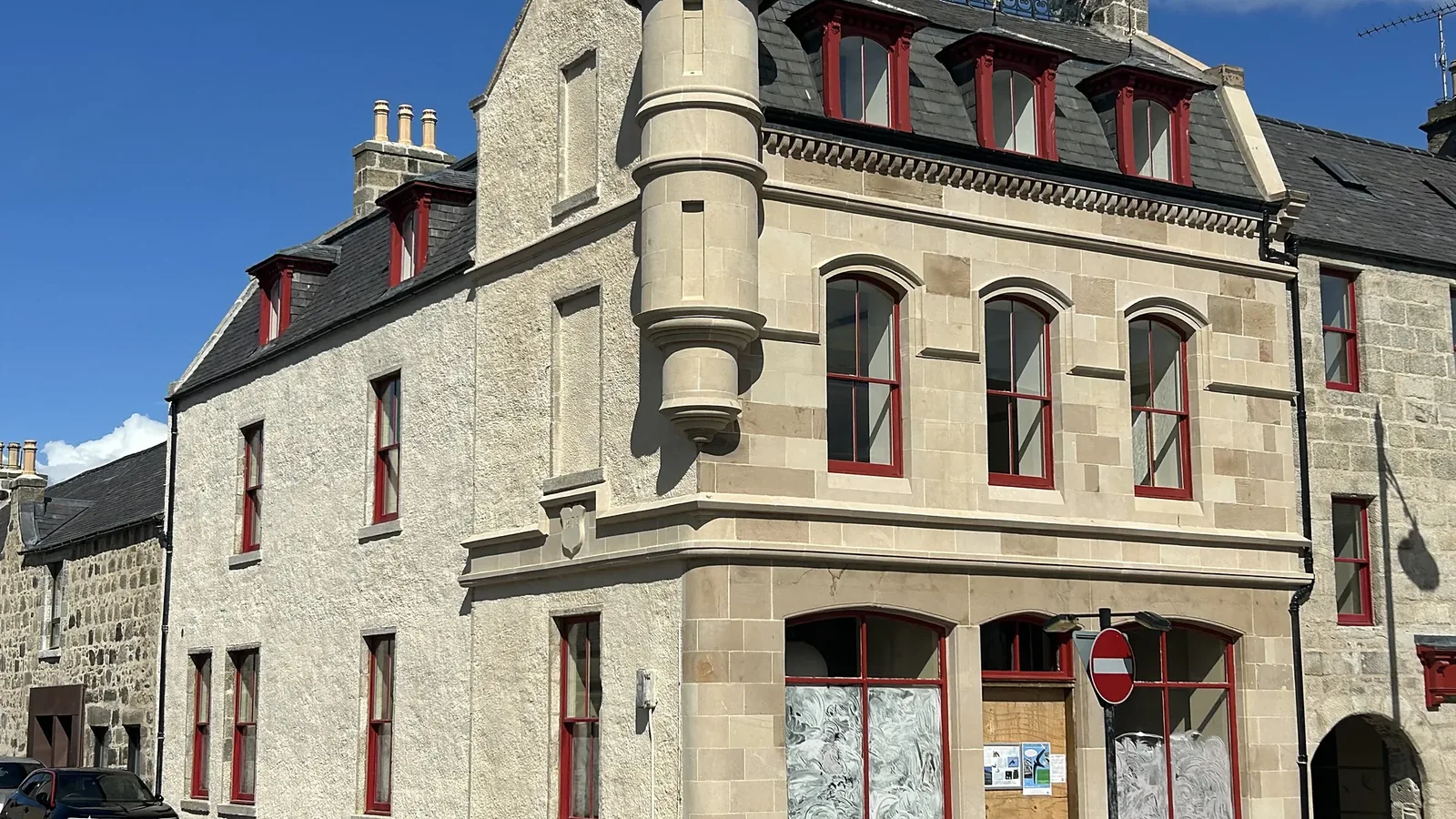
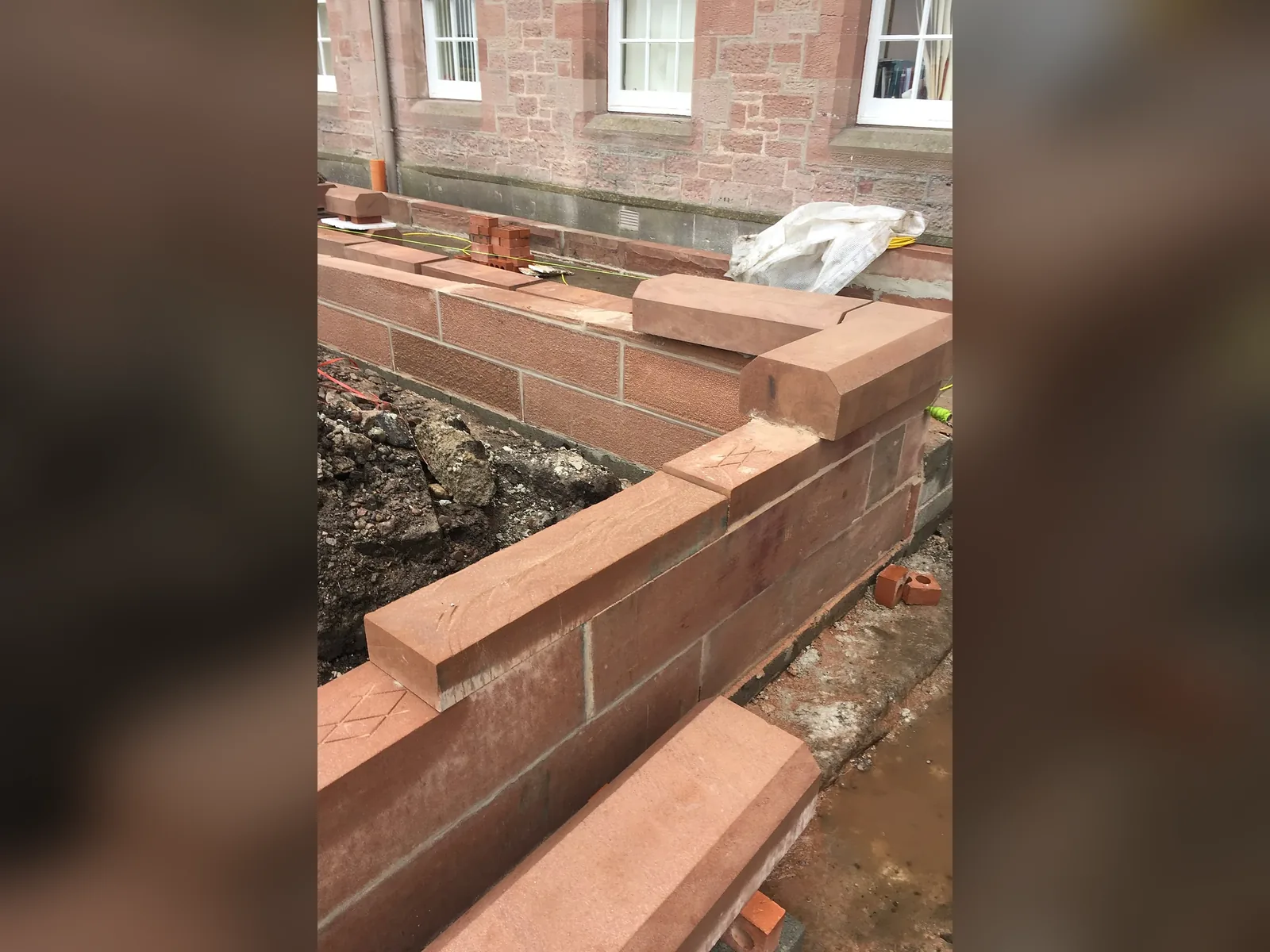
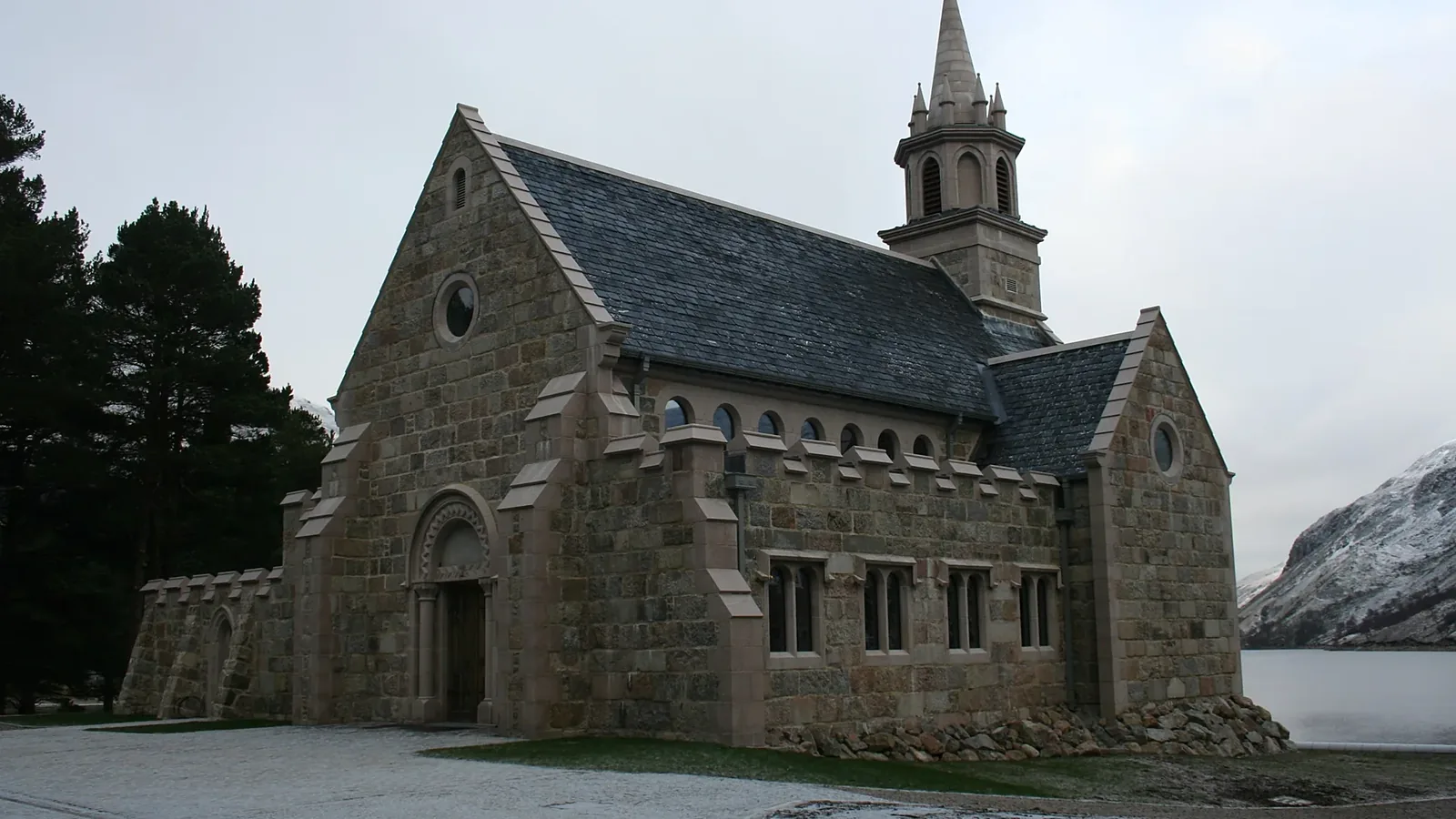
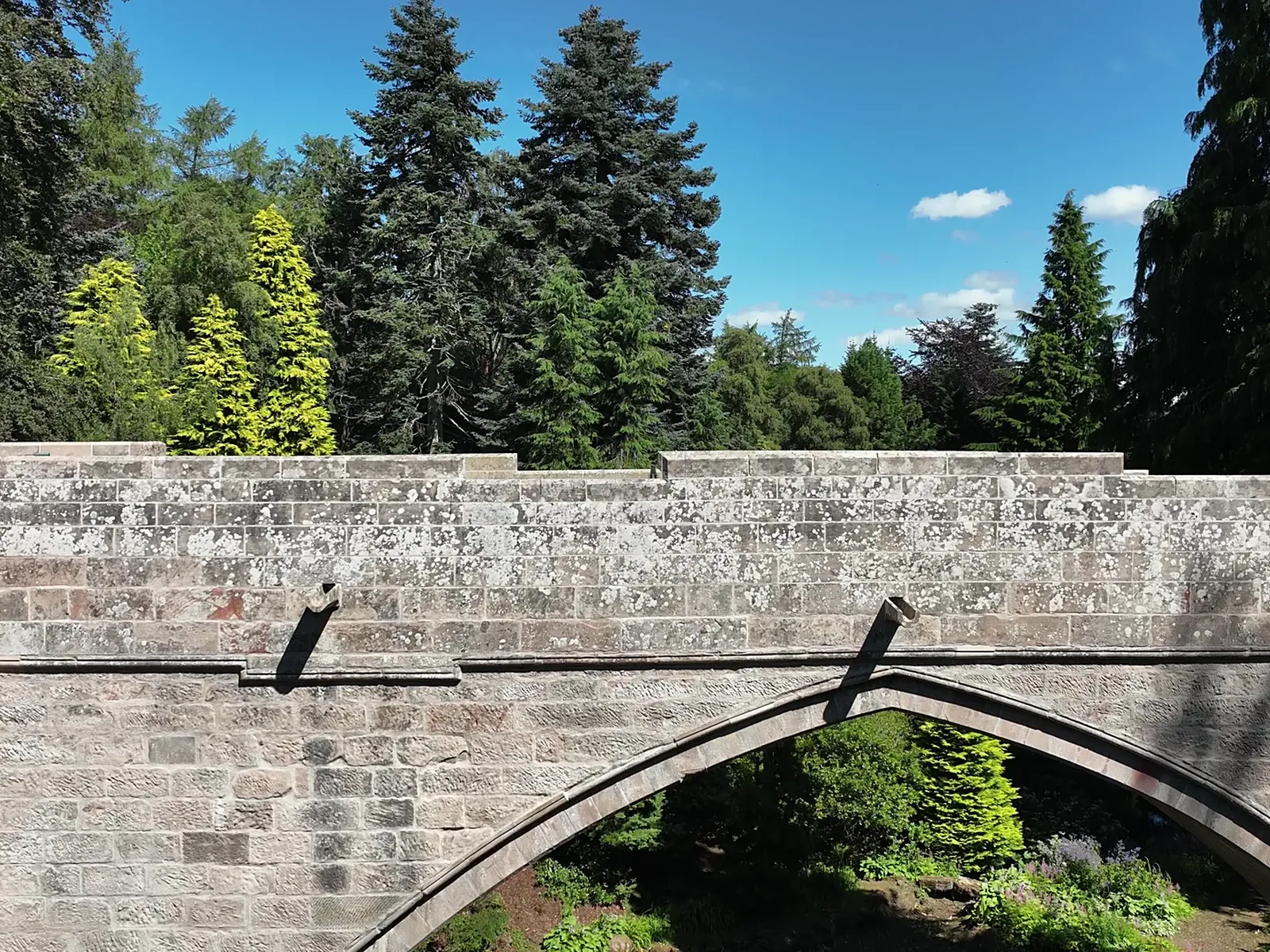
The same masons build from nothing. Ben Alder Chapel, beside a loch near Dalwhinnie, is a new building with the character of a traditional church: a granite nave and transepts, a Romanesque porch, internal arcades, a tall spire and a crenellated precinct wall, all built by LTM in lime mortar under a weathertight shed so that the lime could be used through a Highland winter. The dressings were cut to drawings and cutting sheets for every element, from buttresses and eaves caps to the spire. A second private chapel in the Highlands combined a steel frame with a 300 mm granite outer wall of reclaimed squared rubble and new granite dressings built entirely in hot lime, with leaded joints to the tracery. At Back Den Bridge, Kildrummy, a Gothic arch estate bridge was rebuilt in dressed stone with a new stone sett deck. Whether it is a chapel, a bridge, a boundary wall or a new wing on an old house, new work in stone is set out, dressed and built to the same standard as the historic fabric beside it.
Granite, sandstone, lime
Every stone is chosen for the wall it is going into. Red sandstone at Inverness Castle and Inverness Town House, Locharbriggs at Craiglockhart, Hazeldean and Darney at Selkirk, Witton Fell at the Sir Robert Peel Monument, Auchindoir freestone at Huntly, reclaimed squared Aberdeen granite with new granite dressings at Ben Alder and the Highland private chapel, and Caithness slab carved on site at Drum Castle to replace damaged roof slabs and form a new water outlet. Replacement stone is matched by colour, texture, bed and, where it matters, by geology, so that it weathers with its neighbours rather than against them. The mortar matters as much as the stone. We build and point in natural hydraulic and hot-mixed lime, designed with materials consultants where the contract calls for it and tested on site, and we fix with stainless steel cramps, dowels and wall ties, or with molten lead poured into the joints to form dog cramps where that is how the original building was put together. Cement, which traps water and breaks the stone around it, comes out and does not go back.
Working buildings, live sites
Most of our stonework is done on buildings that stay in use. Alexander Scott's Hospital was a working nursing home for the five years we were on its tower, with access, noise and crane operations controlled around the residents. Inverness Town House stayed open as The Highland Council's civic headquarters throughout; Ayr Sheriff Court sat as a working court while replacement stone was craned on to the Wellington Square elevation and the balustrade rebuilt; Glasgow University's phases were delivered in a busy, occupied campus with noisy work programmed for the least disruptive hours. At Lerwick Town Hall one full scaffold and wrap let masons, roofers and joiners work the whole building from a single controlled platform. At 30 The Square in Huntly a telehandler, hoist and lifting beams on the scaffold moved new sandstone to high level on a town centre site for Bancon Construction. Planning the lift, the sequence and the protection is part of the masonry, not an afterthought.
From the banker to the wall, by our own people
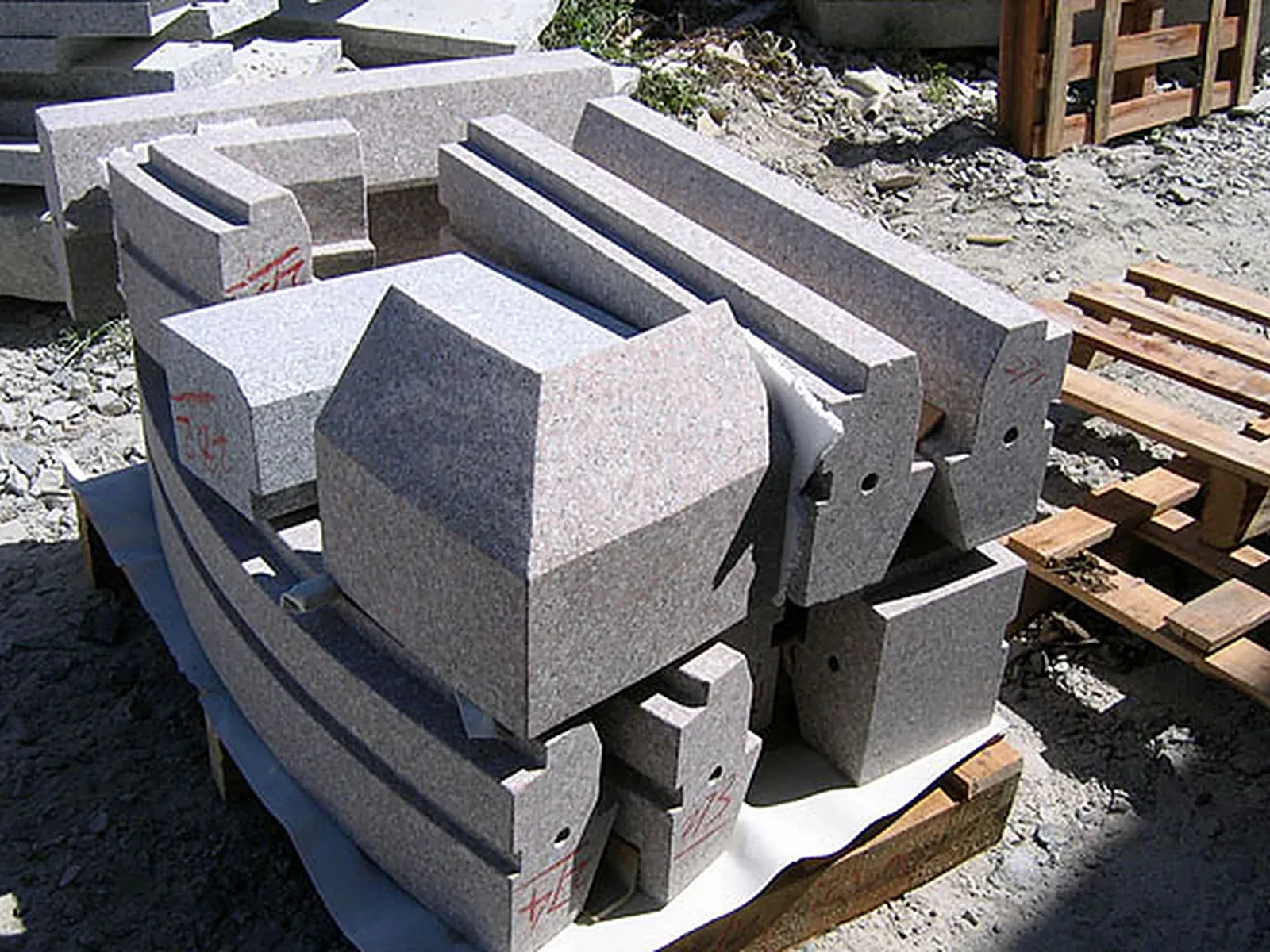
Our masons are directly employed and most of them were trained by us. LTM runs its own SQA-approved traditional skills academy, and apprentices learn on the banker and on site beside time-served masons and carvers, which is why the quality is the same at Lerwick as it is in Stirling. Plain and moulded units are cut on our own CNC profiling saw and finished by machine or by hand; the complex pieces, the carving and the lettering are done by hand in the workshop or in a banker shop set up on site, as at King's College. On site, salvaged stone is dressed and re-used where it is sound, as at Inverness Castle, and new stone is built in with lime, tinted where needed to blend with its neighbours. For over 25 years that has been the business: a multi-award-winning team of stonemasons working on castles, cathedrals, town houses, churches, bridges and country houses across Scotland, from Shetland to the Borders.
What it means for your building
Matched, not approximate
Replacement stone selected by colour, bed and geology, dressed and carved to the surviving profiles, so that new work reads as part of the building rather than a patch on it.
Our own masons and carvers
Directly employed, academy-trained stonemasons carrying the work from survey and template through cutting, carving and fixing, with no gap between the drawing and the chisel.
Built to last in lime
Lime mortars, stainless and lead fixings and cement taken out, so that walls breathe, stone weathers evenly and the repair outlives the people who made it.
Over 25 years of heritage work
A multi-award-winning team with its own SQA-approved traditional skills academy, from the crown of King's College Chapel to a new granite chapel beside a Highland loch.
Stone that needs replacing or carving?
Send us photographs of the elevation or the detail, tell us what has failed, and we will tell you what can be kept, what should be replaced, which stone to use and how we would cut, carve and fix it.
Stonemasonry on site
Stonemasonry and carving case studies
- King's College Chapel and Crown, Old AberdeenCase study →
- Inverness Town HouseCase study →
- Inverness CastleCase study →
- Inverness Castle North TowerCase study →
- Alexander Scott's Hospital, HuntlyCase study →
- Lerwick Town HallCase study →
- 30 The Square, HuntlyCase study →
- Irvine Town HouseCase study →
- Glasgow University, Phases 10 and 11Case study →
- Ben Alder ChapelCase study →
- Craiglockhart Church Spire, EdinburghCase study →
- Ayr Sheriff CourtCase study →
- Larbert East ChurchCase study →
- Kilcairney House, PerthshireCase study →
- Back Den Bridge, KildrummyCase study →
- Private Chapel, HighlandsCase study →
- Sir Robert Peel MonumentCase study →
- Drum CastleCase study →
- Sir Walter Scott Courthouse, Selkirk
Next service
Stone Production
Workshop manufacture, from CNC sawing to hand dressing