Workshop manufacture:
Stone Production
CNC sawing, profiling and hand dressing
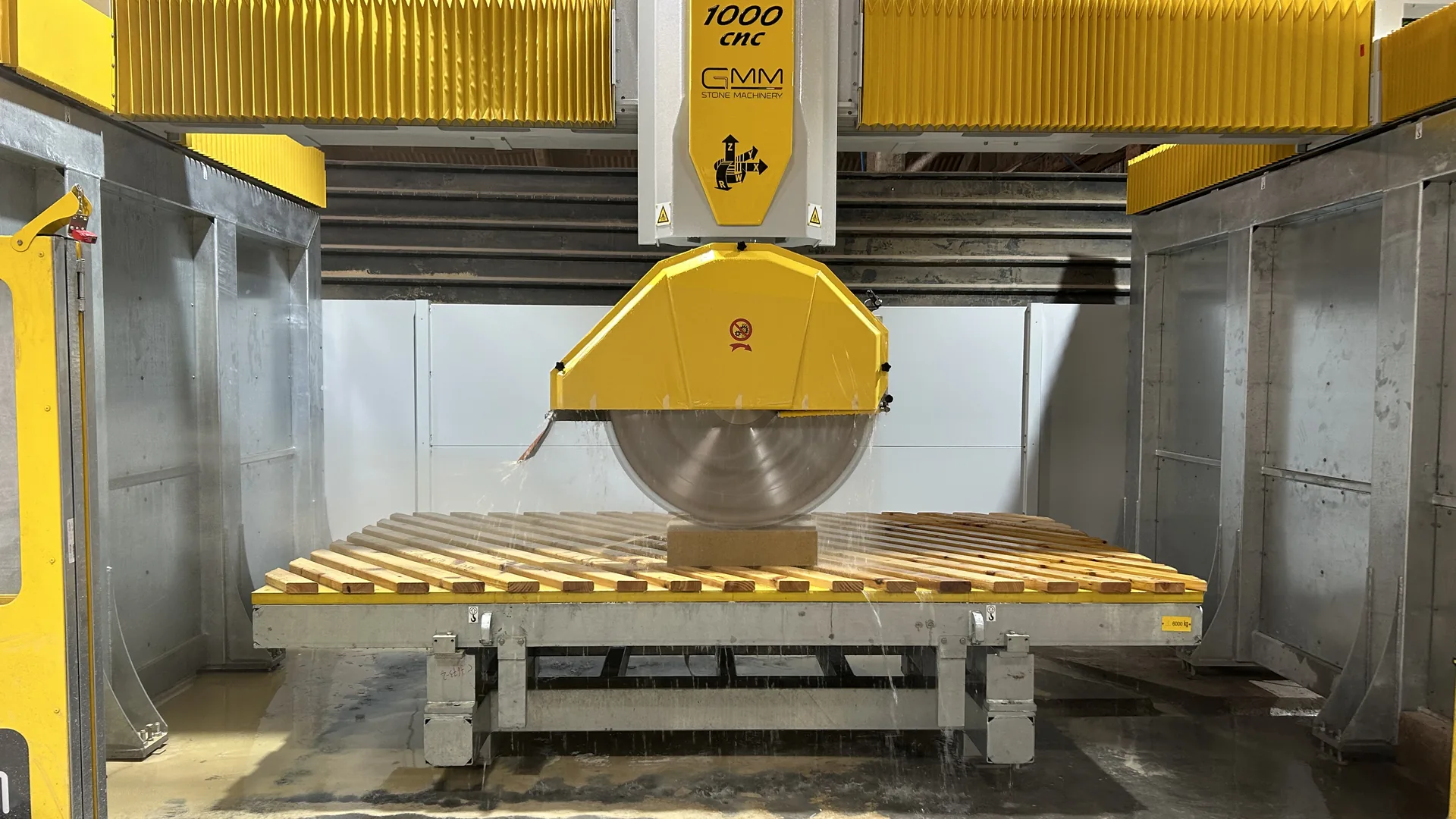
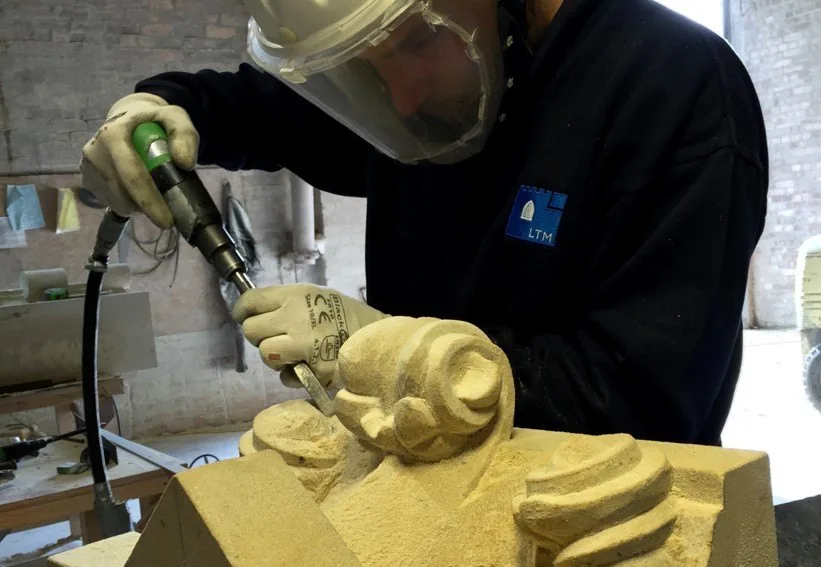
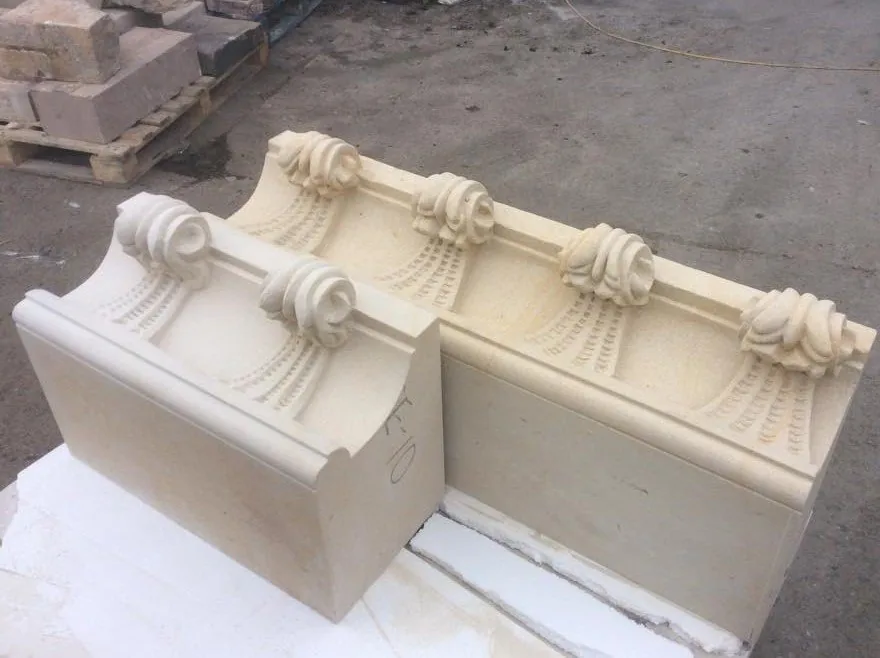
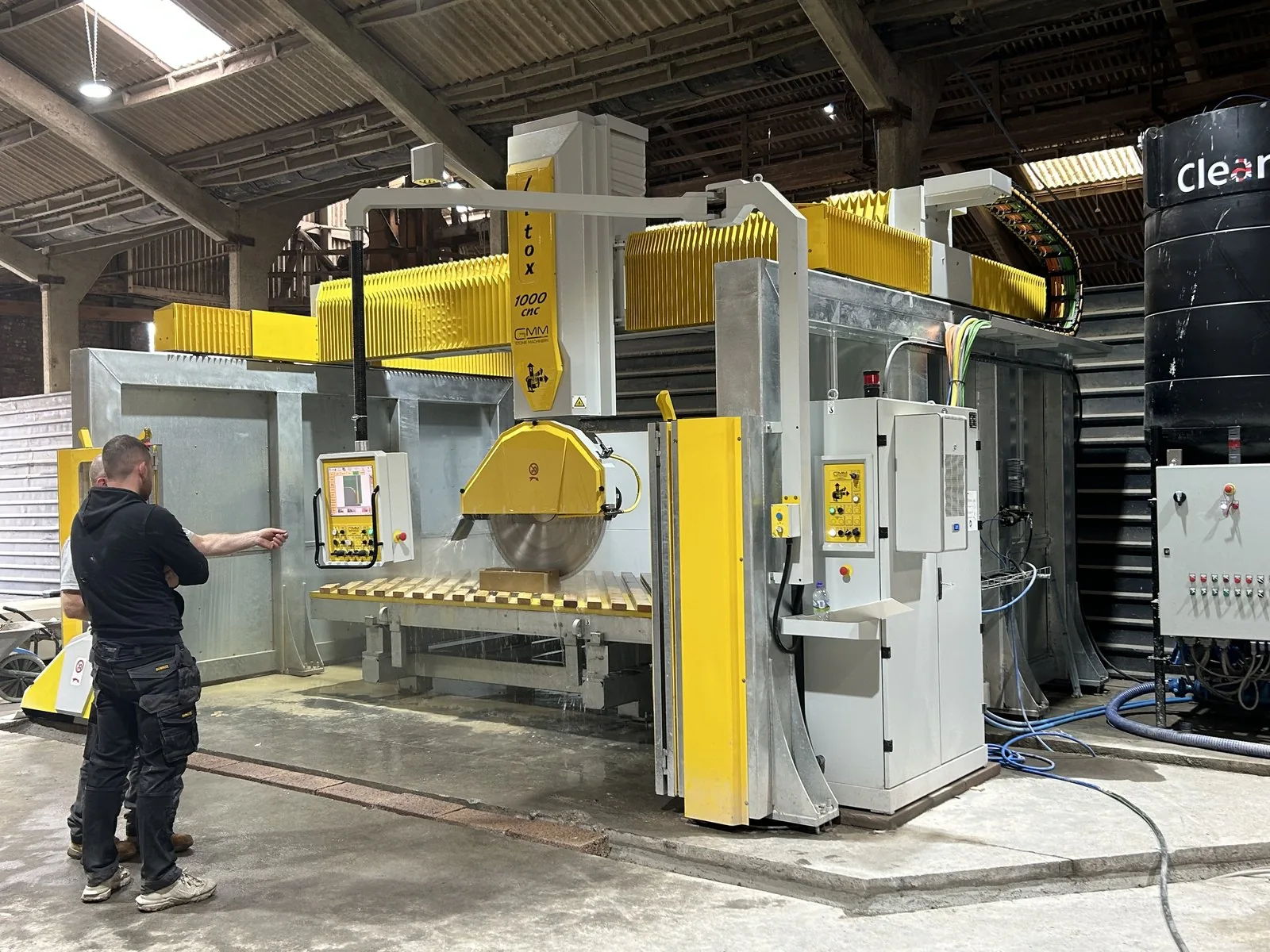
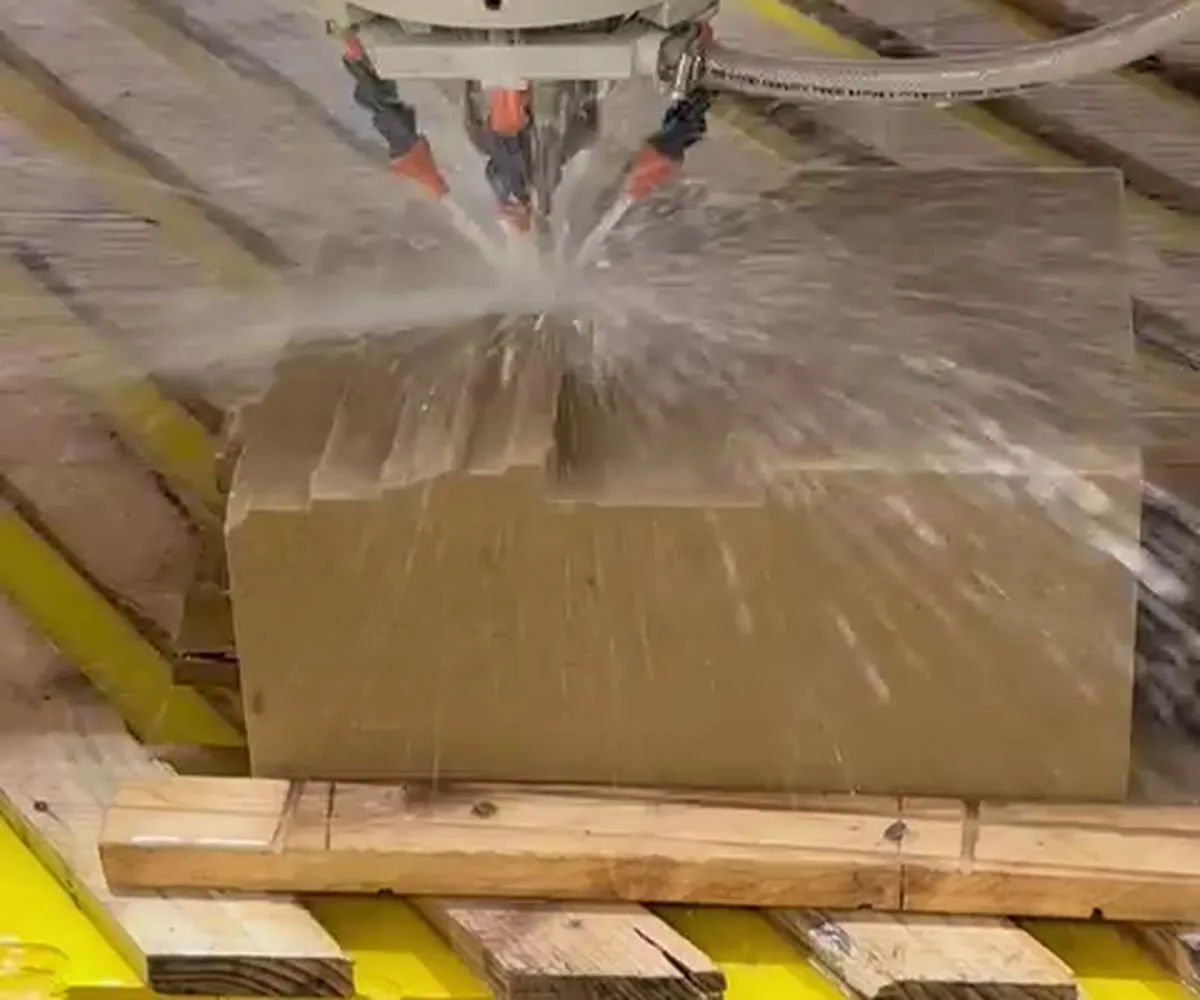
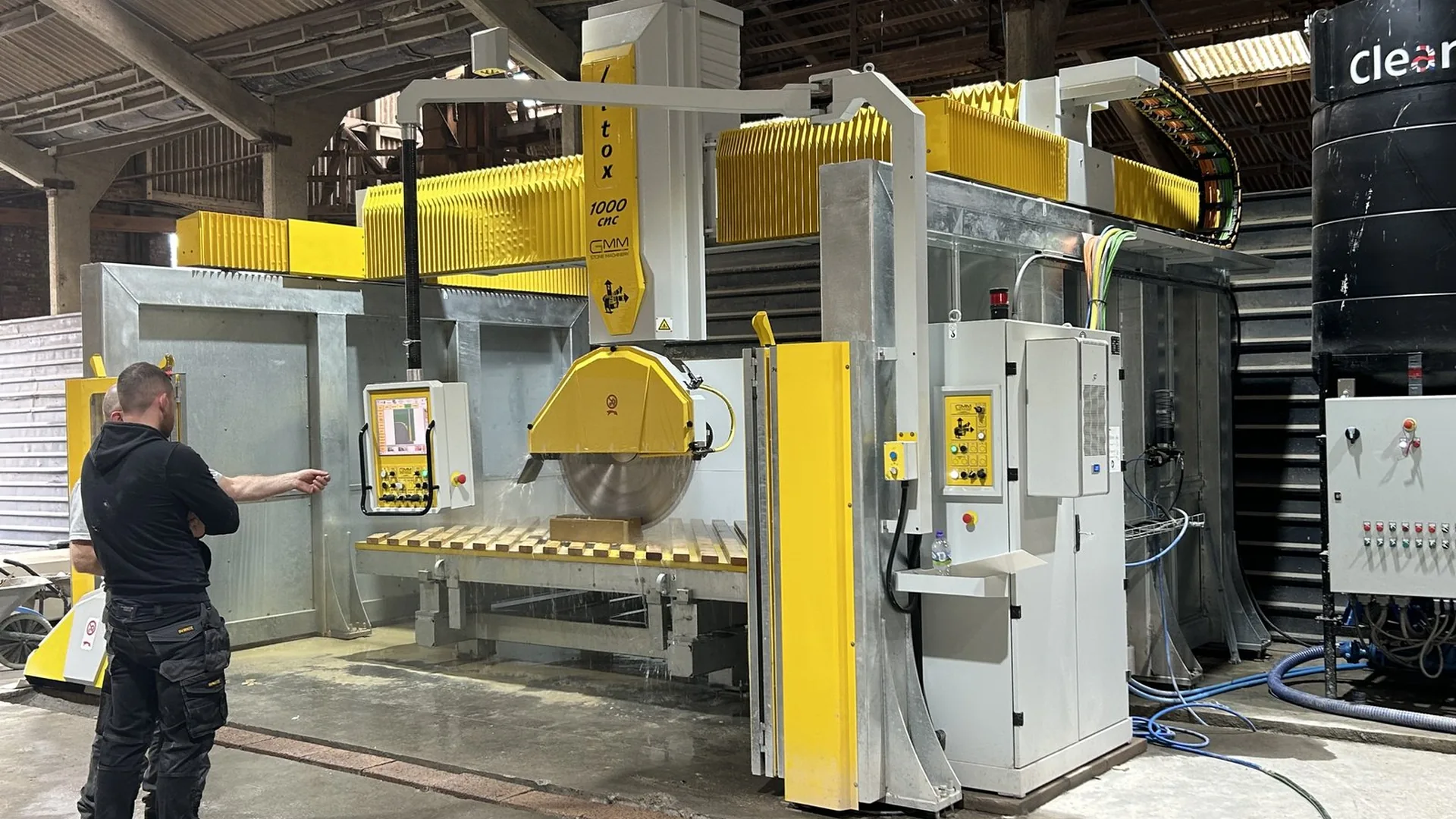
Most of the dressed and moulded stone that LTM builds with is produced in our own workshop. That gives our site teams control over quality, programme and matching, and it lets us take on work that depends on accurate repeat profiles: string courses, copes, cornices, rybates, sills and mouldings cut to the original section and finished by hand to suit the building. A five-axis CNC bridge saw and a CNC router do the heavy cutting and profiling; our banker masons and carvers do what machines cannot, reading the stone and finishing every piece by hand.
From the drawing to the saw
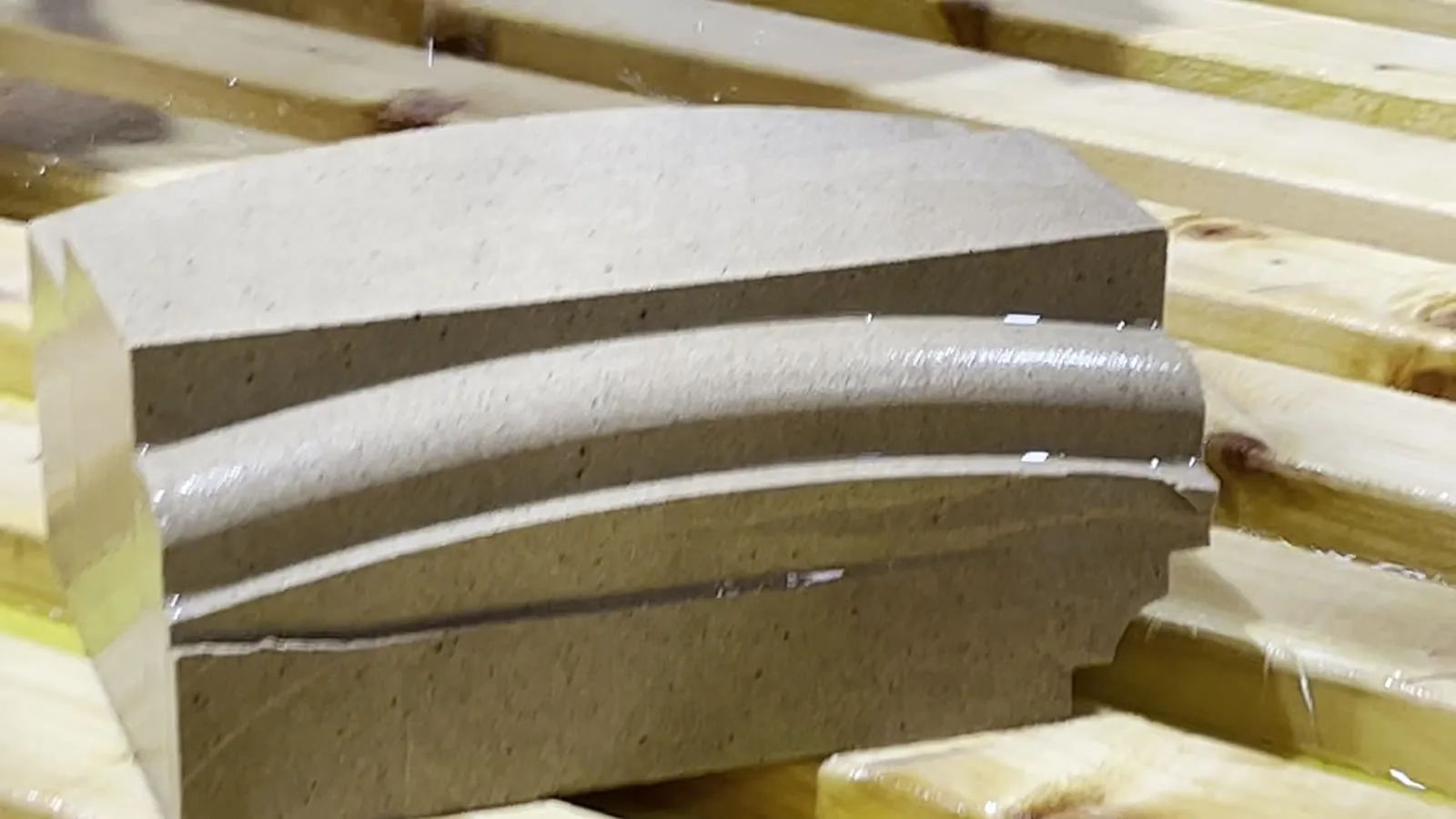
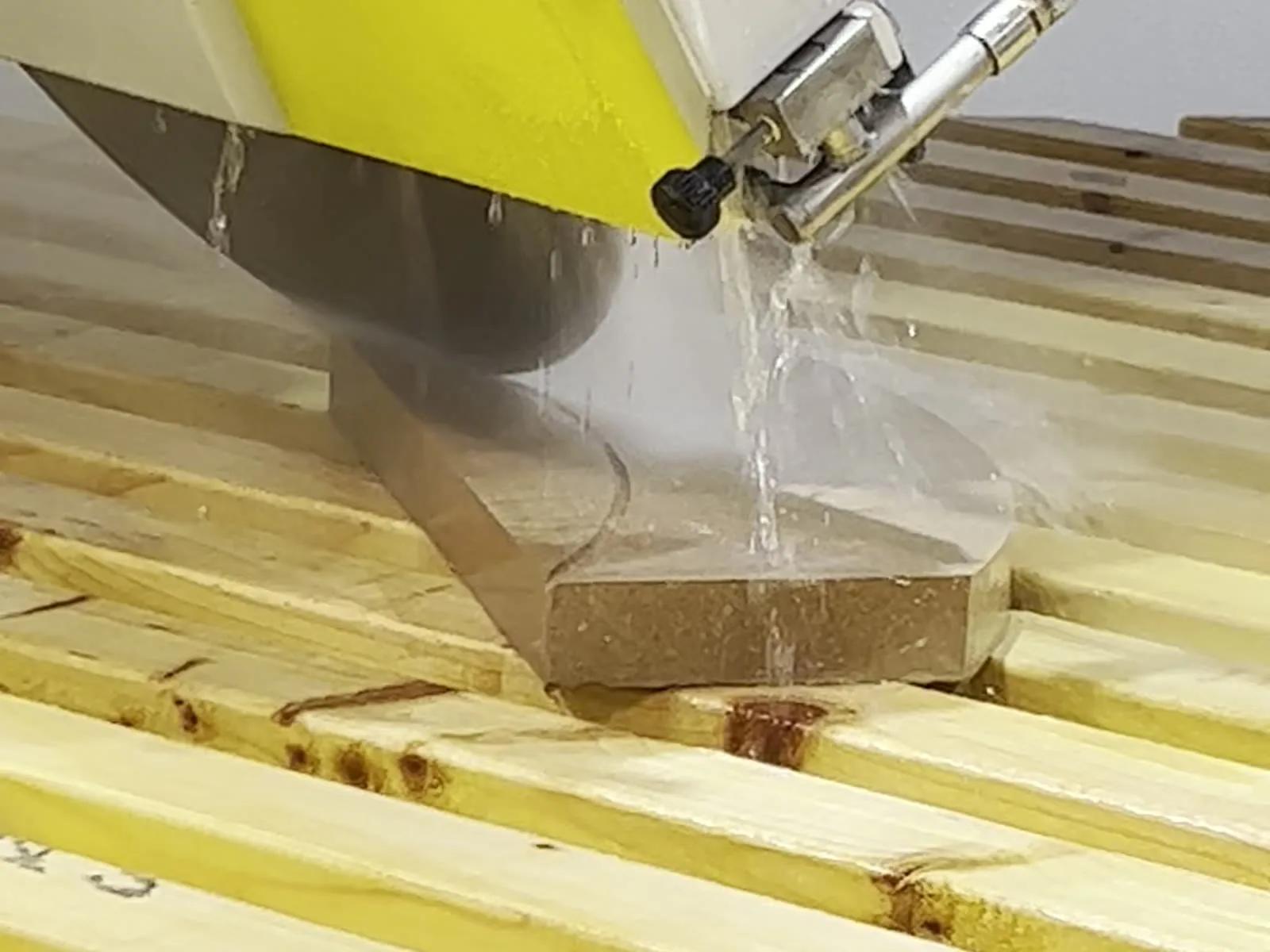
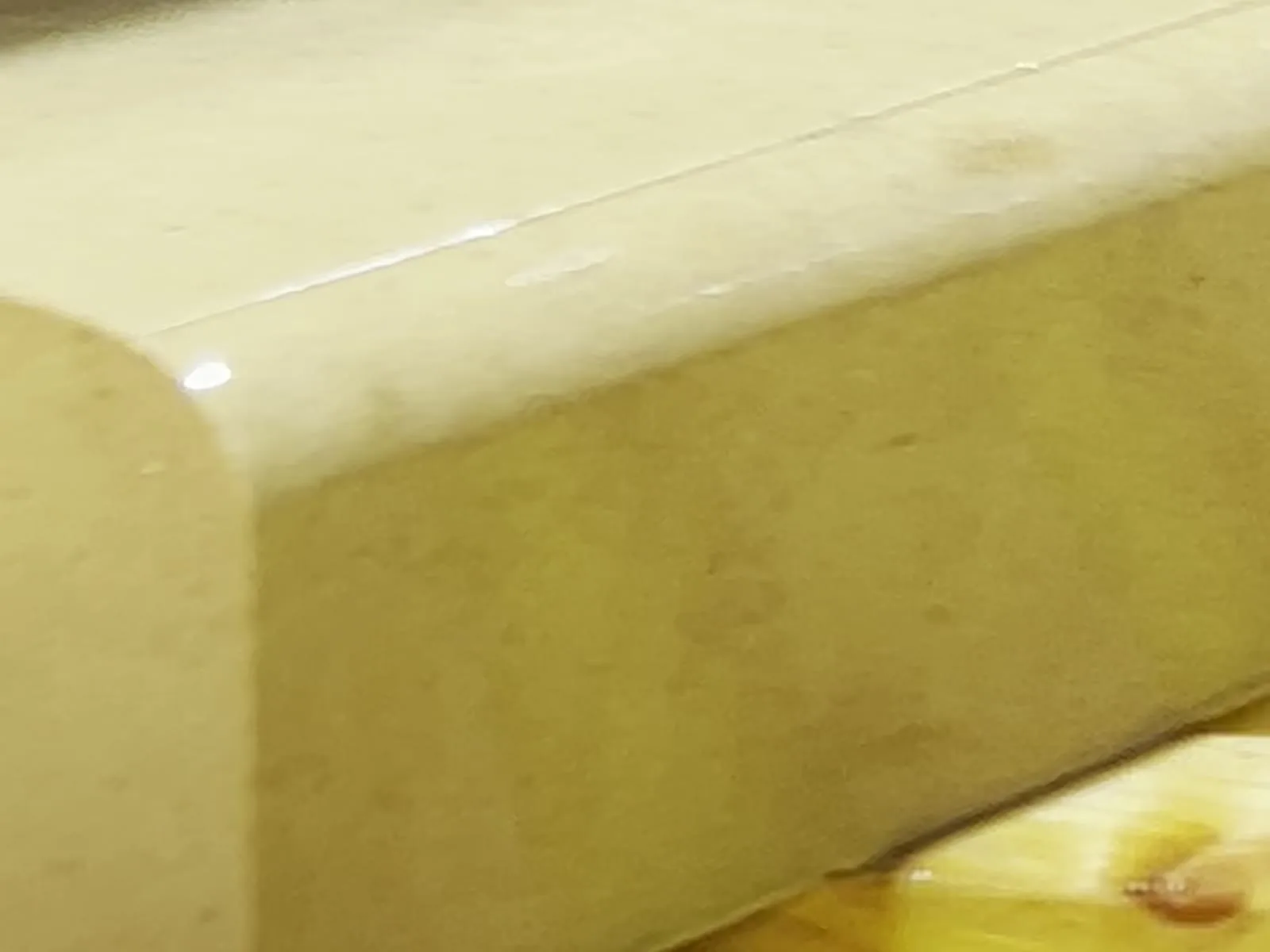
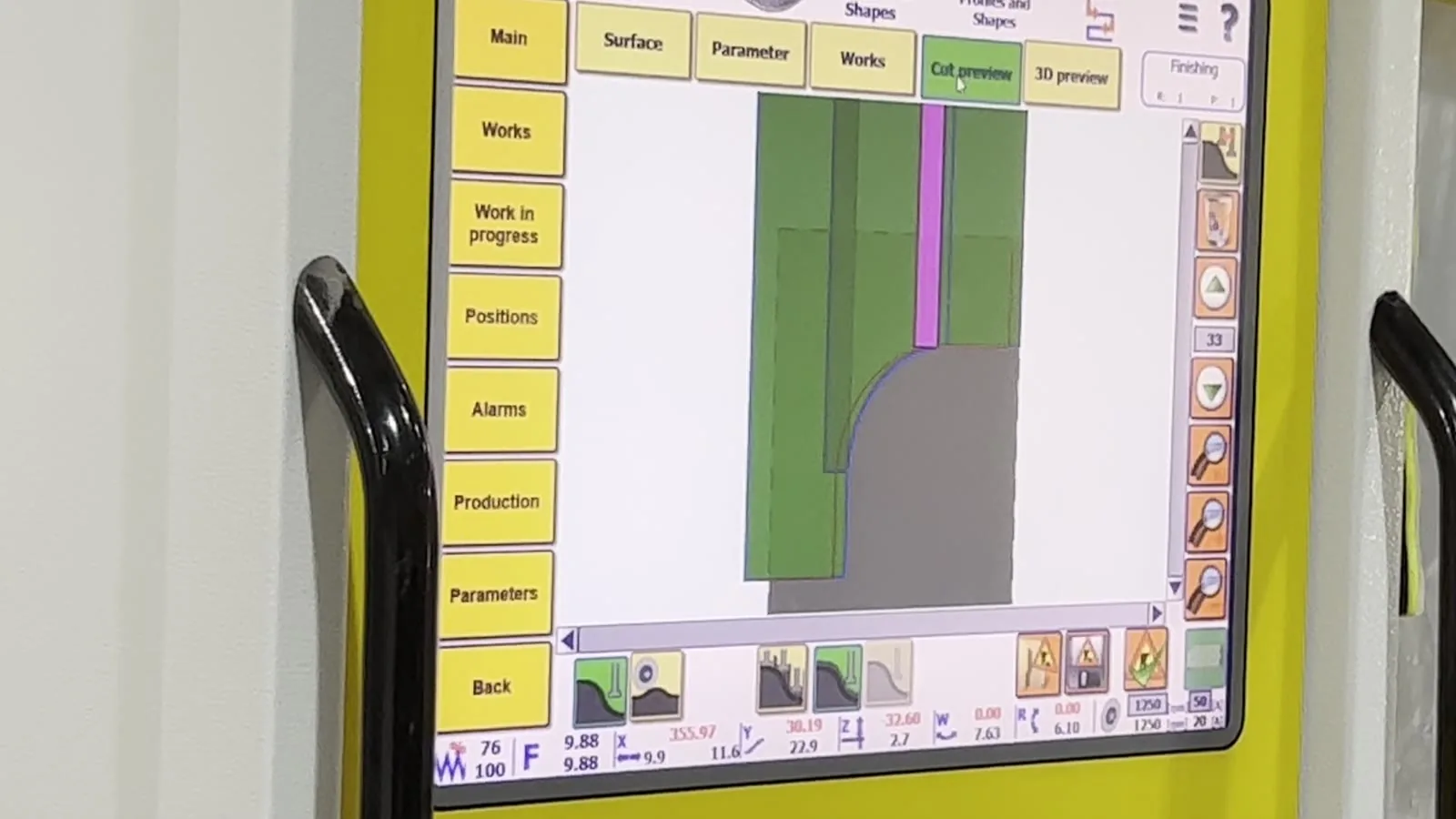
We survey and template on site, or work from the architect's drawings and schedules. The stone is selected and sourced to match the existing building geologically and visually, with samples submitted for approval. Each profile is drawn in CAD, loaded at the Litox and checked on screen before the first cut. The five-axis head rotates and tilts, so the diamond blade can be driven through the stone at any angle: square cuts, splays, skews, curves and full moulded profiles in a single programme. Once a profile is programmed, every repeat section comes off the saw identical, which is what makes a long run of cope or string course read correctly on the finished elevation, and what makes complex sections affordable on jobs where hand working alone would not be.
From the saw to the banker
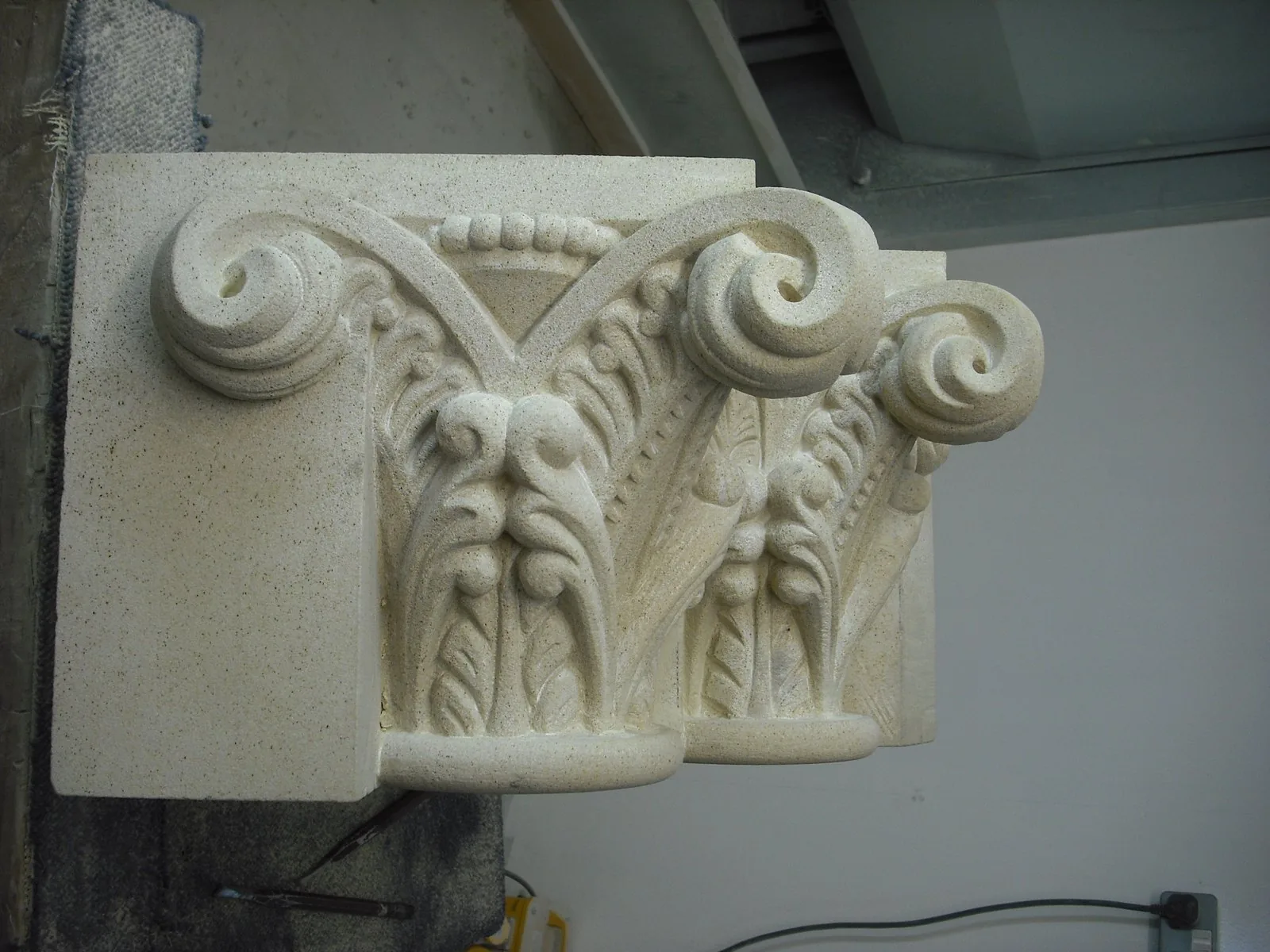
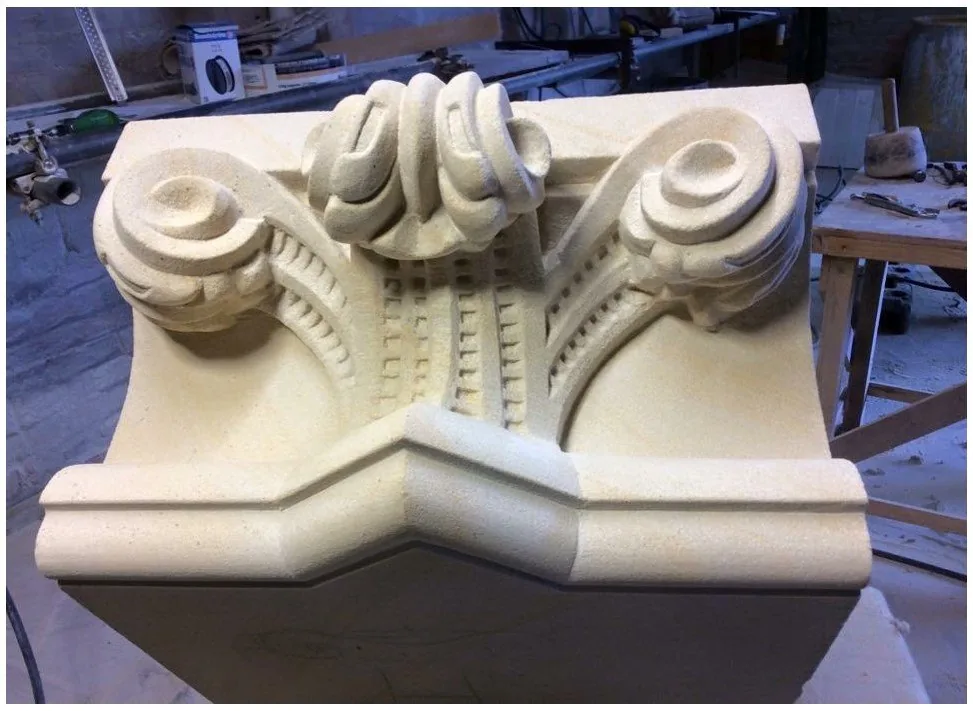
Every stone that leaves the workshop is finished by hand. Sawn and routed faces go to our banker masons, who dress them to the finish the building needs, whether tooled, droved, stugged, punched, boasted or rubbed, and who work the returns, arrises and joints so that each stone sits as it should when it is built. Our carvers take on the enriched work: capitals, cornices, pediments, heraldry and figurative pieces, worked from the surviving original, from drawings or from a clay model with a pointing frame to transfer the form accurately into the new stone. Finished stones are numbered to the schedule and palletised, then built in by LTM masons or supplied for others to fix.
CNC routing
Alongside the saw, a CNC router handles the work a blade cannot reach: sinkings, rebates, checks, chamfers and shaped returns. Routed stones go to the banker for hand finishing in the same way as sawn work.
Cleaner, safer, less waste
The saw cuts under water, which keeps the blade cool, keeps silica dust out of the air and leaves a clean arris ready for the banker. A water treatment plant beside it recycles the cutting water and bags the stone silt for reprocessing. Cutting each block to its most useful sections before any hand work begins also means less stone is wasted than in conventional production.
What it means for your project
Accurate repeat profiles
Every section on a run of cope, string course or cornice cut to the same programmed profile, then finished by hand to match the building.
Complex sections made viable
Splays, curves and full mouldings cut in one programme, so enriched replacement stone is affordable on jobs where hand working alone would not be.
One package, under our control
Survey, stone selection, cutting, dressing, carving and fixing by one team, with quality, programme and matching in our own hands from drawing to delivery.
Have stone to match?
Send us a drawing, a photograph of the stone you need to match, or a schedule, and we’ll come back with a stone proposal, a sample and a price.
Back to
Stone Services
Masonry, conservation, cleaning, lettering, cladding and production