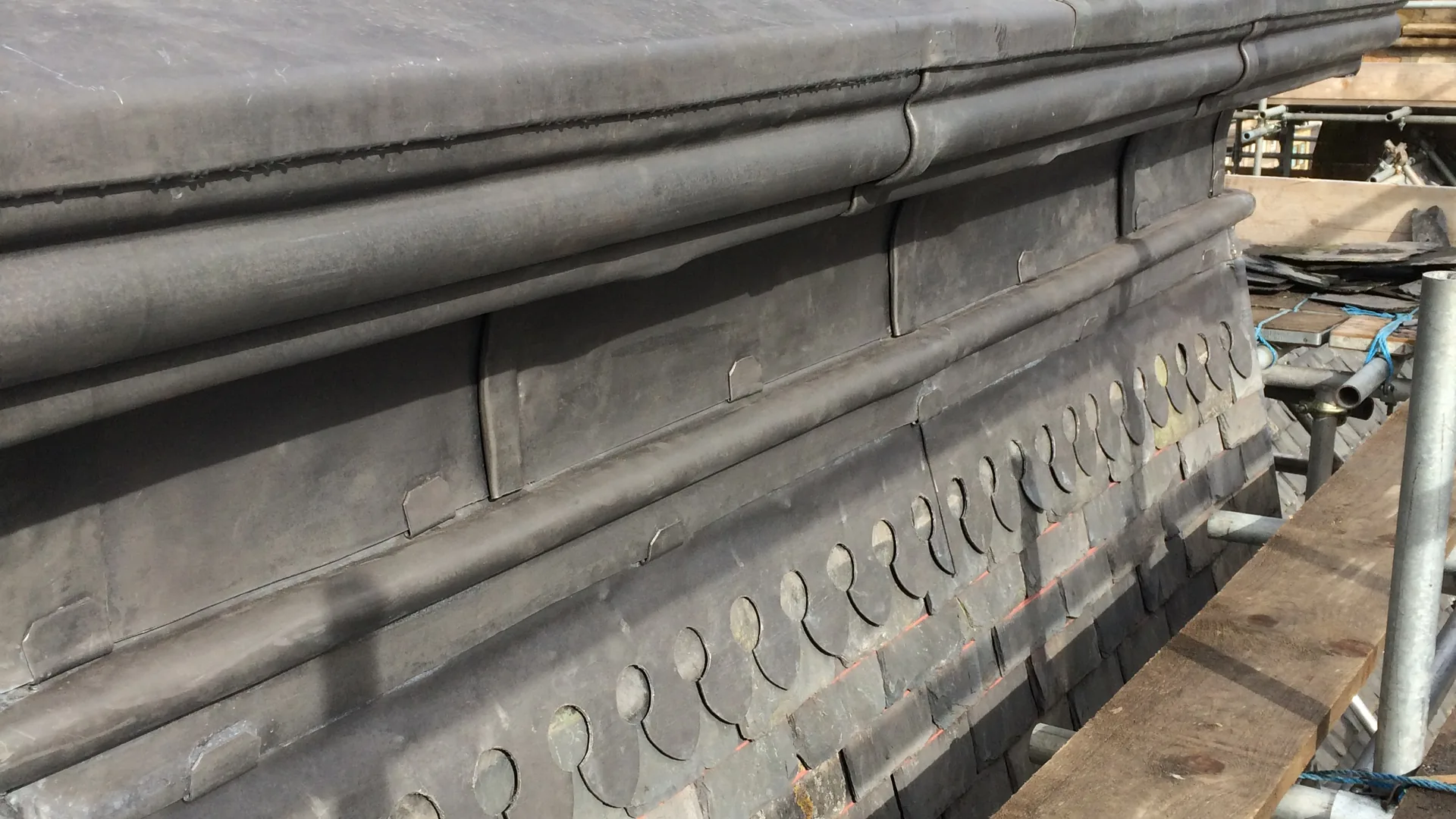
Sheet, decorative and cast leadwork:
Traditional Leadwork
Made, dressed, burned and fixed by our own leadworkers
Lead is what keeps the water out where a roof meets a wall, a chimney, a parapet or another roof, and it is the covering of choice where a roof is flat, curved or too intricate to slate. Having leadworkers in-house means we can offer our clients a seamless and efficient solution to any detailing problem encountered while working on their buildings, with no need to depend on subcontractors and no costly delays to the project. Our leadworkers work on the same scaffolds as our slaters, masons and joiners, so the detailing that keeps a historic building dry is designed and made by people who understand the fabric around it. From the flat roof of Lerwick Town Hall to the cresting on the fleche of Inverness Town House, we fabricate, dress and fix it ourselves, and we cast what cannot be bought.
Sheet leadwork
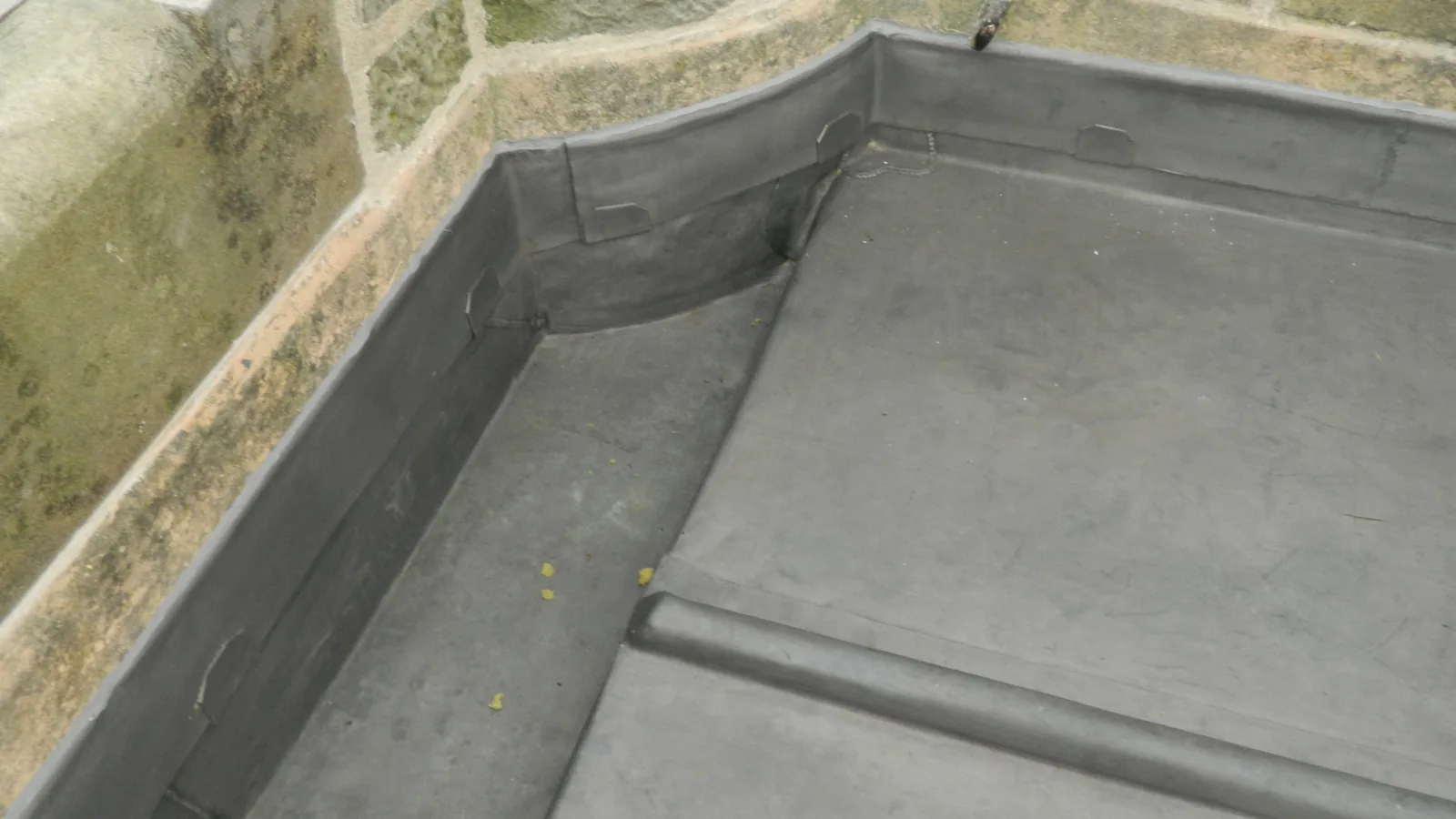
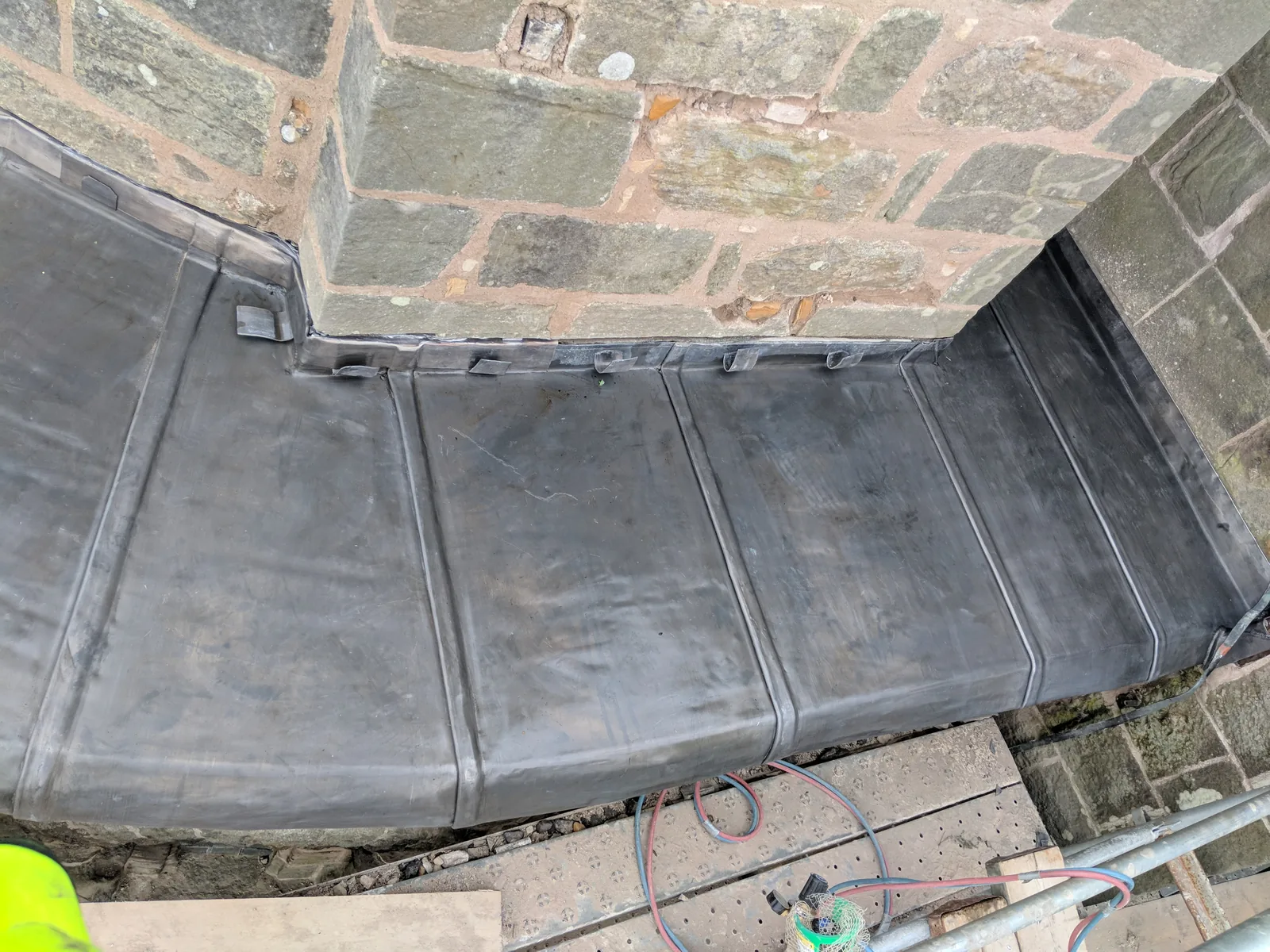
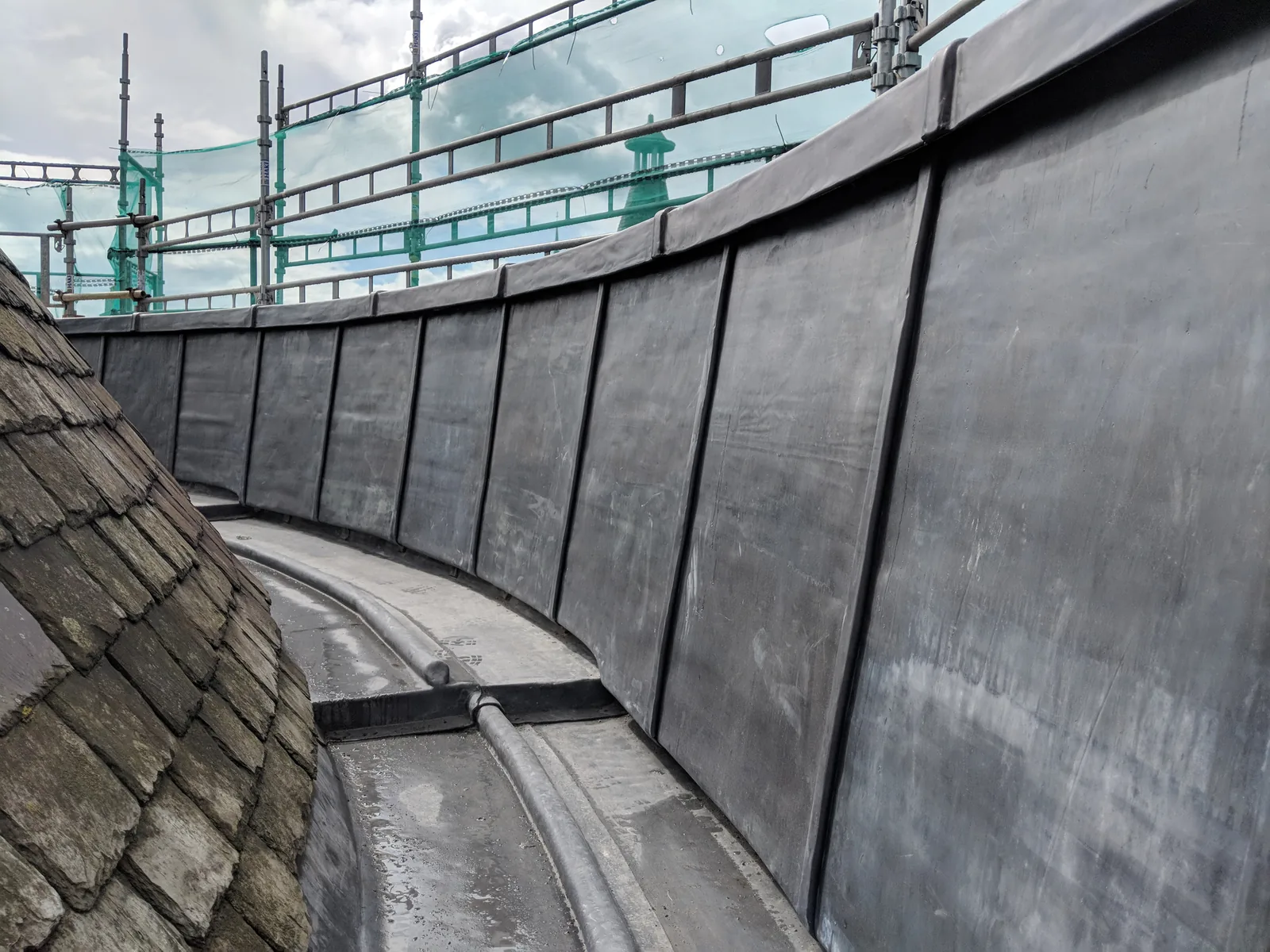
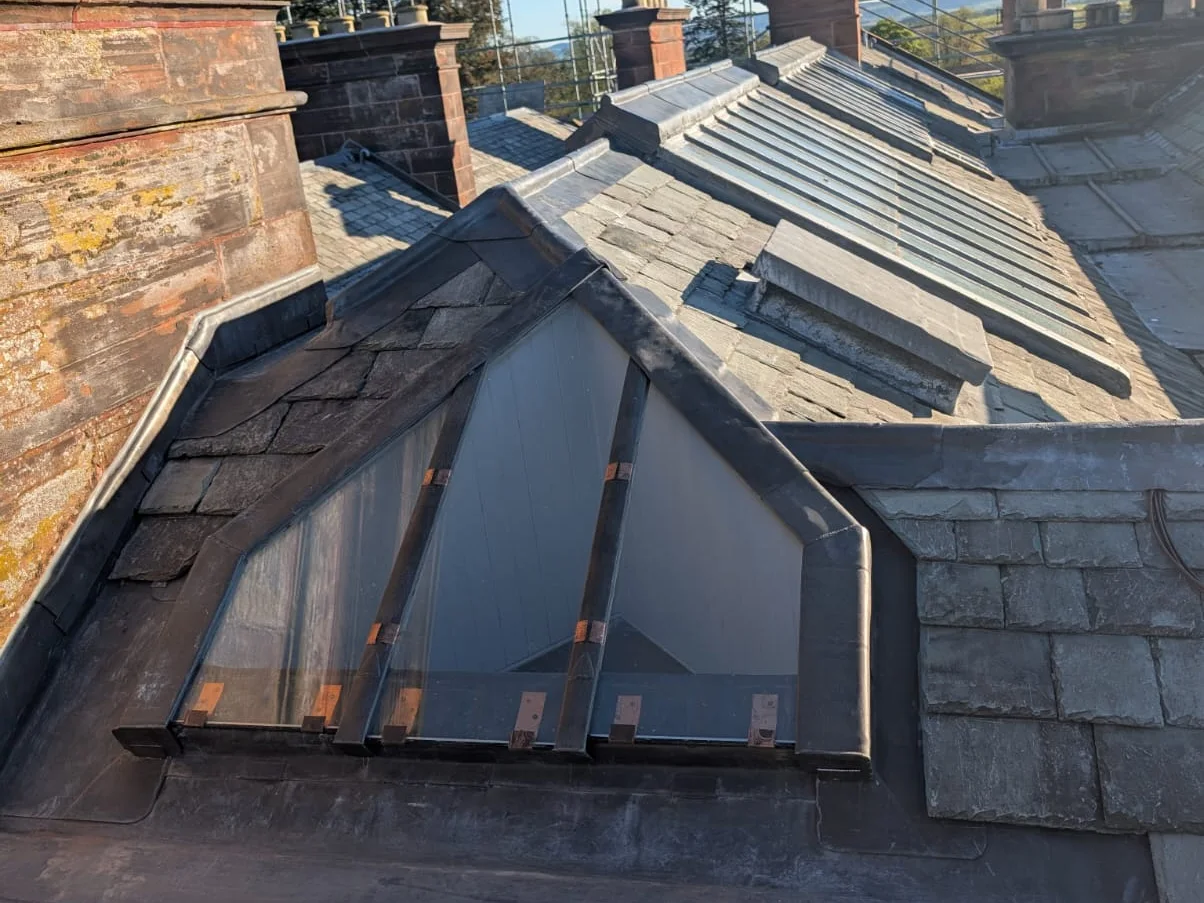
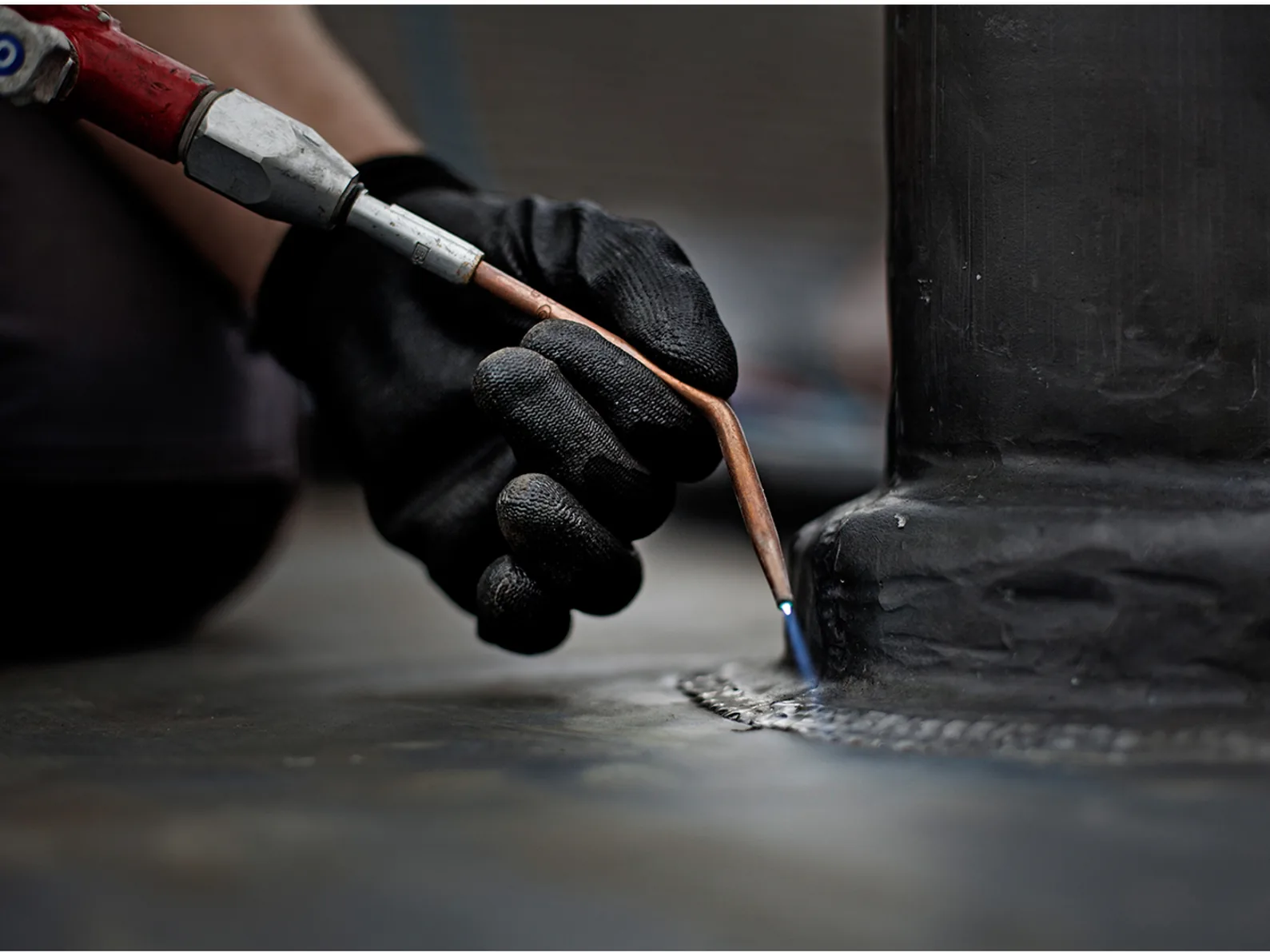
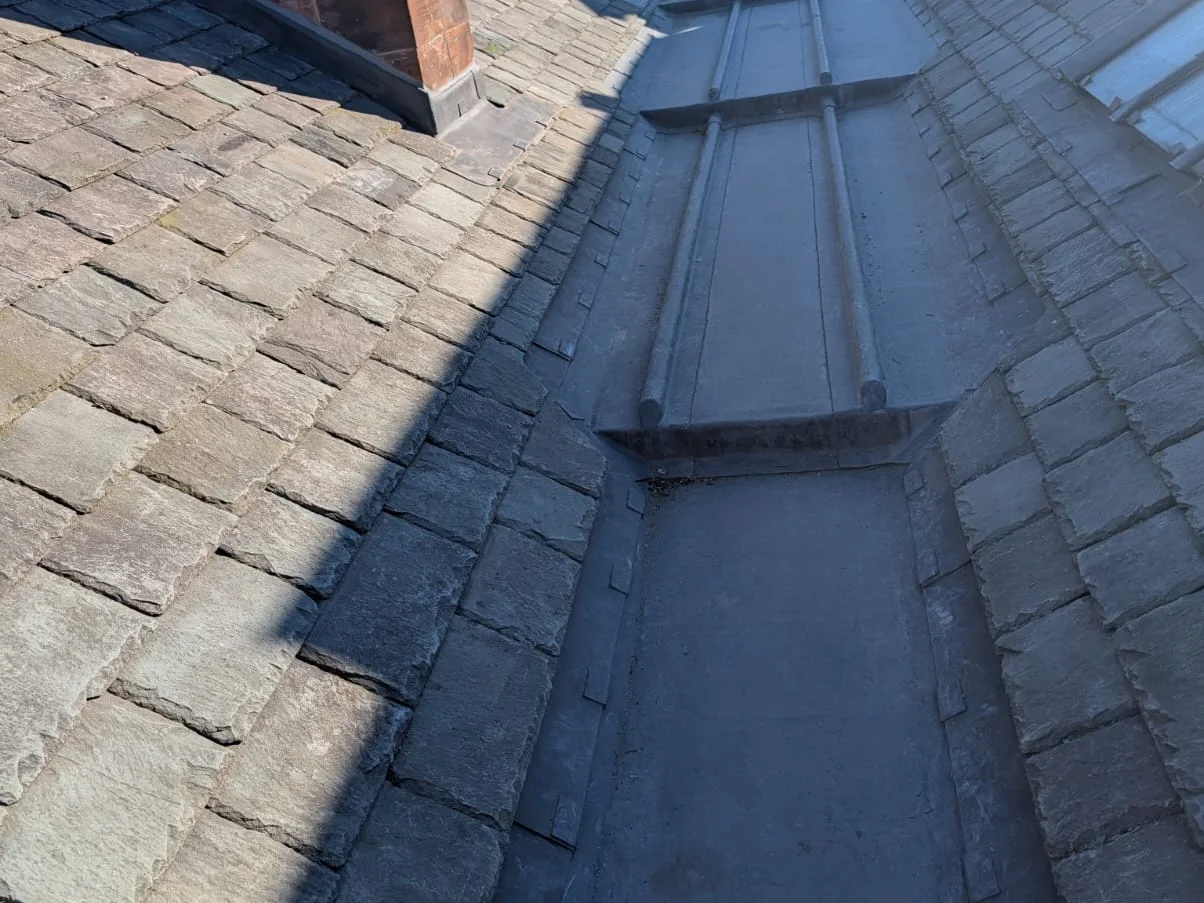
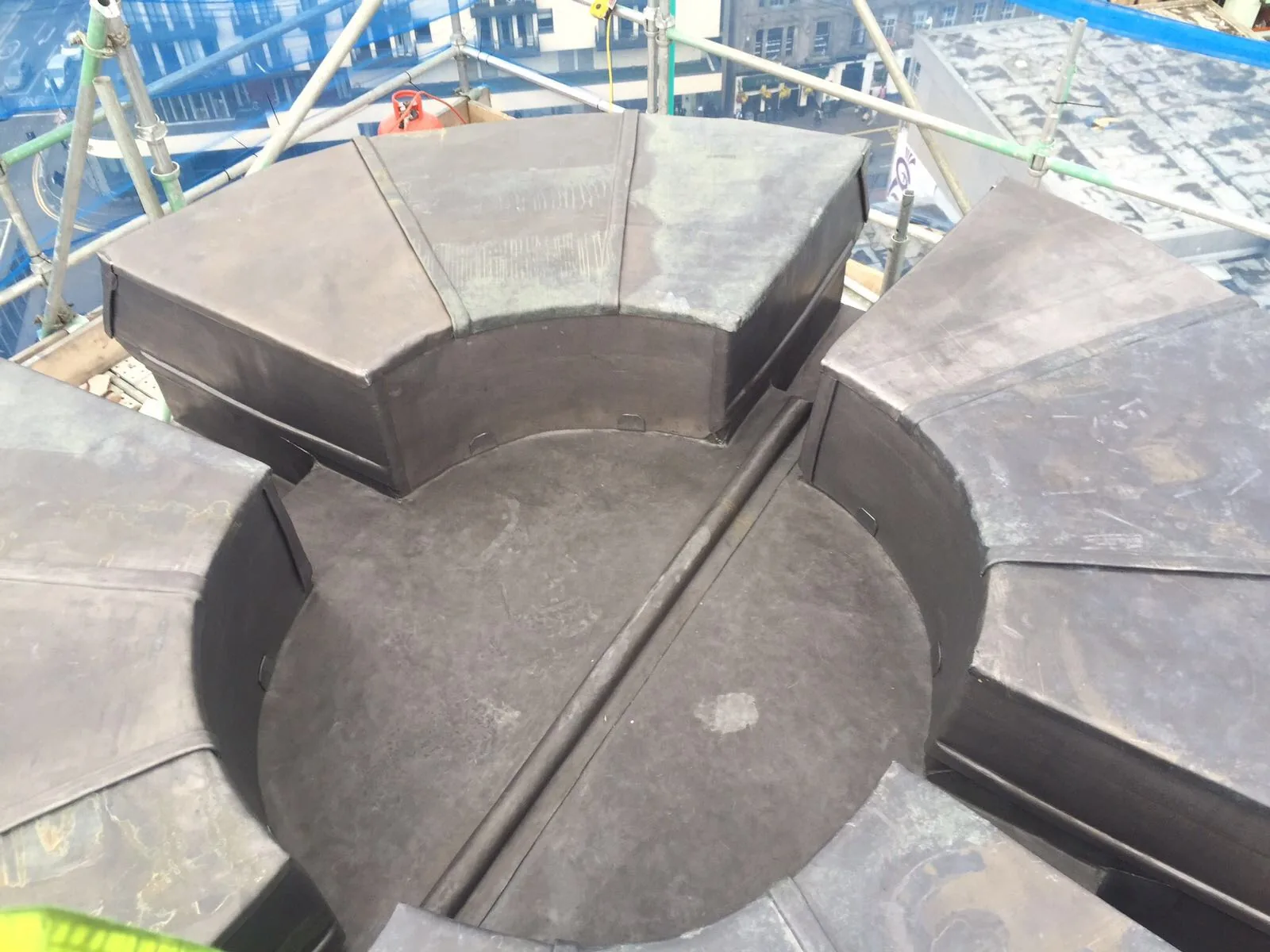
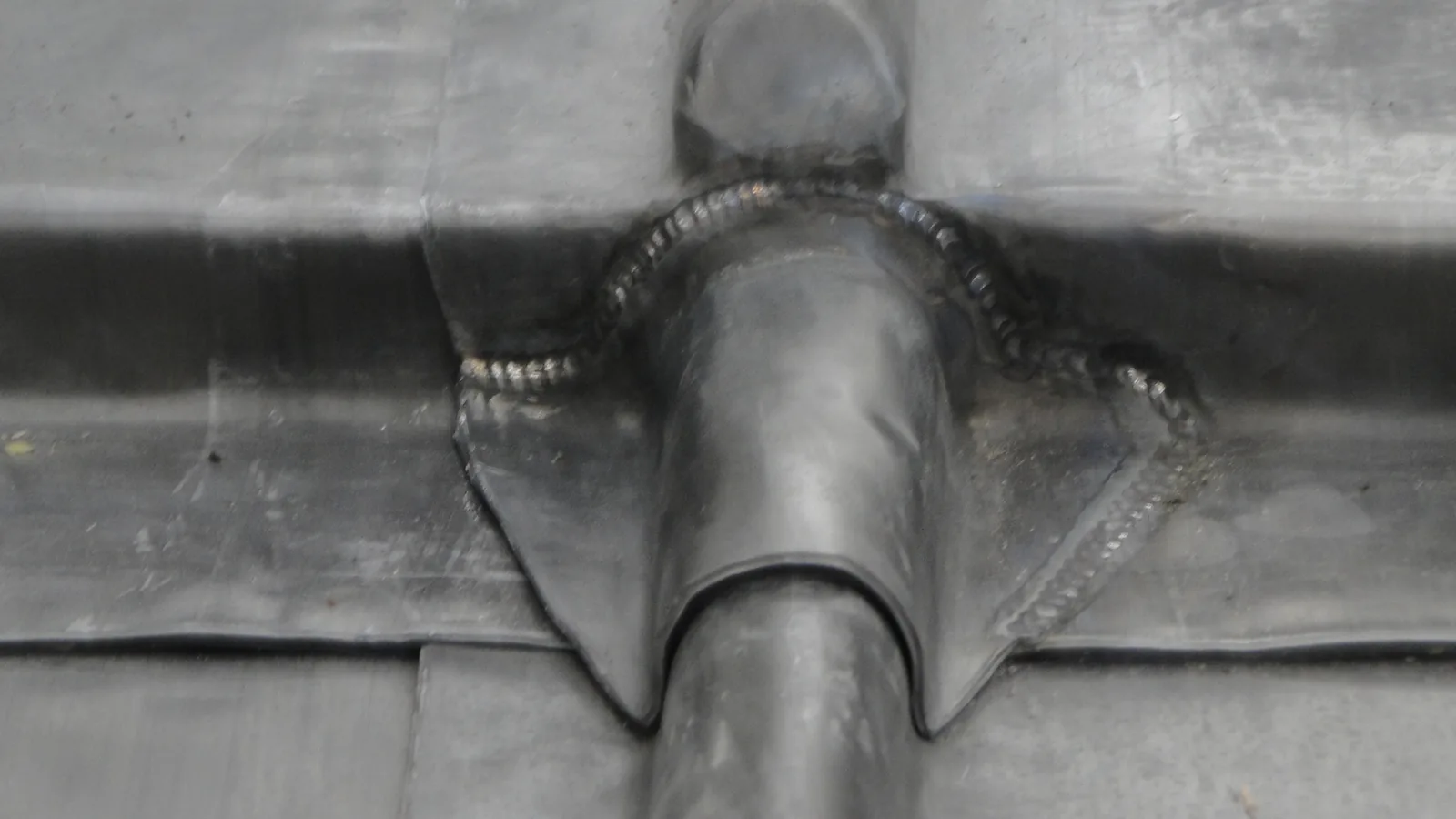
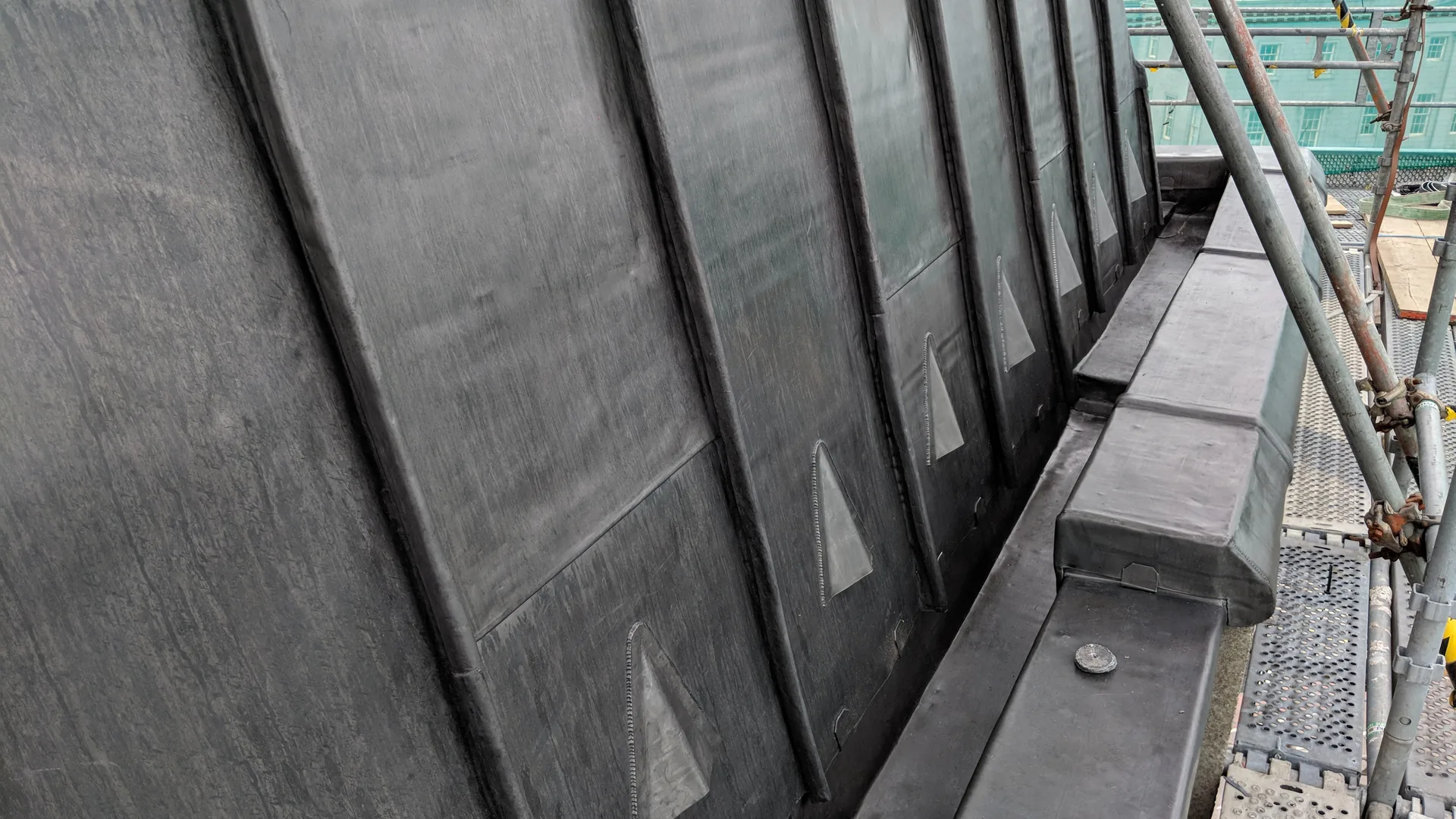
Sheet lead is cut, dressed and fixed by hand. We size each bay for its code and position, join bays with wood-cored rolls or welts, step the drips and laps so the water always runs over a joint and never into one, and fix with copper and stainless steel so that nothing corrodes behind the lead. Where a detail needs a welded joint we lead burn it: lead fused to lead, with no solder and no sealant. At Lerwick Town Hall the flat roof behind the parapets was stripped and re-laid in rolled lead as part of the full roof replacement, with every pipe and post penetration burned in. At Asknish House we laid the parapet gutters, at Nairn Courthouse and the North Tower of Inverness Castle we re-covered the spire and the capping, and at Aberdeen Central Library we clad the curved parapet and renewed the gutters behind it. At St Athernase Church in Leuchars the junction between the chancel roof and the Norman apse was worked out with the architect on the scaffold and made in lead.
Decorative and cast leadwork
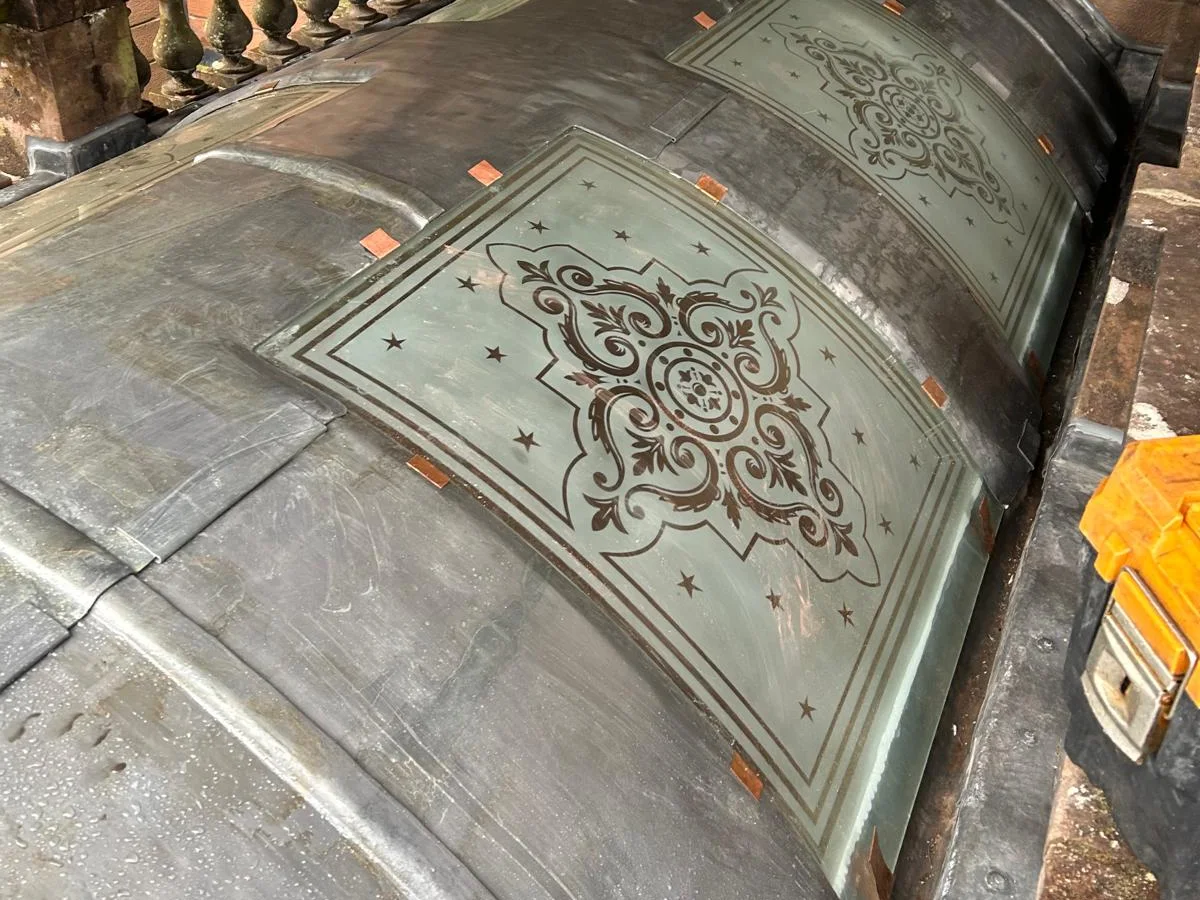
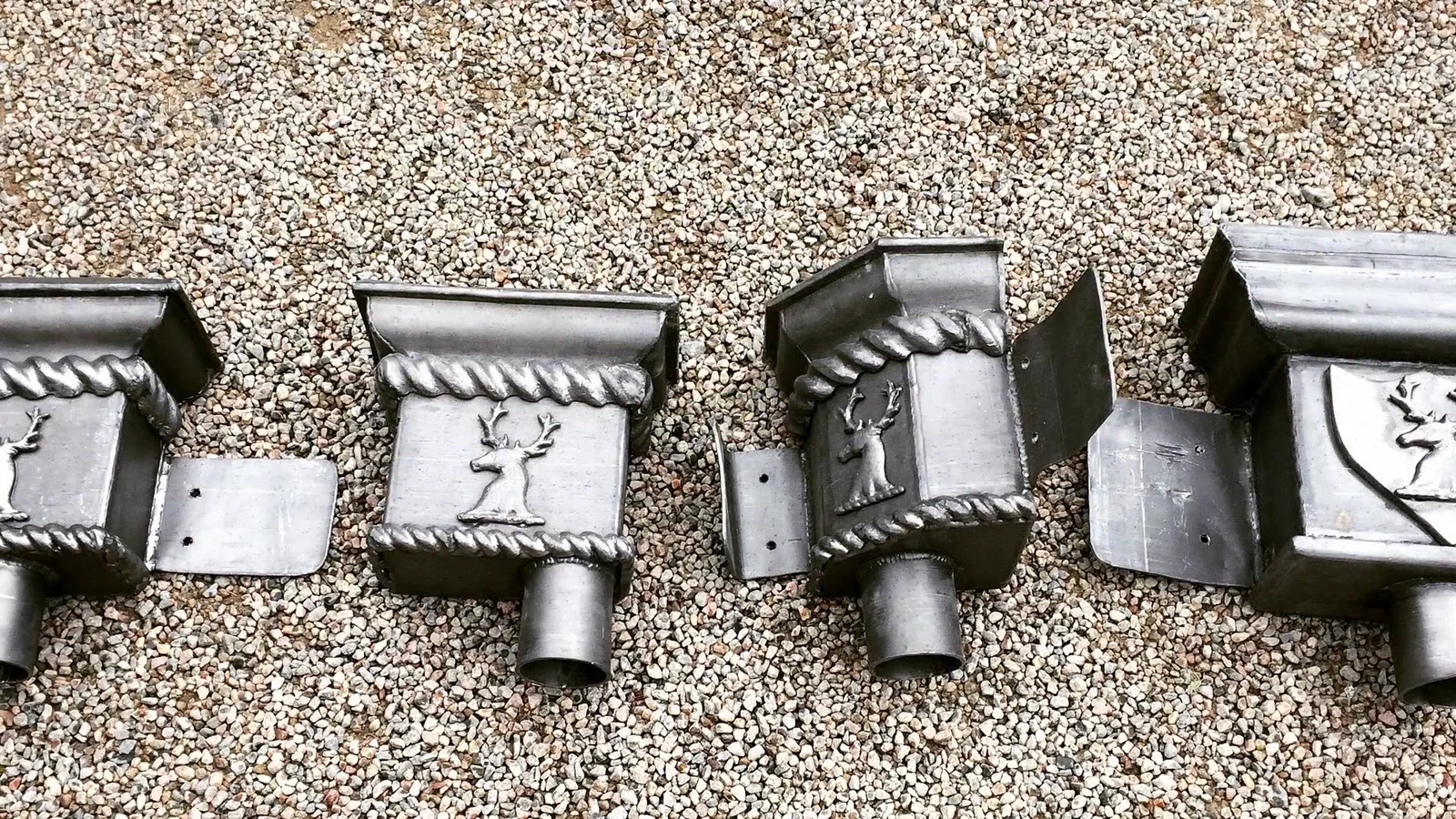
Much of the lead on a historic building is there to be looked at as well as to shed water: crestings and finials on a fleche, decorated hoppers at the head of each downpipe, plaques and ornaments on parapets. Where these have been lost or are beyond repair we cast replacements, taking a mould from a surviving original where one exists or making a new pattern where it does not, and we dress and finish the castings by hand so they sit with the old work. The ornamental cornice and cresting of the fleche at Inverness Town House were replicated this way during the roof replacement, and the hoppers at Aldourie Castle were cast new with the estate's stag crest to match the pattern of the originals.
Where lead meets stone and slate
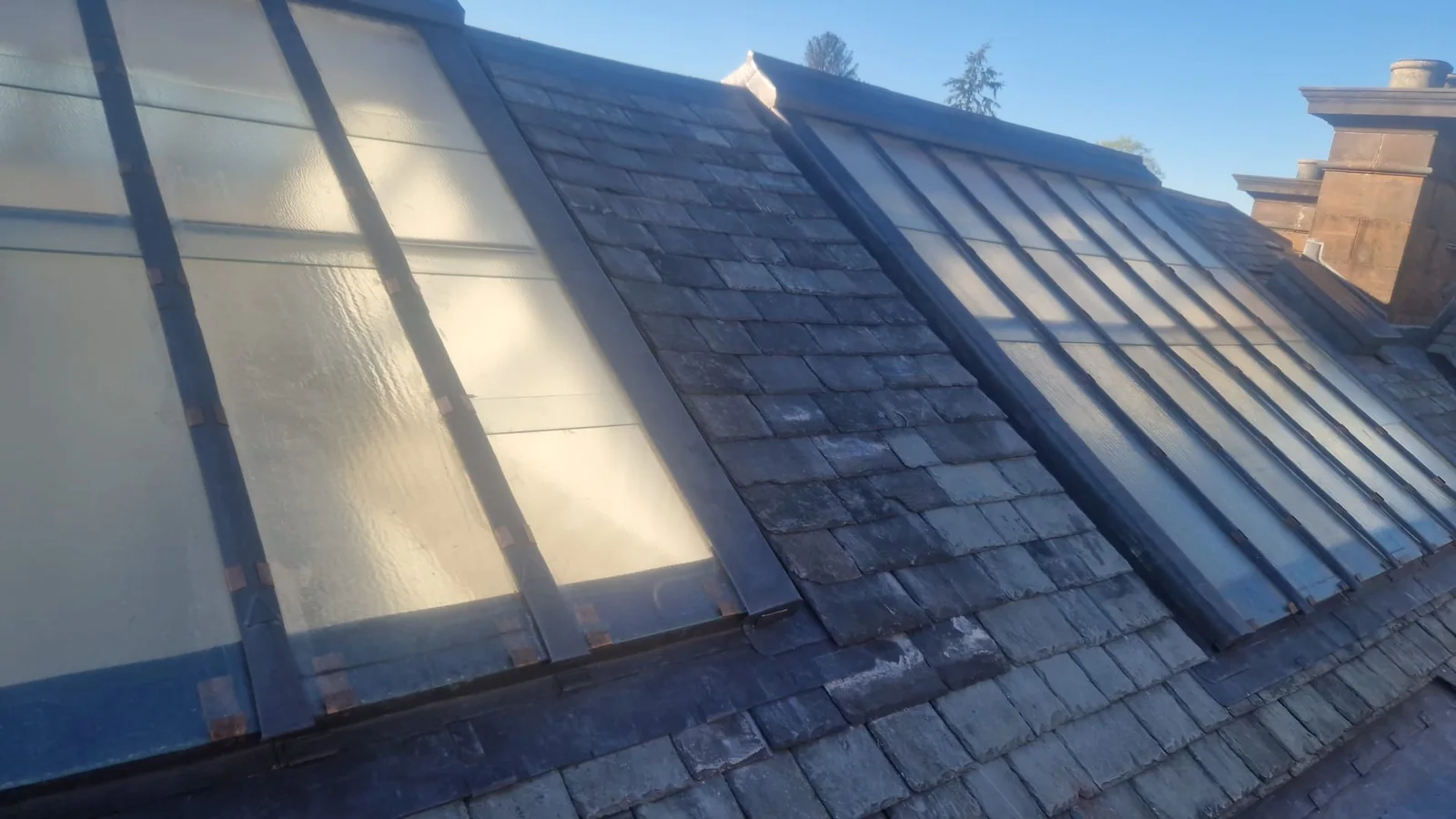
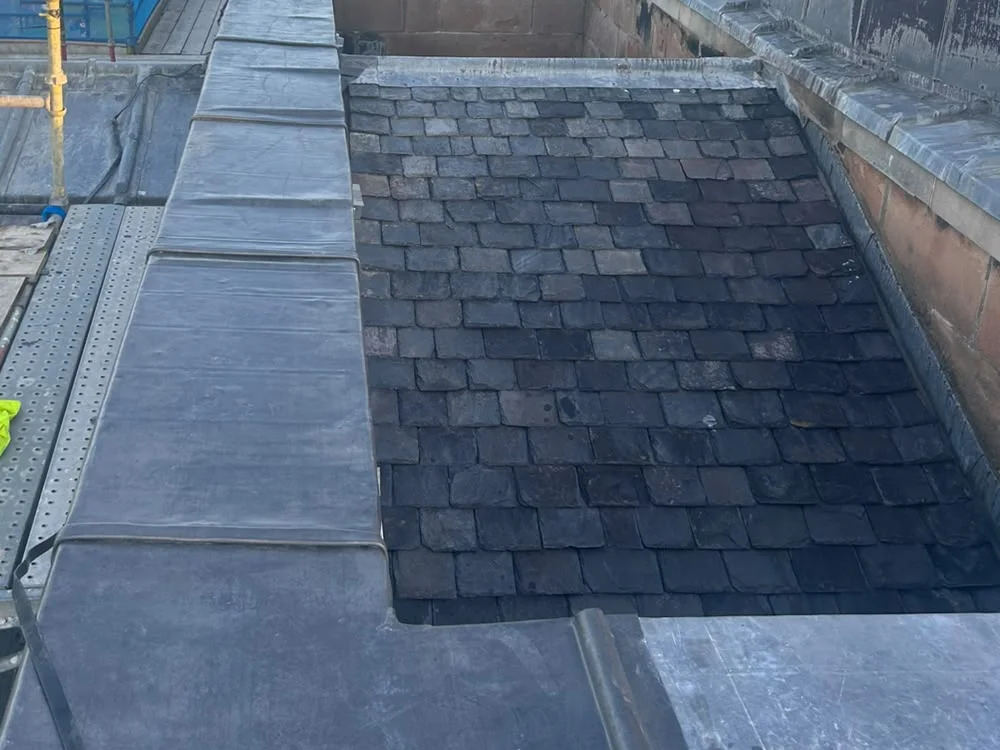
Most leaks on an old building start at a junction: a chimney, a skew, an abutment, a gutter behind a parapet. Having leadworkers in-house means those junctions are detailed by people who also understand the slating and the masonry on either side of them. Stepped flashings are cut into the joints of the stone and wedged and pointed in lime, and chimney copes are lined so the stone beneath never saturates, as at Inveraray; soakers are interleaved with the slates course by course; and the gutter behind a parapet is sized and lined to carry the water the roof actually sends it. There is no subcontractor to wait for and no hand-off where a detail can be lost, which is why our slating and leadwork teams have worked together on LTM roofs, from Thurso to Islay and from Shetland to Alloa, for well over a decade.
Built to last a century
A lead roof detailed properly will outlast the people who laid it. We choose the code of lead for the exposure and the size of the bay, keep bays within the limits that stop thermal fatigue, allow the sheet to move, ventilate and underlay the deck so condensation cannot attack it from beneath, and treat new lead with patination oil so it weathers evenly. We work to the Lead Sheet Association's guidance throughout, and we tell owners what to look at and when, so that the few things that do need attention over a lead roof's life are caught early. A good hat is what keeps a building sound, and lead is what makes the hat watertight.
What it means for your building
Junctions that stay dry
Flashings, soakers, gutters and cappings detailed and made by people who also understand the slate and stone around them.
Castings you cannot buy
Lost hoppers, finials, crestings and plaques replicated from the original, so the building keeps its detail as well as its weather-tightness.
One scaffold, one team
Leadworkers, slaters, masons and joiners from one contractor, with no subcontractor to chase and no detail lost in a hand-off.
A roof that still leaks?
Send us photographs of the junction, the gutter or the chimney and we will tell you how we would detail it in lead, and what else around it needs attention.
Leadwork on site
Leadwork case studies
- Nairn CourthouseCase study →
- Inverness Town HouseCase study →
- Lerwick Town HallCase study →
- St Athernase Church, LeucharsCase study →
- Asknish HouseCase study →
- Aldourie CastleCase study →
- Inverness Castle North TowerCase study →
- Balgray HouseCase study →
- Brodie Castle Roof RepairsCase study →
- Forres Town HallCase study →
- Smith Art Gallery and MuseumCase study →
- St Kilda Church and SchoolroomCase study →
Back to
Roofs & Timber
Slating, leadwork and joinery