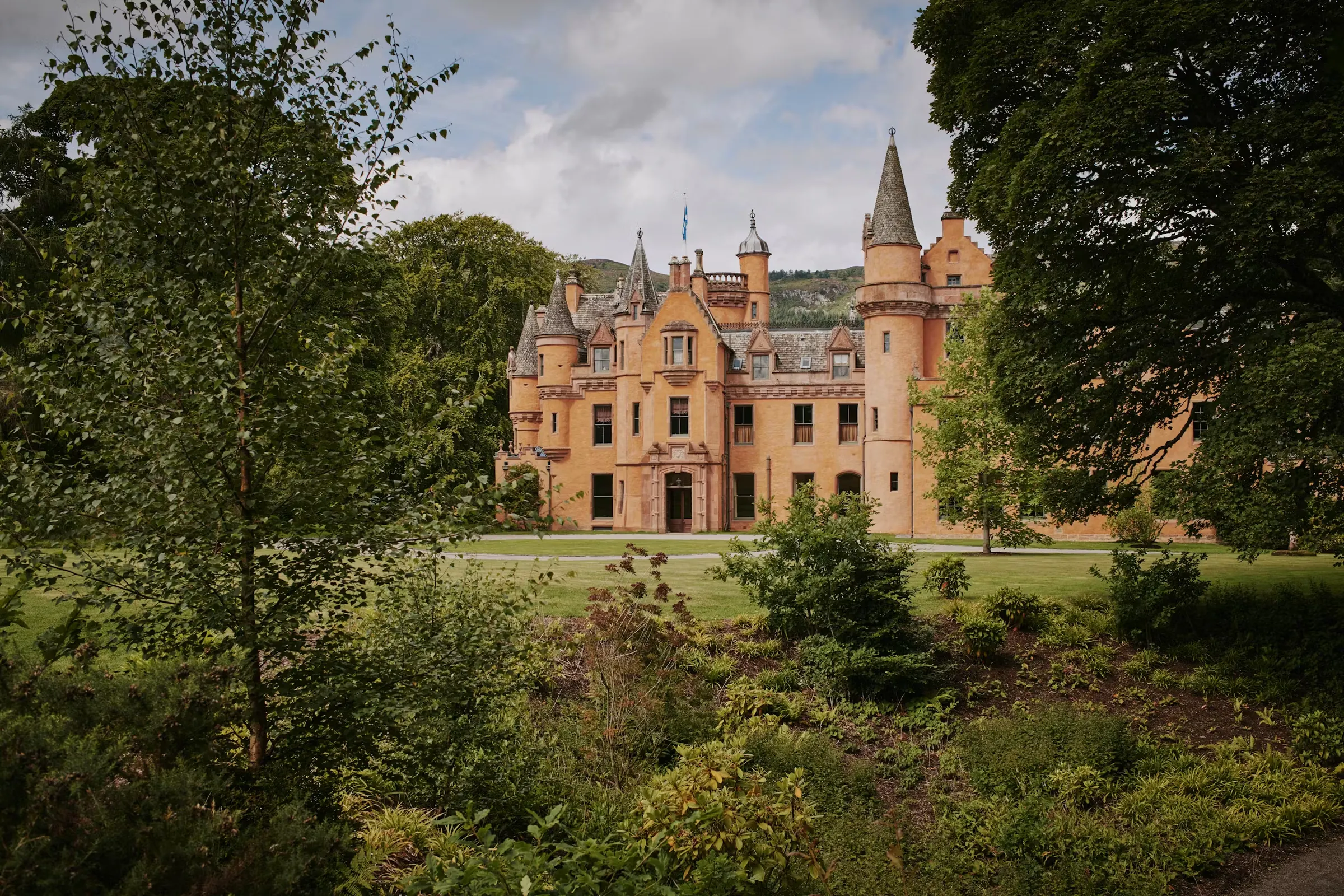
Harling using hot lime mortars:
Aldourie Castle
Inverness · 2017
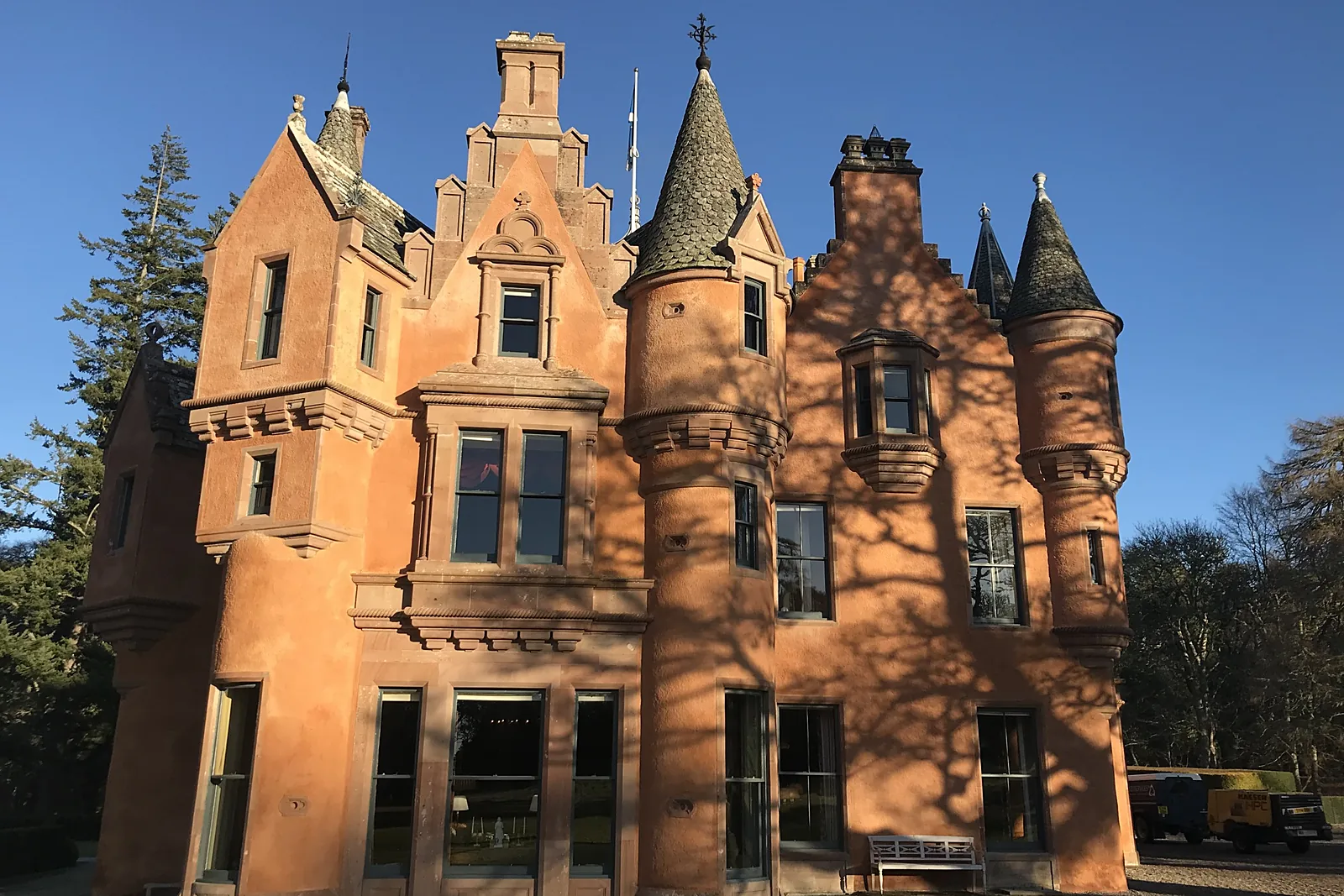
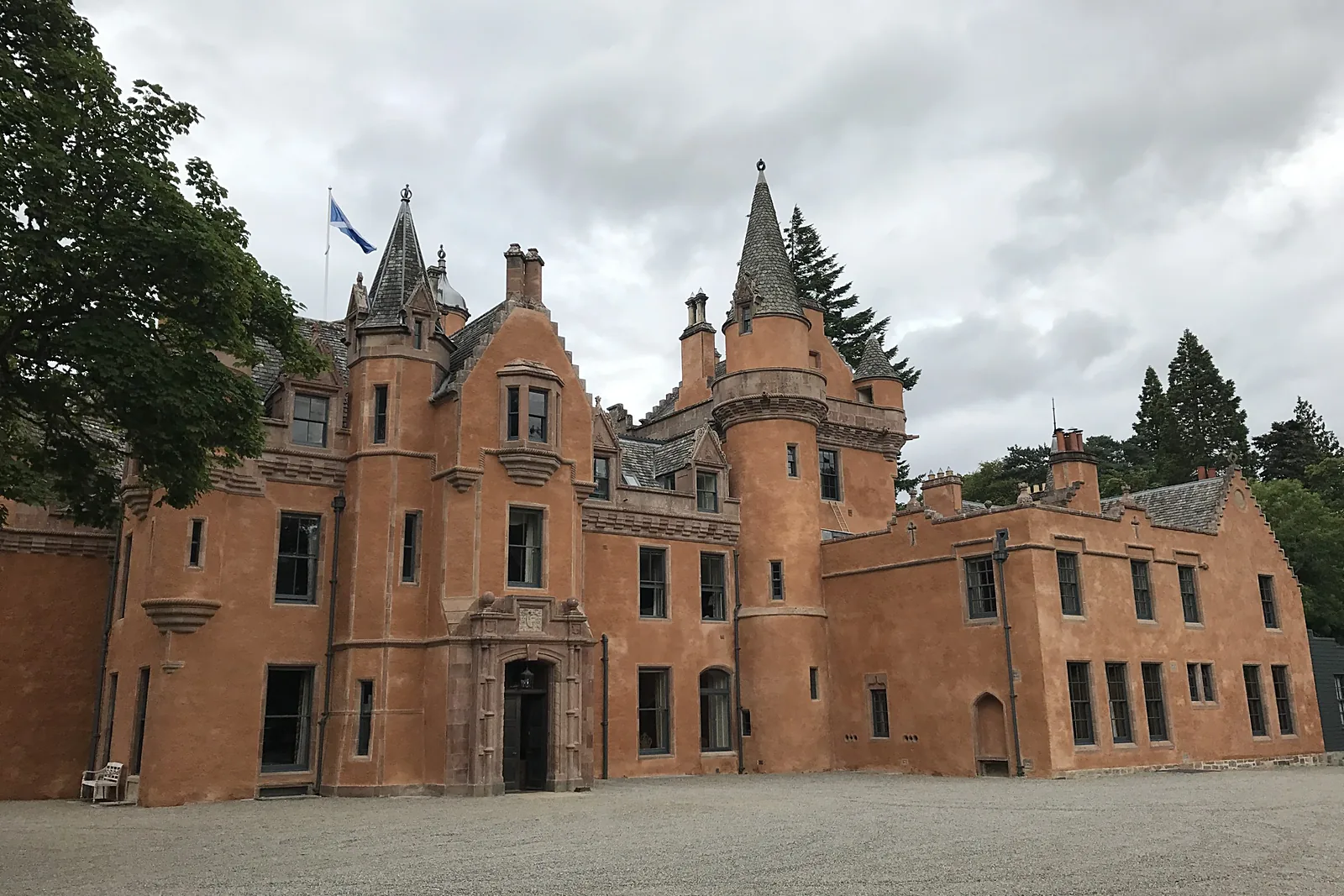
Aldourie Castle stands on the eastern shore of Loch Ness. First recorded as a laird's house in 1625, it was extended in the 1860s into a full Scottish baronial composition of turrets, corbelling and rope-moulded string courses, with further additions by Sir Robert Lorimer in 1902 to 1904. Now let for exclusive private hire, the castle was re-harled by us for Wildland Limited under Ptolemy Dean Architects, together with stone repairs, an overhaul of the roofs and new rainwater goods. The wider restoration of the Aldourie Castle Estate, of which our harling and masonry works to the castle formed part, went on to win an RIAS Award, the RIAS Timber Award and a RIBA National Award in 2025.
Before & after
Drag across the image to compare the building before our work and after completion.
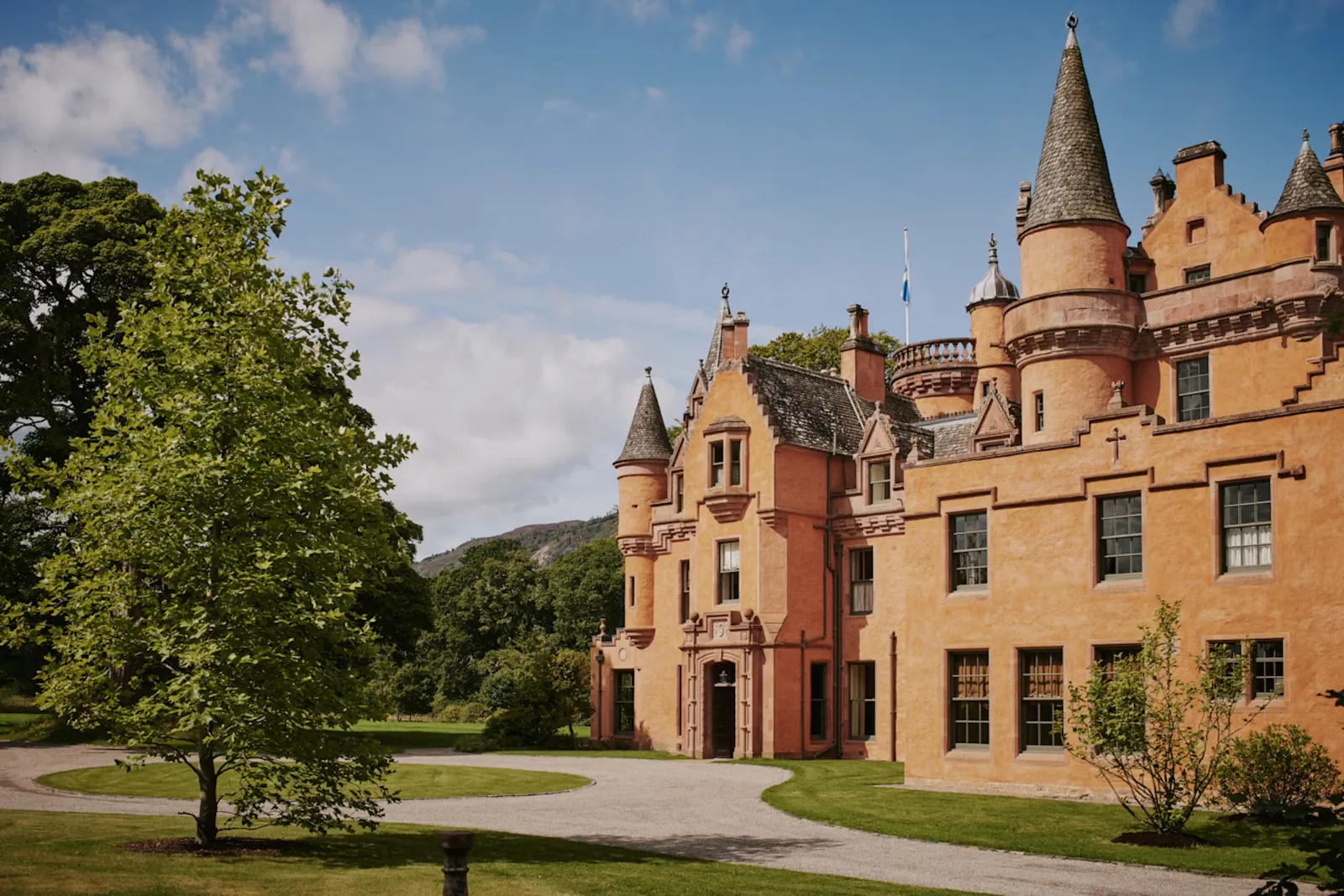
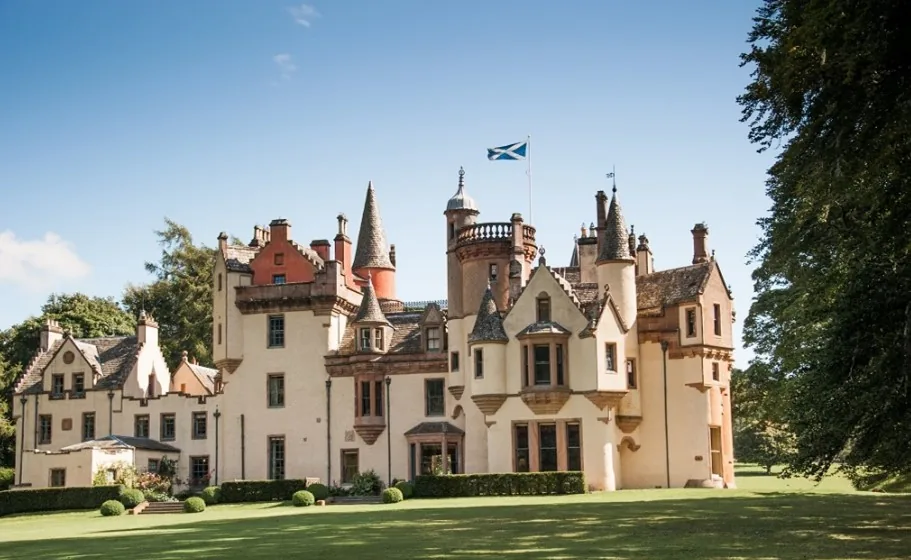 BeforeAfter
The challenge
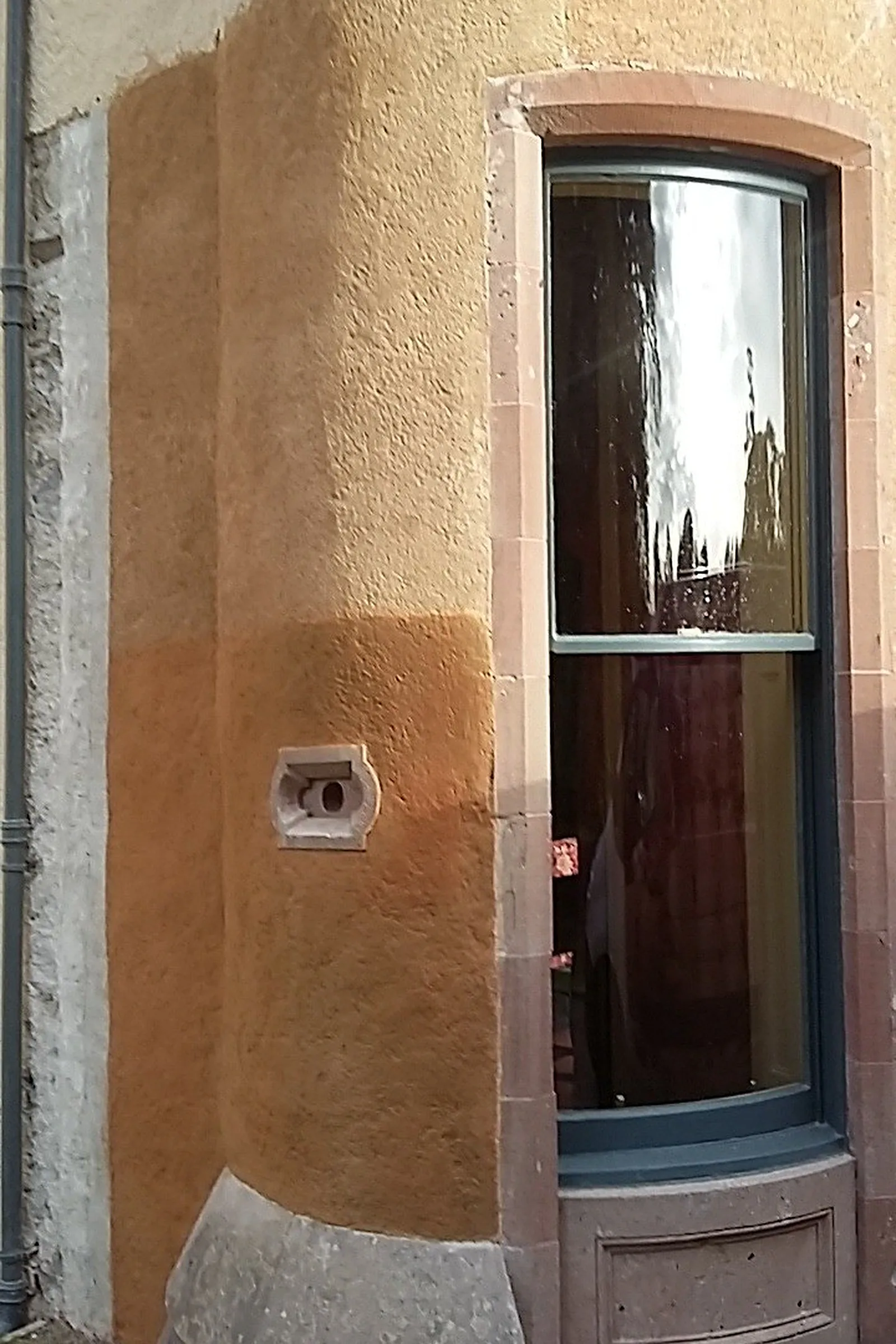
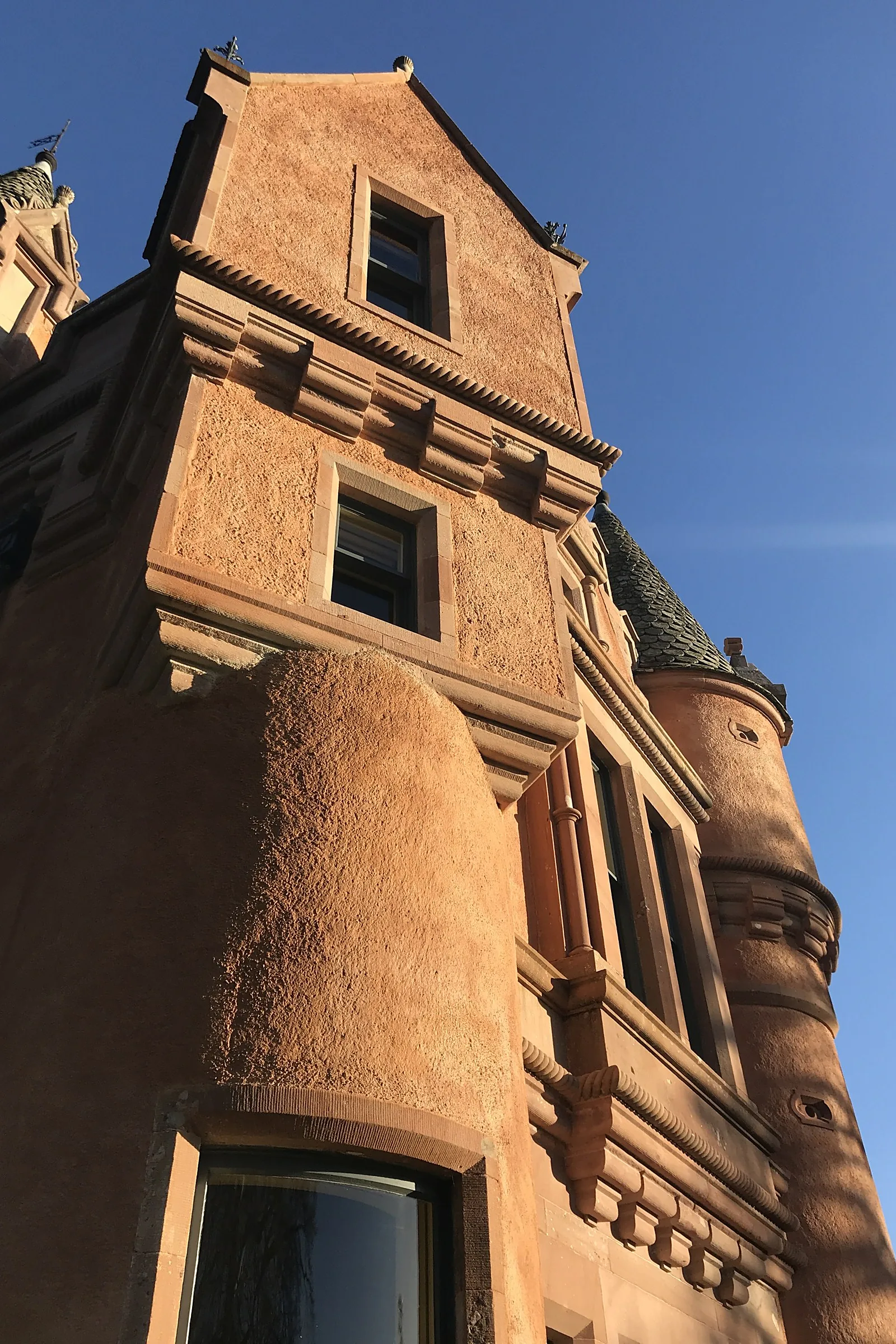
The work began with matching the last surviving areas of historic harl and limewash, so that the new finish would be true to the building rather than a modern approximation. Once on site, around 2,000 square metres of harling and the associated stone, roof and leadwork had to be completed in the 20 weeks the castle was closed to guests, from February to July 2017. A separate contractor was relandscaping the gardens at the same time, so scaffold had to be struck and areas handed back in sequence. The hardest technical demand was a deep, rusty Copperas colour held consistently across every elevation.
Our solution
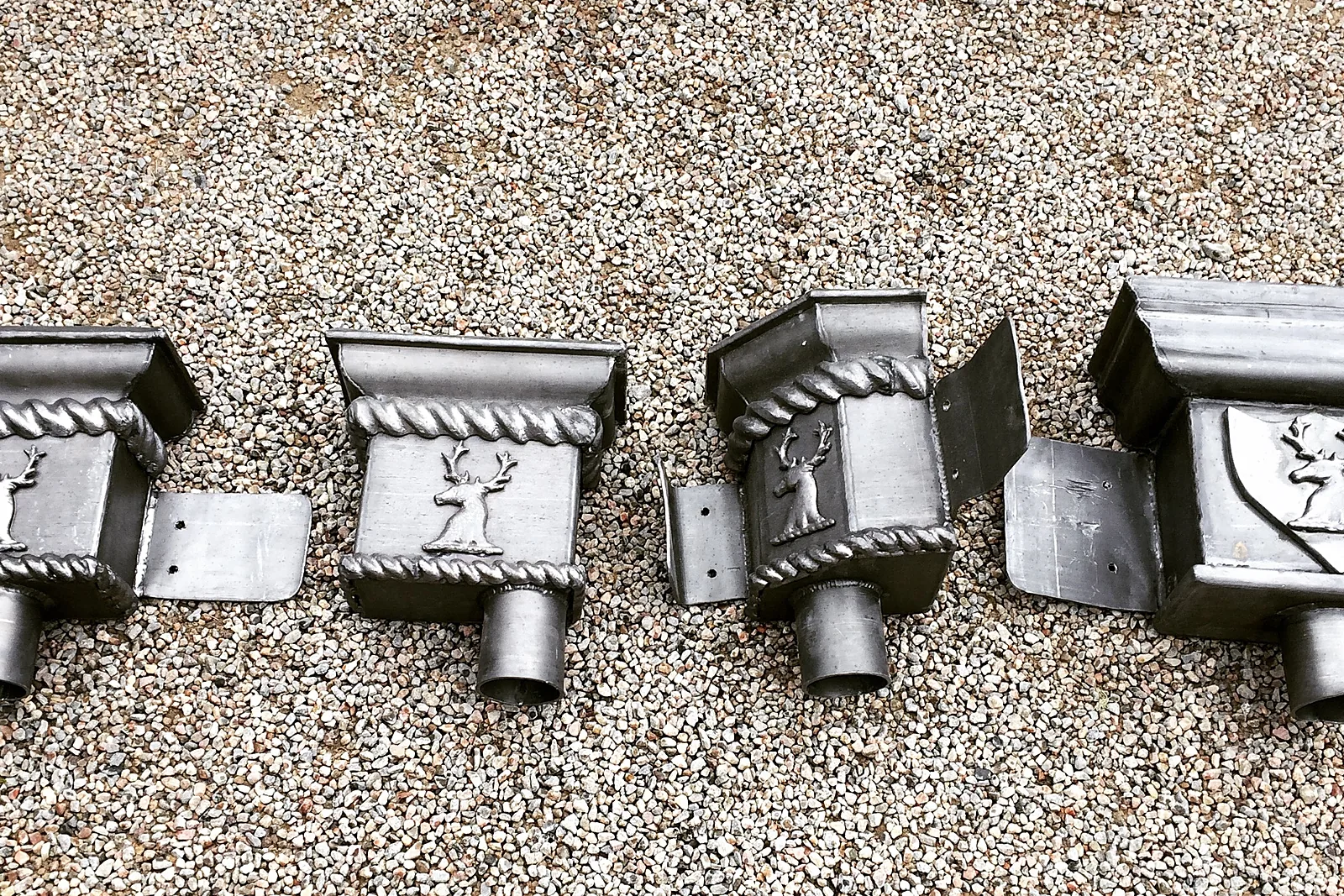
In late 2016 we prepared a series of trial panels on the castle, supported by mortar analysis and petrographic testing of the historic limewash, working with Construction Materials Consultancy. The trials settled on a gauged hot lime harl finished with a Copperas limewash. With the full elevations encapsulated in scaffold, an average of 12 masons, plasterers, slaters and leadworkers worked to a single programme. The harl was finished neatly around the dressed red sandstone margins, string courses and corbelling, which were conserved and repaired as the work progressed. Because Copperas alone could not give the depth of colour the client wanted, we slaked the quicklime in large steel vessels over burners and added the pigment during slaking, using the heat to draw the most colour from it. Each batch was then mixed in IBC tanks for consistency and applied in five coats, burnished and protected with hessian. Above, the slate and lead coverings were overhauled and every rainwater good renewed, including lead hoppers carrying the stag crest. Weekly reports and fortnightly site meetings with the architect and the client's representatives kept decisions moving.
Outcomes
Finished within the closure
All harling, stone, roof and rainwater work completed inside the 20 week window, so the castle reopened for the letting season.
Consistent Copperas colour
Pigment added during slaking and batch mixing gave an even, deep finish across every elevation.
A finish based on evidence
Trial panels, mortar analysis and petrographic testing matched the new harl and limewash to the surviving historic finish.
Part of an award-winning estate
The Aldourie Castle Estate restoration won an RIAS Award, the RIAS Timber Award and a RIBA National Award in 2025; LTM carried out the specialist masonry and hot lime harling to the castle as subcontractor.
Have a similar building?
Tell us about it and we’ll come back to you with how we’d approach it.
One of 1,000+ projects
More castles & towers
- Ballindalloch CastleCase study →
- Brodie Castle Roof Repairs 2026Case study →
- Coxton TowerCase study →
- Craigievar CastleCase study →
- Drum CastleCase study →
- Drum Castle, Old Tower (consultancy)Case study →
- Dunyvaig Castle, IslayCase study →
- Fairburn TowerCase study →
- Glamis Castle Dining Room CeilingCase study →
- Inverness CastleCase study →
- Inverness Castle North TowerCase study →
- Rosslyn CastleCase study →
Next project
Rodel House
Isle of Harris