Traditional slating and heritage roofing:
Traditional Slating
A good hat for the building, laid by our own slaters
A roof is the building's hat, and nothing we do to the walls below it lasts if the hat lets water in. Our teams of roofers work constantly on LTM projects and have a wealth of experience in the traditional roofing materials needed to make a building watertight and keep it that way: Scotch slate laid in diminishing courses, stone slate, salvaged slate matched to the original, lime-bedded ridges and skews. Because our slaters are our own, and work on the same scaffold as our leadworkers, joiners and masons, the whole roof comes from one team, from the sarking and the chimney heads to the last course at the eaves, with nobody to wait for and no detail lost between trades.
Scotch slating
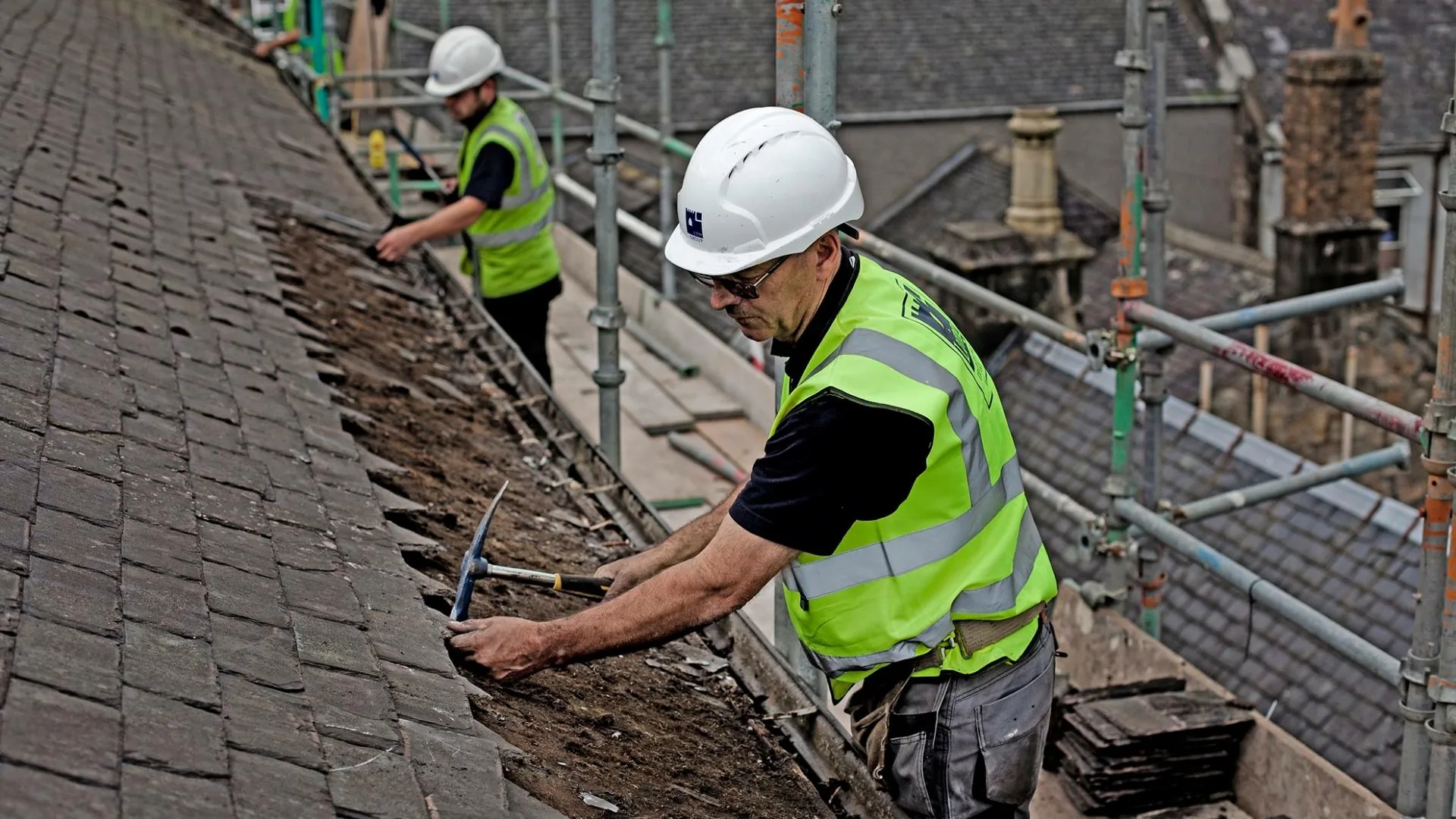
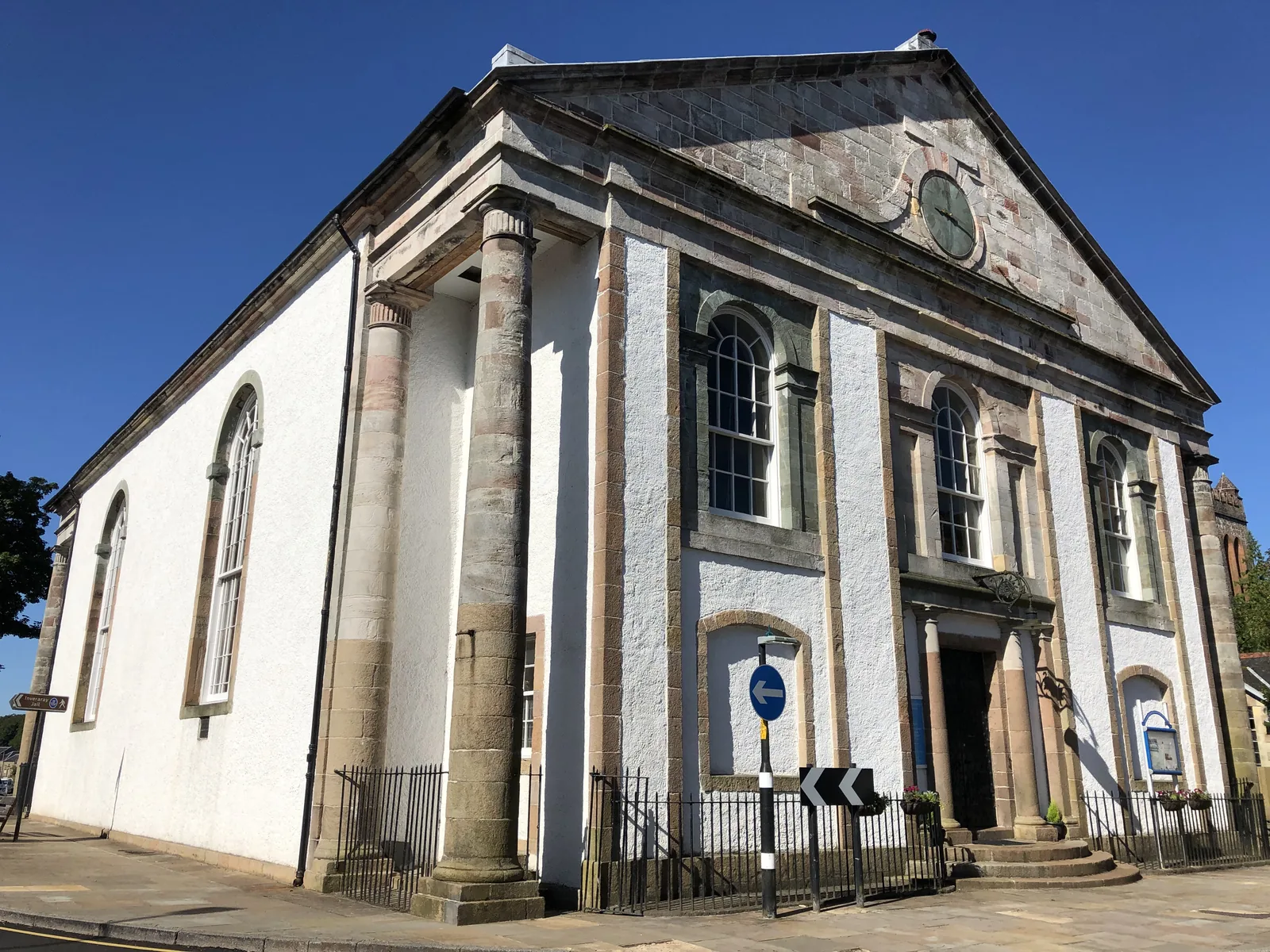
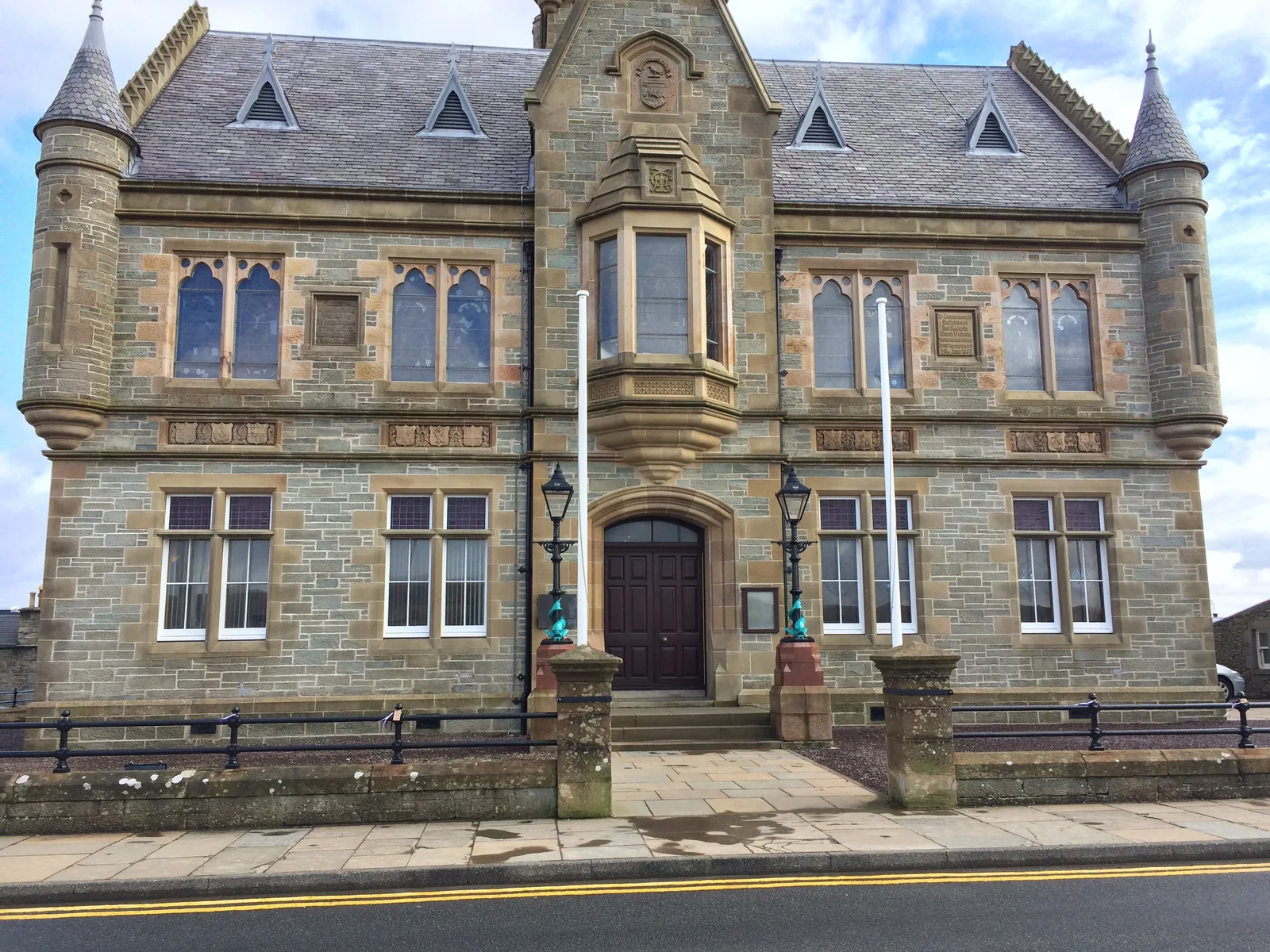
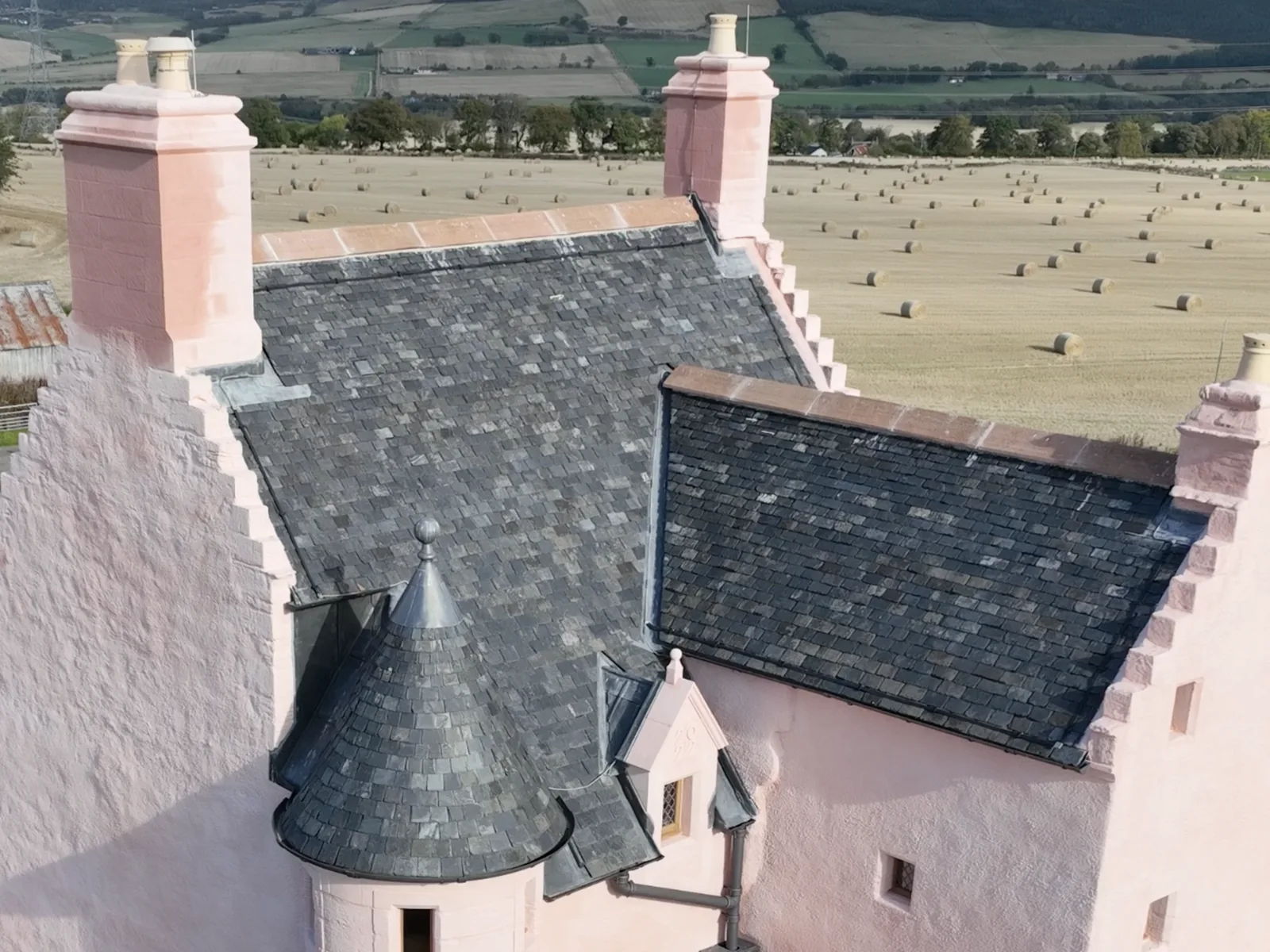
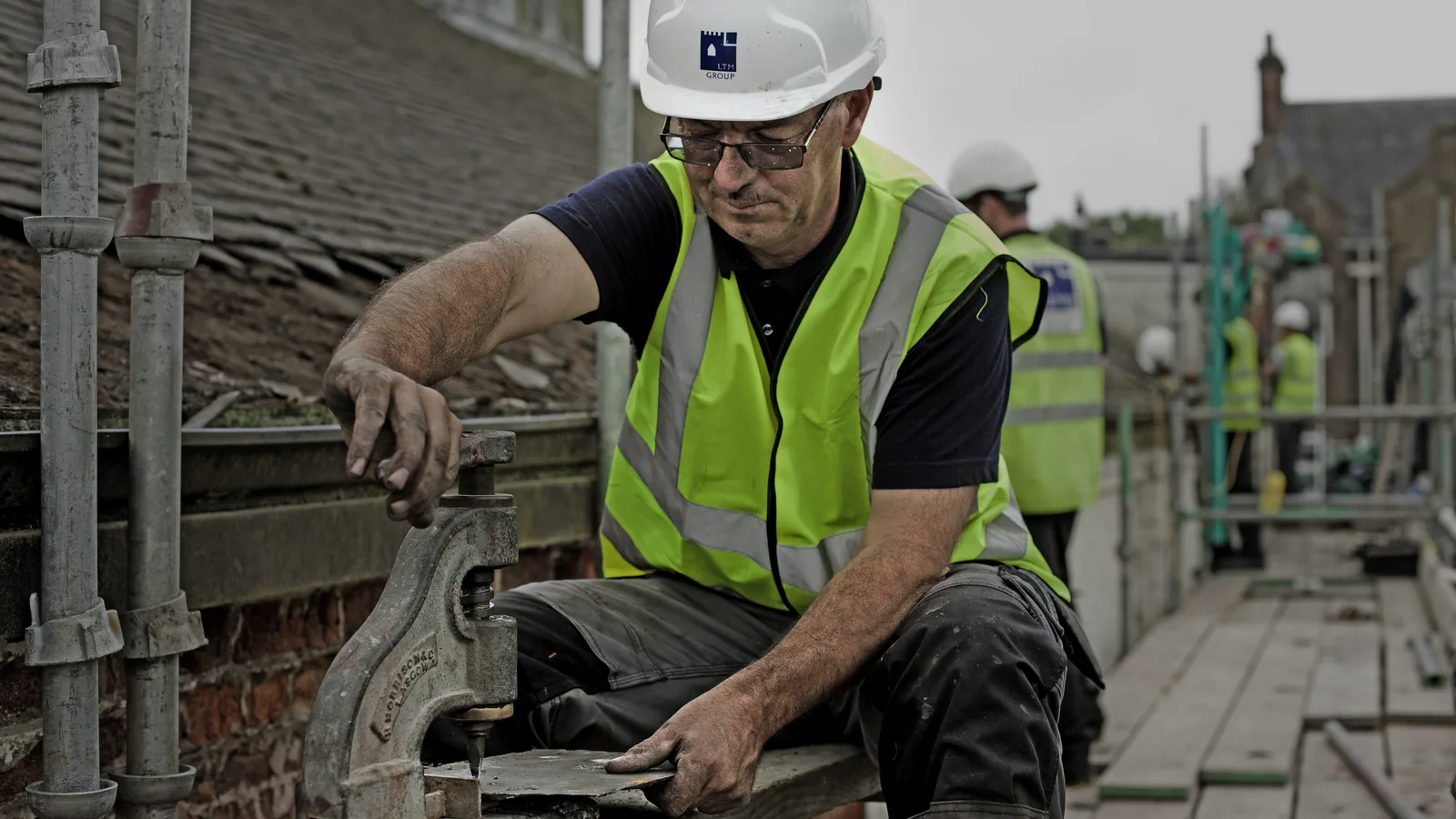
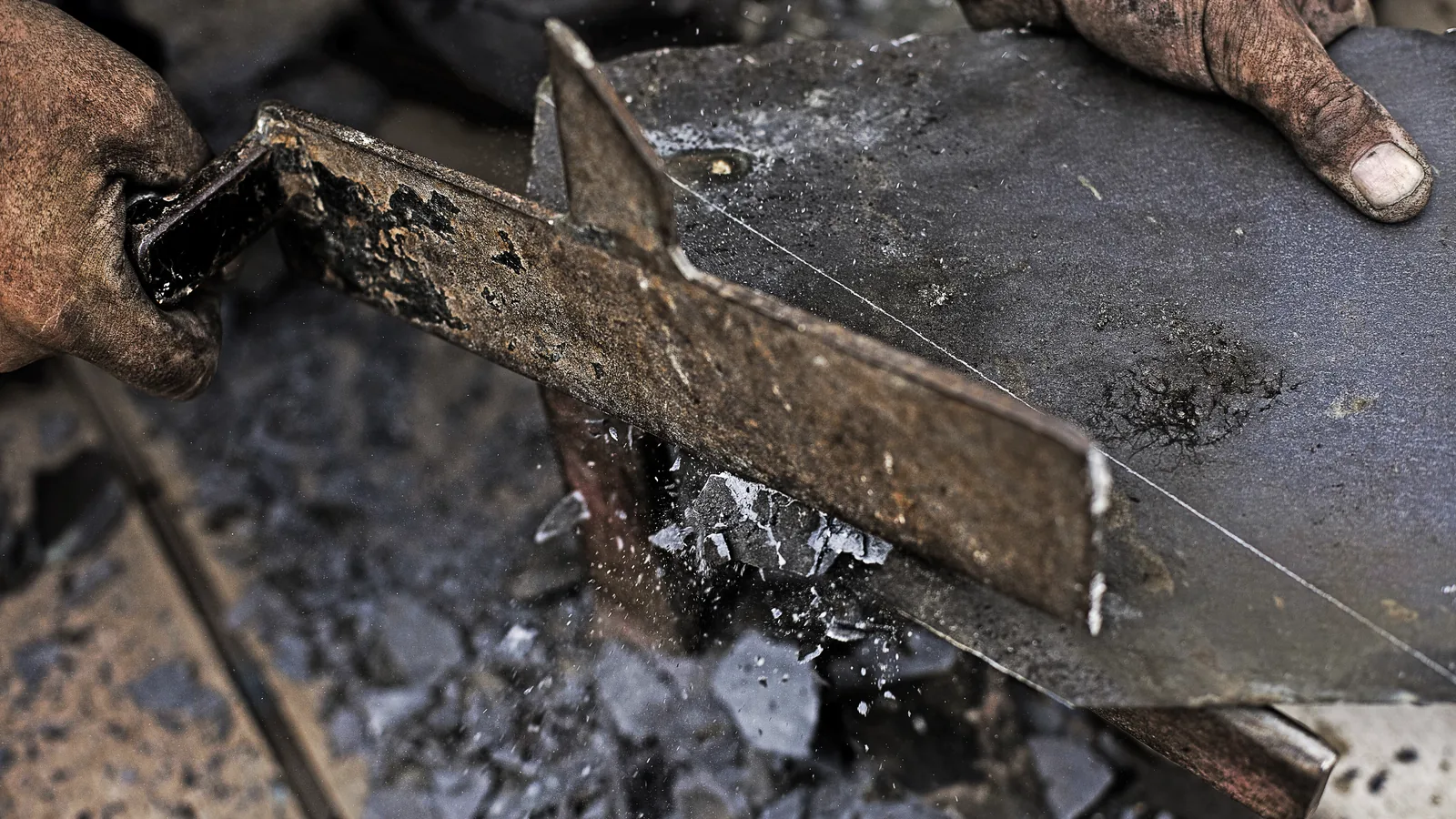
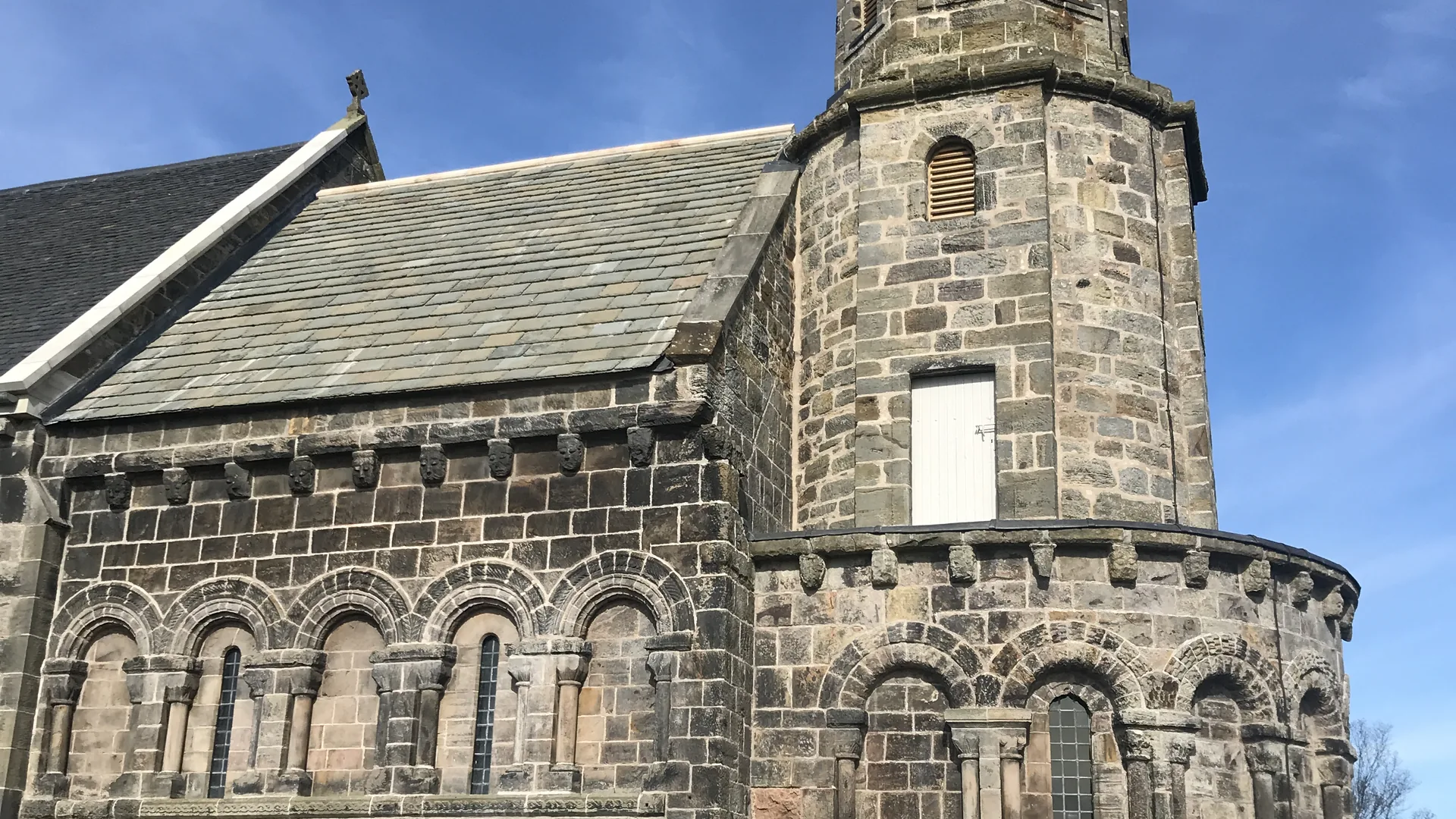
Scottish slate roofs were laid from random-width slates sorted into diminishing courses, the largest at the eaves and the smallest at the ridge, each slate single nailed through the sarking with a copper nail and the courses shouldered so that no joint sits over another. That is how we lay them. Where the original slate survives it is stripped, sorted, holed and re-dressed on the scaffold and relaid with the shortfall made up in matching salvage, as at Kirkmichael, where salvage Easdale slate was sourced, resized and intermixed with the original so the diminishing coursing could be kept, with cheek nailing every sixth course and T-nails made specially for the job. Where the roof is nail sick but the slate is sound, the slate goes back on; where it has gone, we source the nearest match in Scotch, Welsh or Cumbrian slate and lay it to the same gauge. The nave of St Athernase Church, the roofs of Inveraray Parish Church, Lerwick Town Hall and Forres Town Hall and the church and schoolroom on St Kilda have all been re-slated this way.
Stone slate and the awkward roofs
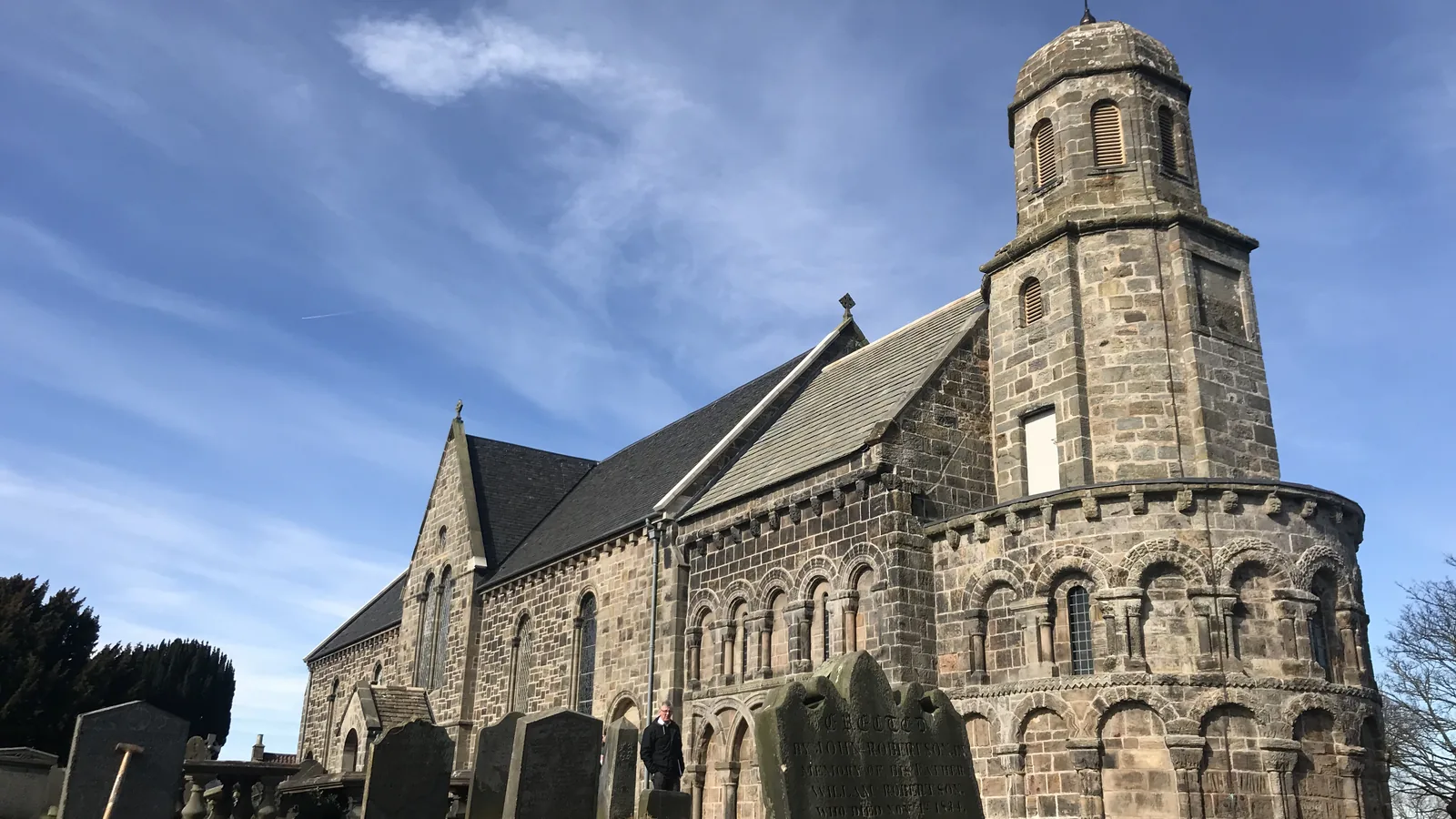
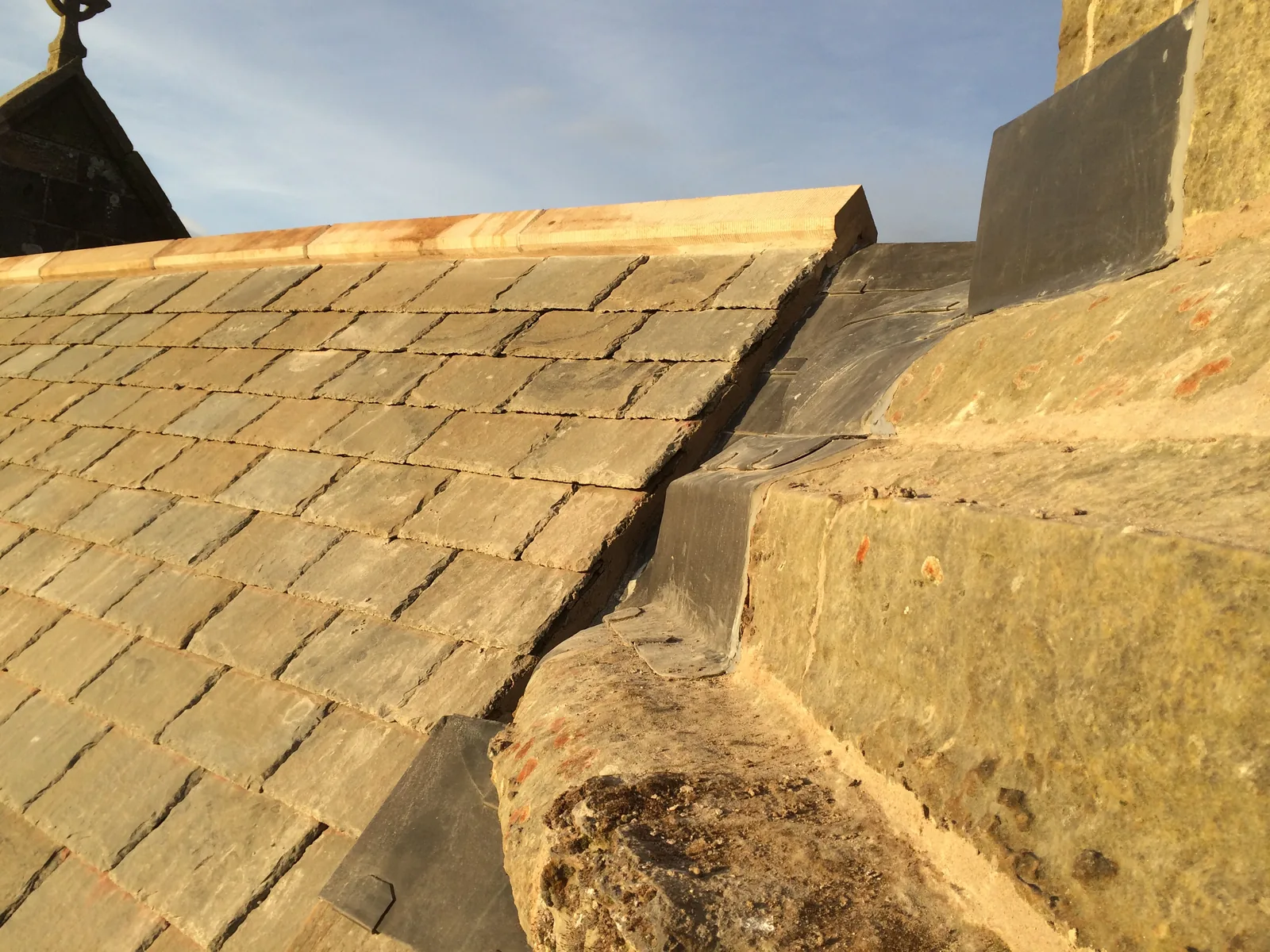
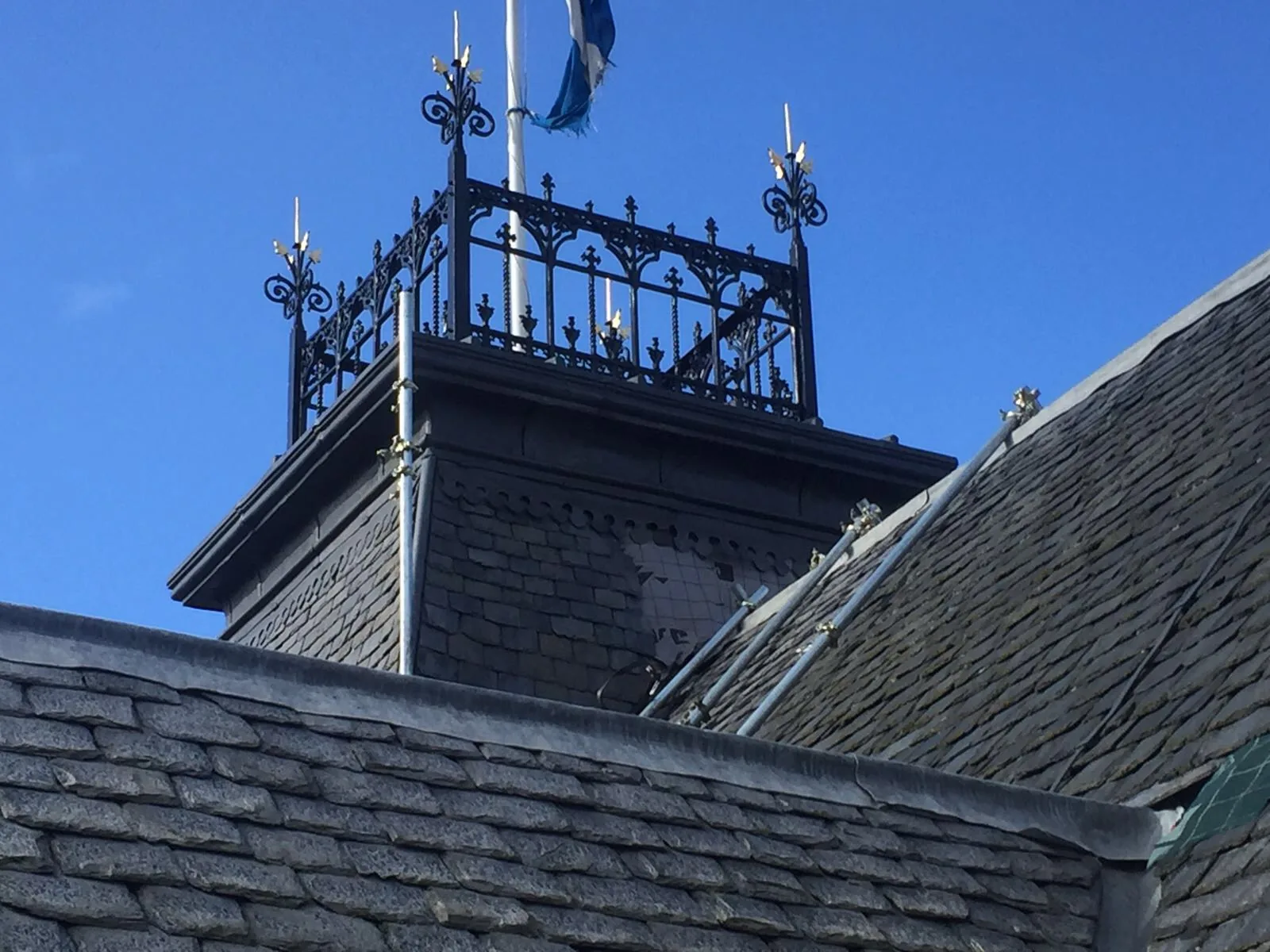
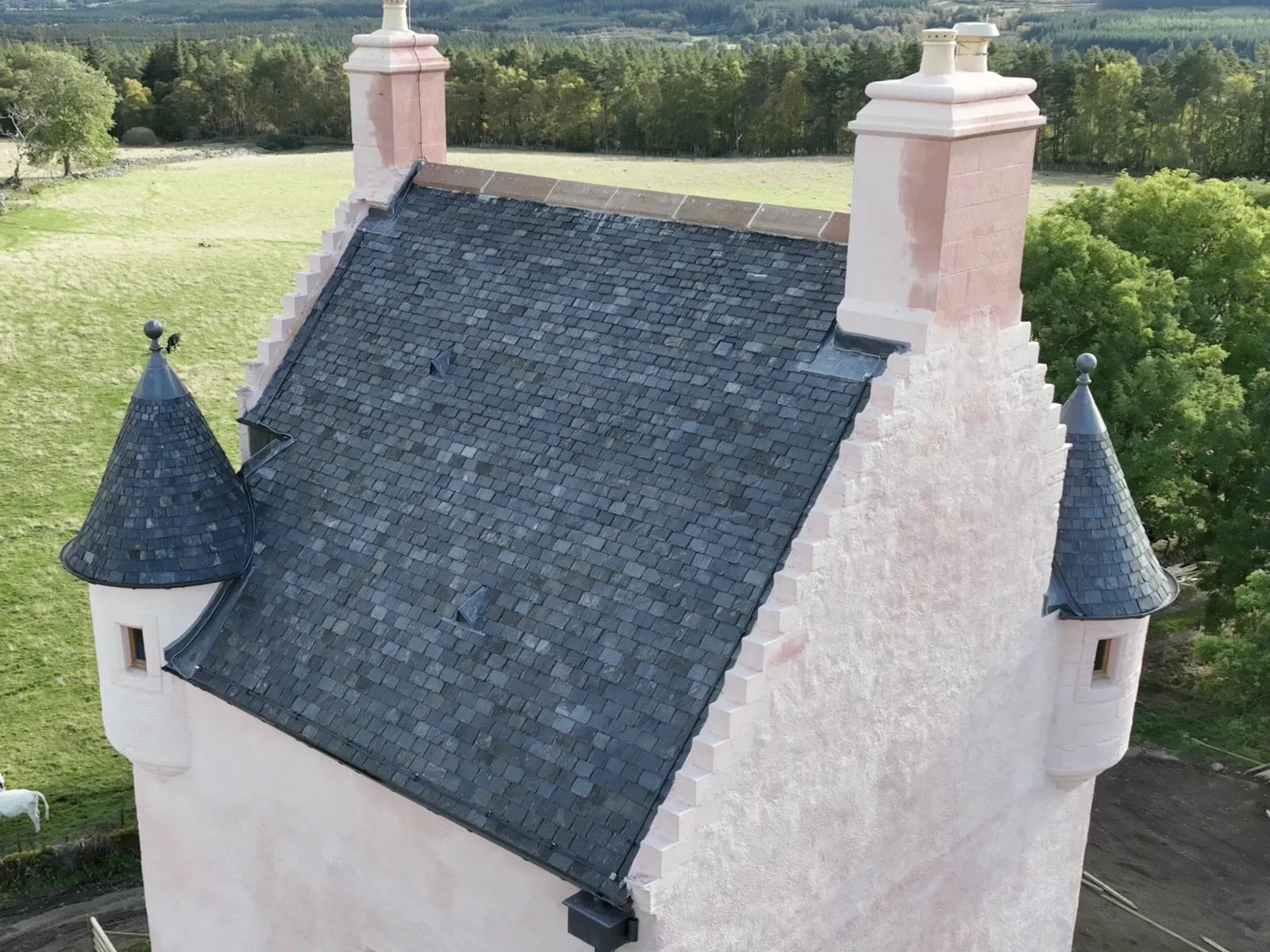
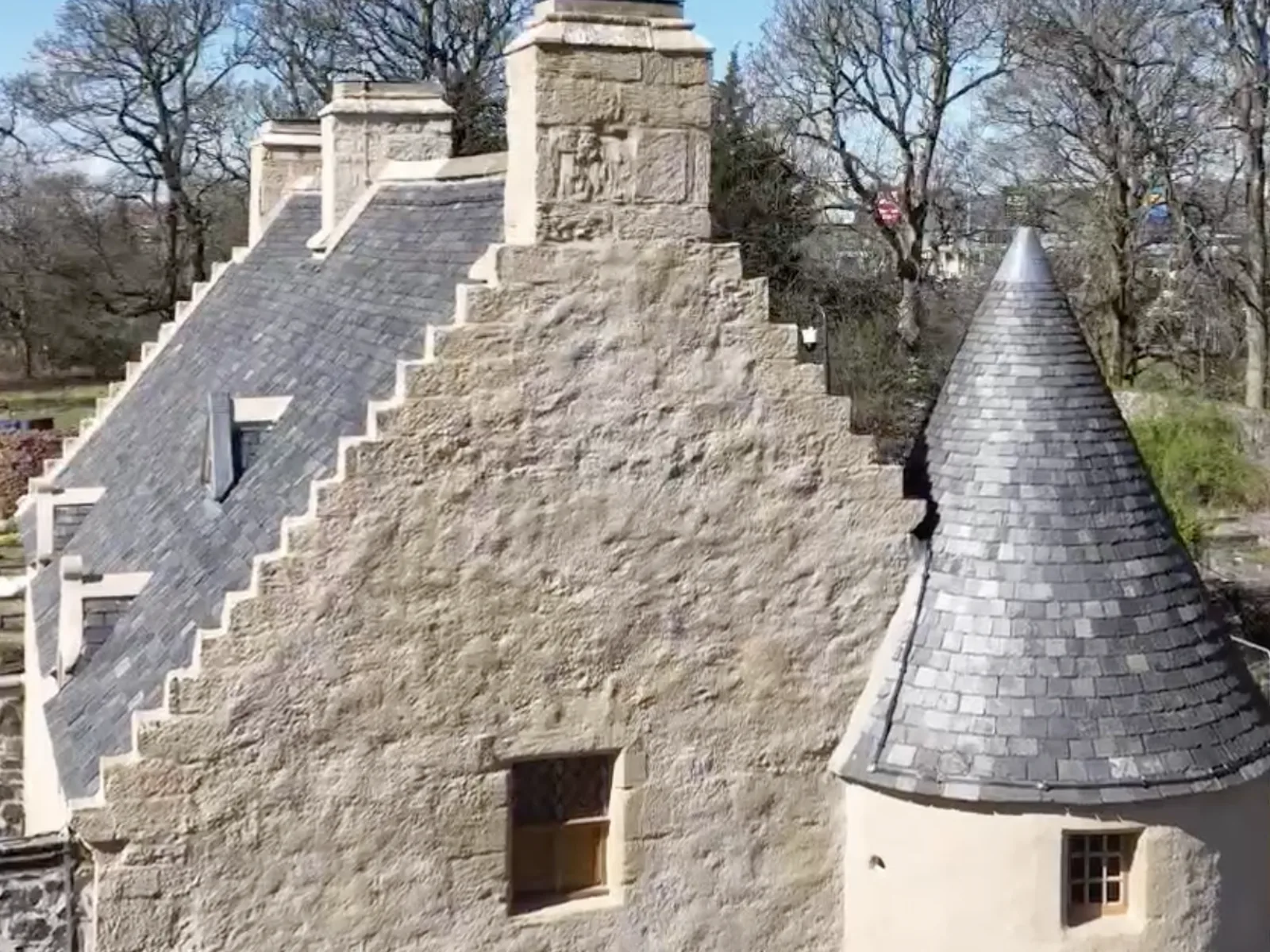
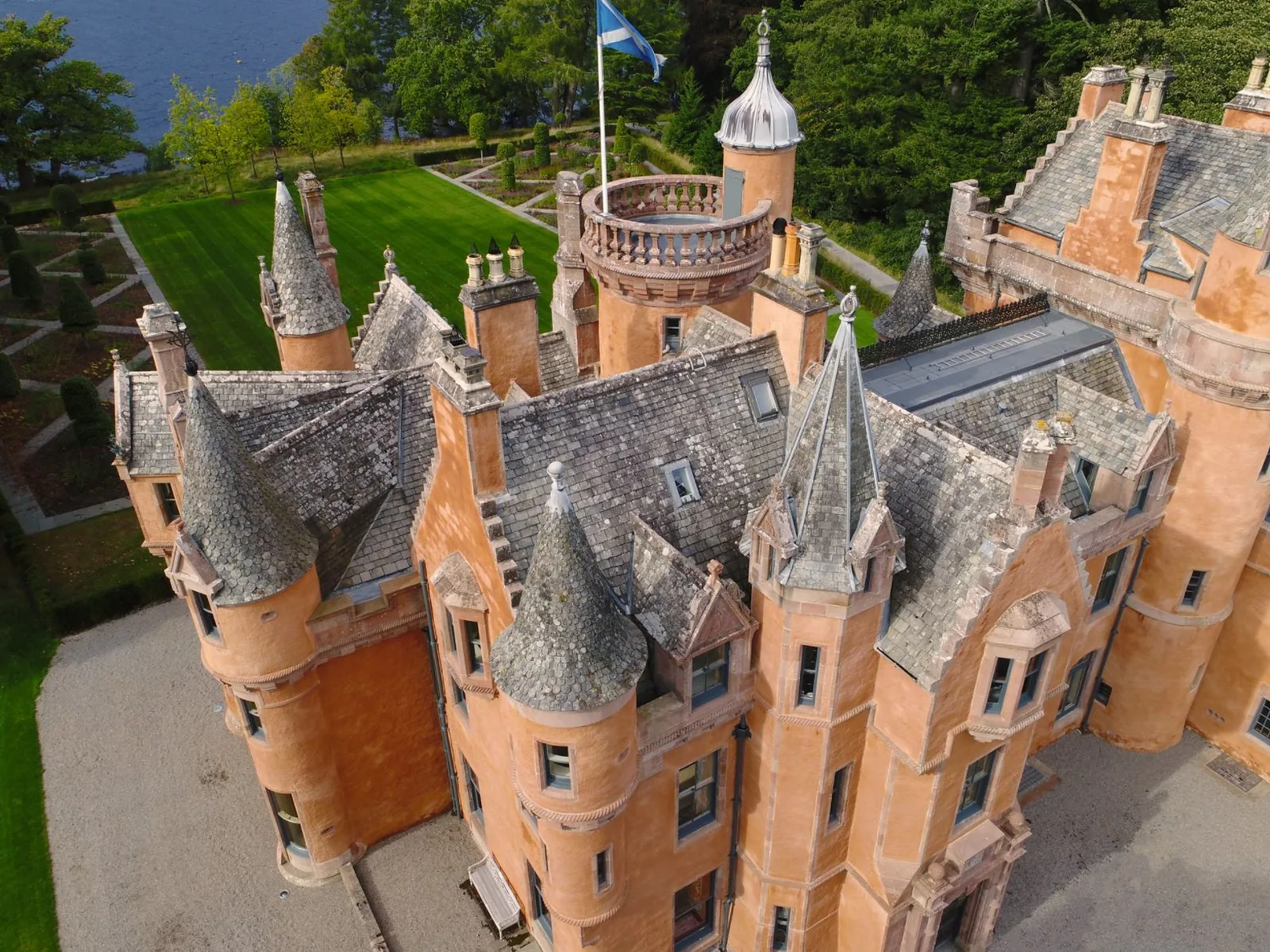
Not every roof is slate. The chancel of St Athernase Church was covered in thick Carmyllie stone slabs that had been re-bedded in cement and were too soft to save; with no new Carmyllie to be had, Denfind stone from the Pitairlie Quarry was cut, dressed and pre-holed to the original diminishing sizes, nailed with copper and bedded on a feebly hydraulic lime so the slabs could not rock, and finished with new Clashach sandstone ridges on a hydraulic lime bed. Turrets, spires, ogee roofs and the cheeks of dormers are slated in the same hand-sorted way, cut to the curve and swept round the cone, as on the fleche of Inverness Town House and the tower-house turrets we have re-roofed.
One roof, one team
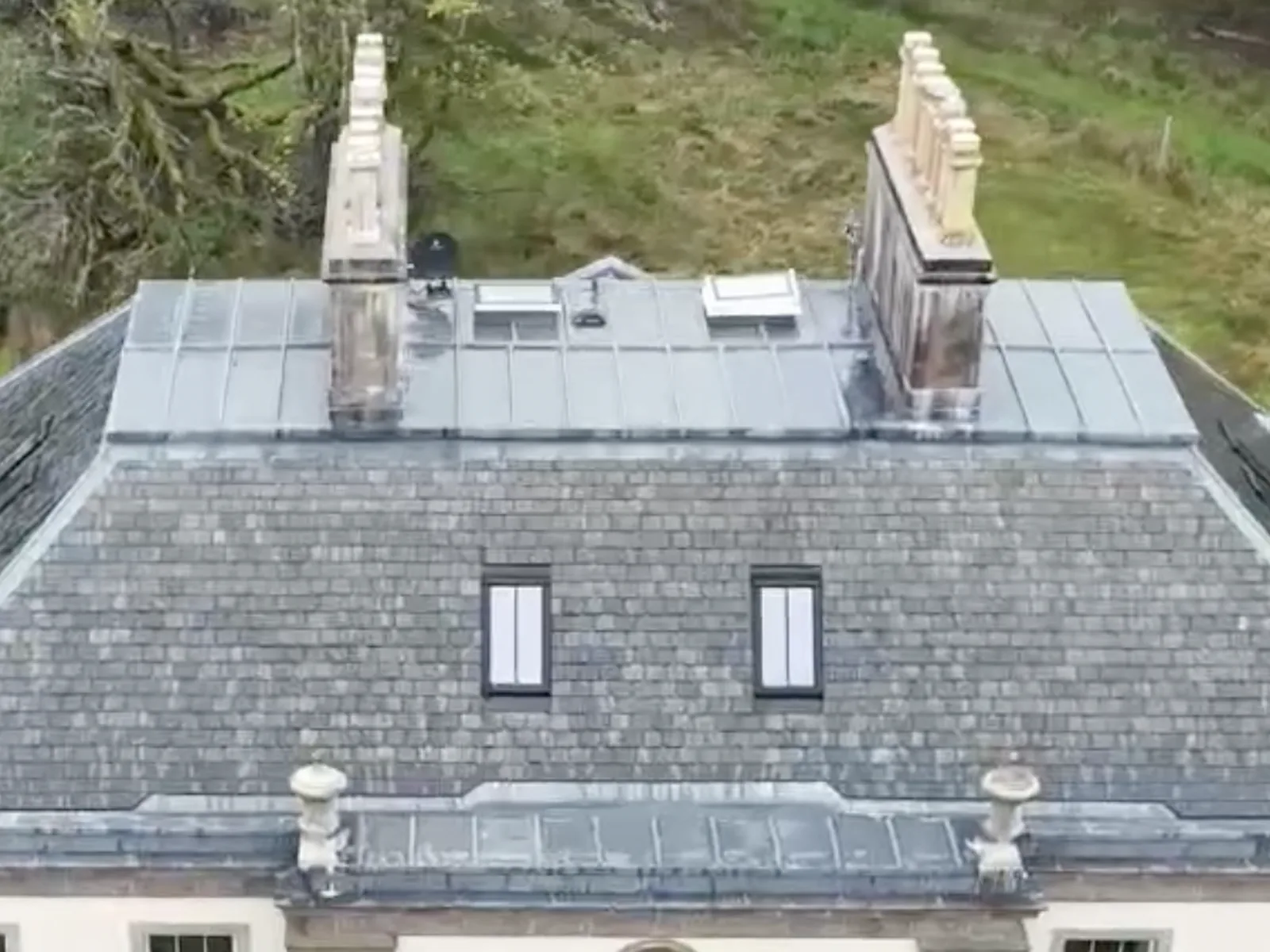
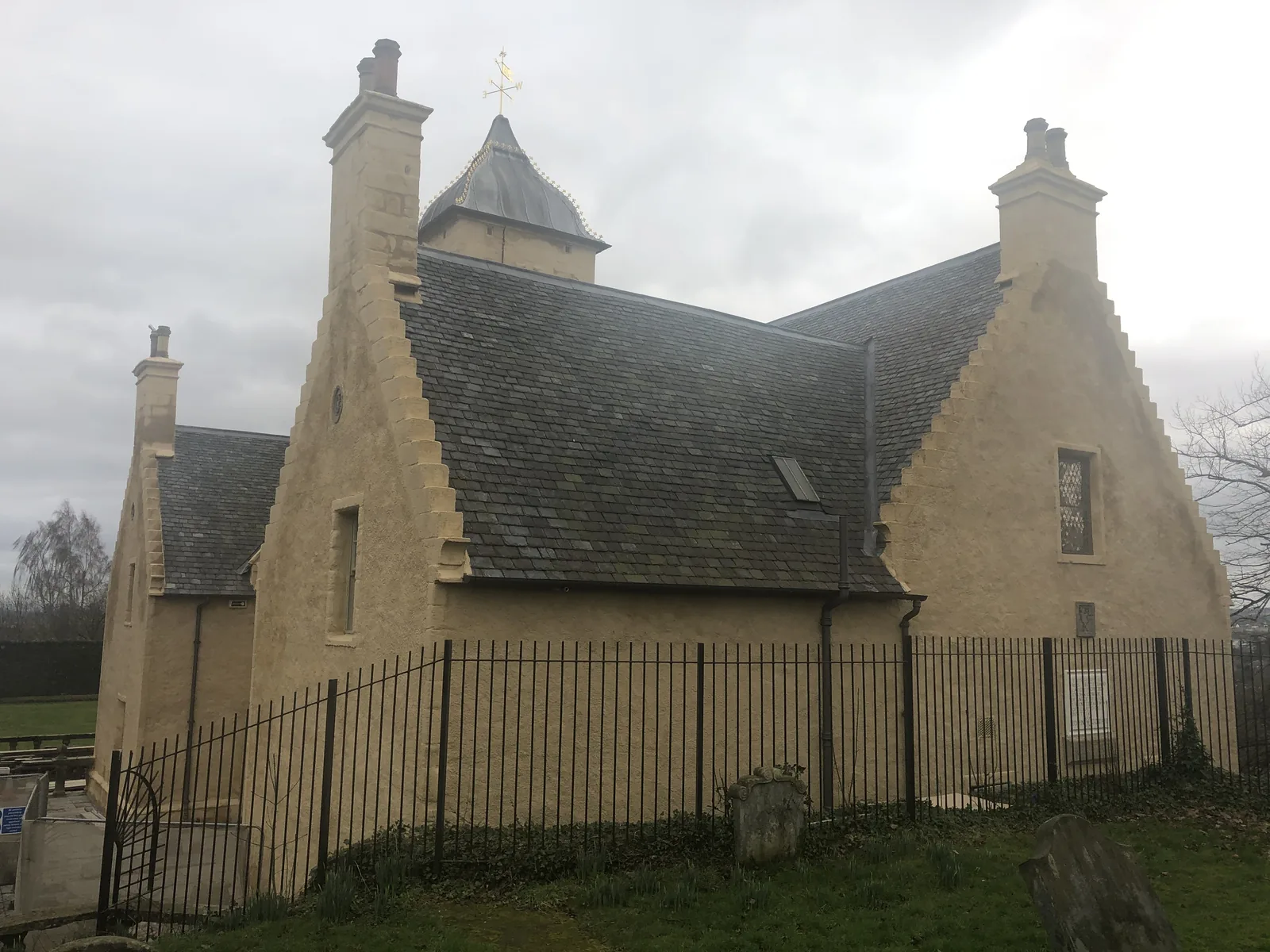
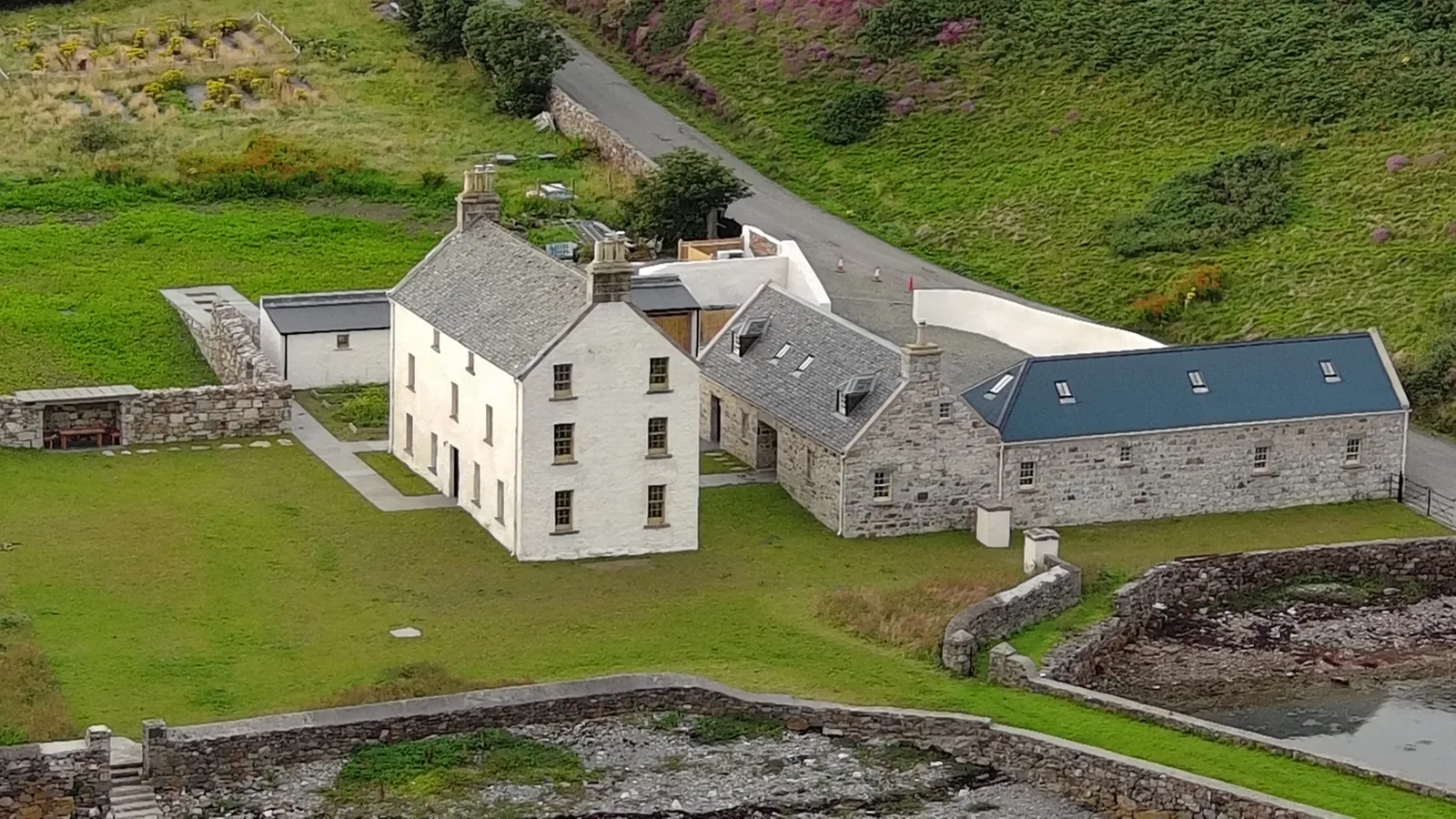
Most of what goes wrong on an old roof goes wrong at the edges: a skew, a chimney, a valley, a gutter behind a parapet. Our slaters work alongside our leadworkers, who make the soakers, secret gutters and flashings, our joiners, who repair or renew the sarking and the roof timbers, and our masons, who rebuild chimney heads, copes and skew stones in lime. On a full roof replacement that means the strip, the timber repairs, the slating, the leadwork and the rainwater goods are programmed and carried out by one contractor, as they were at Inverness Town House, Lerwick Town Hall, Aberdeen Central Library, Dunlossit House on Islay, 30 Princes Street in Thurso, Alloa, Slamannan, Inveraray and Kirkmichael churches, Coldstone House and Asknish House.
Repair first, replace only where needed
A nail-sick roof does not always need stripping. We survey first, by hand and with our drones, find where the water is actually getting in, and tell owners what can be patched, what should be re-slated and what can wait. At Forres Town Hall the first phase took four slated roofs in turn, with new lead gutters, slating, copes and cast iron rainwater goods; at Inverness Castle the slating was repaired during the building's conversion; on Hirta the 1827 church and 1898 schoolroom were re-slated with their leadwork and rainwater goods renewed. The aim is always the same: a roof that is watertight, breathable and recognisably the roof the building was built with.
What it means for your building
The right slate, laid the right way
Scotch, Welsh, Cumbrian or stone slate matched to the original and laid in diminishing courses with copper nails, so the roof looks and performs as it was built to.
Watertight at the details
Skews, valleys, chimneys and gutters detailed by slaters and leadworkers who work together every week, not by two subcontractors meeting on your roof.
One contractor for the whole roof
Sarking, timber repairs, slating, leadwork, chimney heads and rainwater goods from one team, programmed as one job.
A roof that is nail sick?
Send us photographs, or ask for a drone survey, and we will tell you what can be repaired, what should be re-slated and what it will take to give the building a good hat again.
Slating on site
Roofing case studies
- Forres Town HallCase study →
- St Athernase Church, LeucharsCase study →
- Inveraray Parish ChurchCase study →
- Lerwick Town HallCase study →
- Inverness Town HouseCase study →
- Inverness CastleCase study →
- St Kilda Church and SchoolroomCase study →
- Clackmannan Town HallCase study →
- Cowane's Hospital, StirlingCase study →
- Balgray HouseCase study →
- Cultarlann Inbhir NisCase study →
- Smith Art Gallery and MuseumCase study →
Next service
Traditional Leadwork
Sheet, decorative and cast leadwork