Stone conservators:
Stone Conservation
Preserving stone heritage, with our own in-house conservators
Our stone conservators are dedicated to the careful preservation and restoration of stone elements. Using approved methods and materials, we clean, repair and conserve stone structures, ensuring their longevity and historical integrity. They are our own people, employed in-house, and that matters most for the stone that cannot be replaced: a seventeenth-century coat of arms, a founder's date stone, a carved crest or an inscription on a monument is the building's own record of itself, and once it is cut out and copied the original is gone. Because our conservators work within LTM's masonry teams, conservation is never a separate contract bolted on to the job. The conservator, the mason and the carver stand on the same scaffold and decide together what is kept, what is consolidated, what is pinned back and what, only as a last resort, is renewed.
Survey first, then a report you can act on
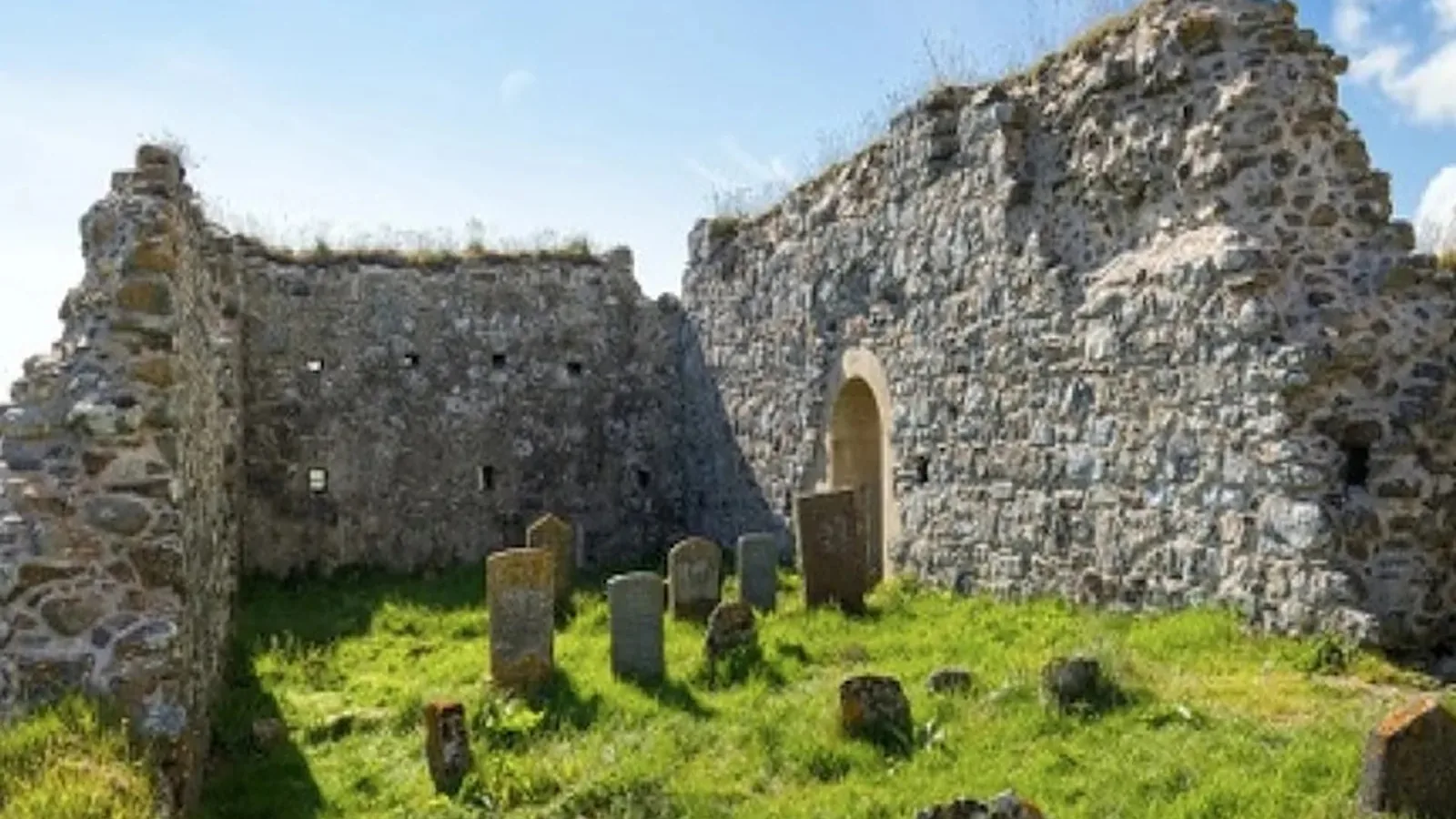
Every conservation job starts with looking. Our conservators record the stone, identify what it is made of and what is attacking it, salts carried up from the ground, water trapped behind a delaminating face, ferrous fixings rusting and bursting the stone, lichen eating into an inscription, cement repairs holding water against soft sandstone, and set it down with a priority and a method for each repair. At Craiglockhart Parish Church in Edinburgh our conservator surveyed the tower stone by stone once the scaffold was up and marked every repair on the architect's elevations, so each stone could be agreed as replace, indent or conserve. At Teampull na Trionaid on North Uist every inscribed gravestone round the ruined church was recorded in the same way. The survey then becomes the method statement for the work, and a record for whoever looks after the stone next.
Consolidation: keeping what is there
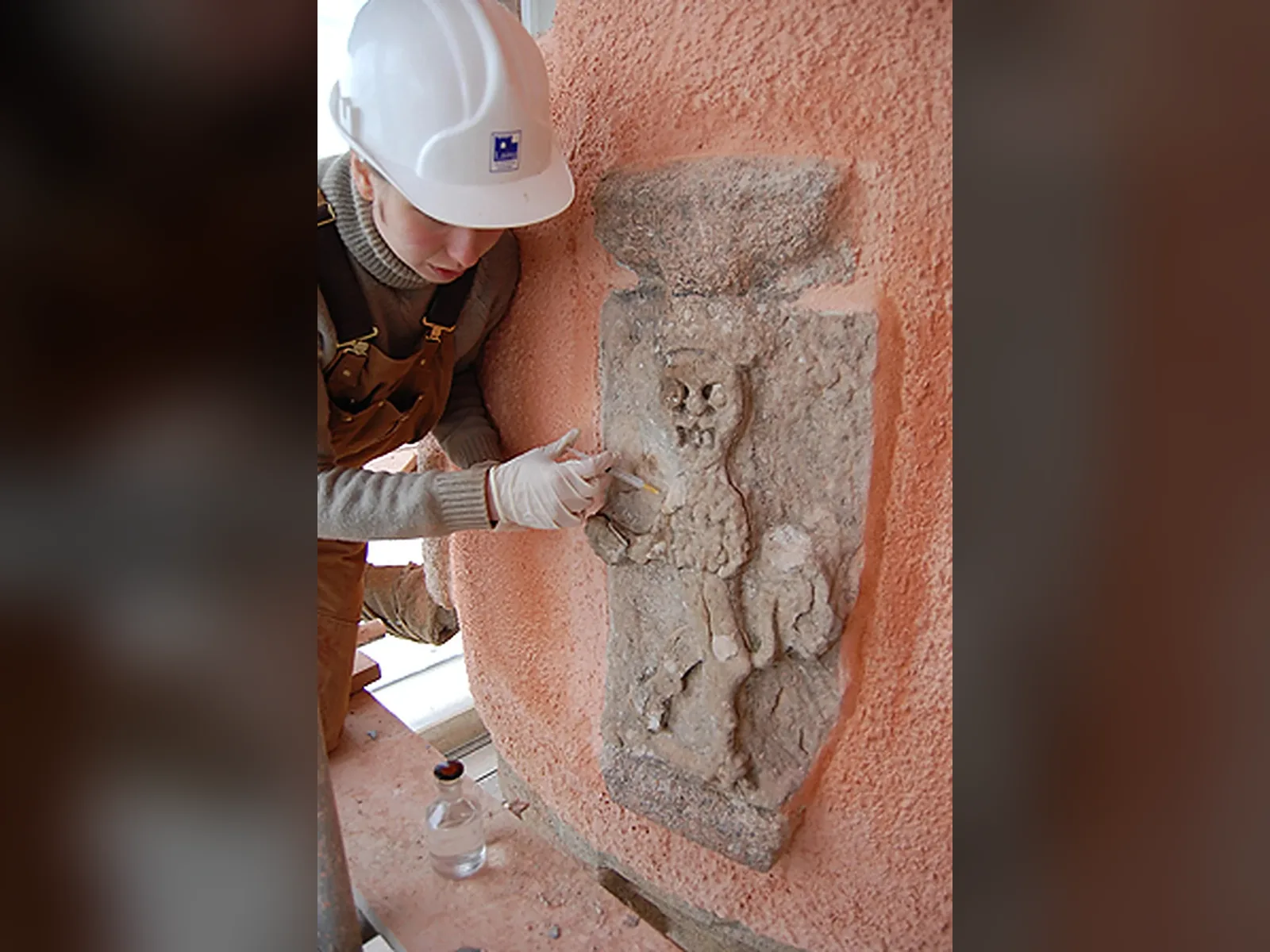
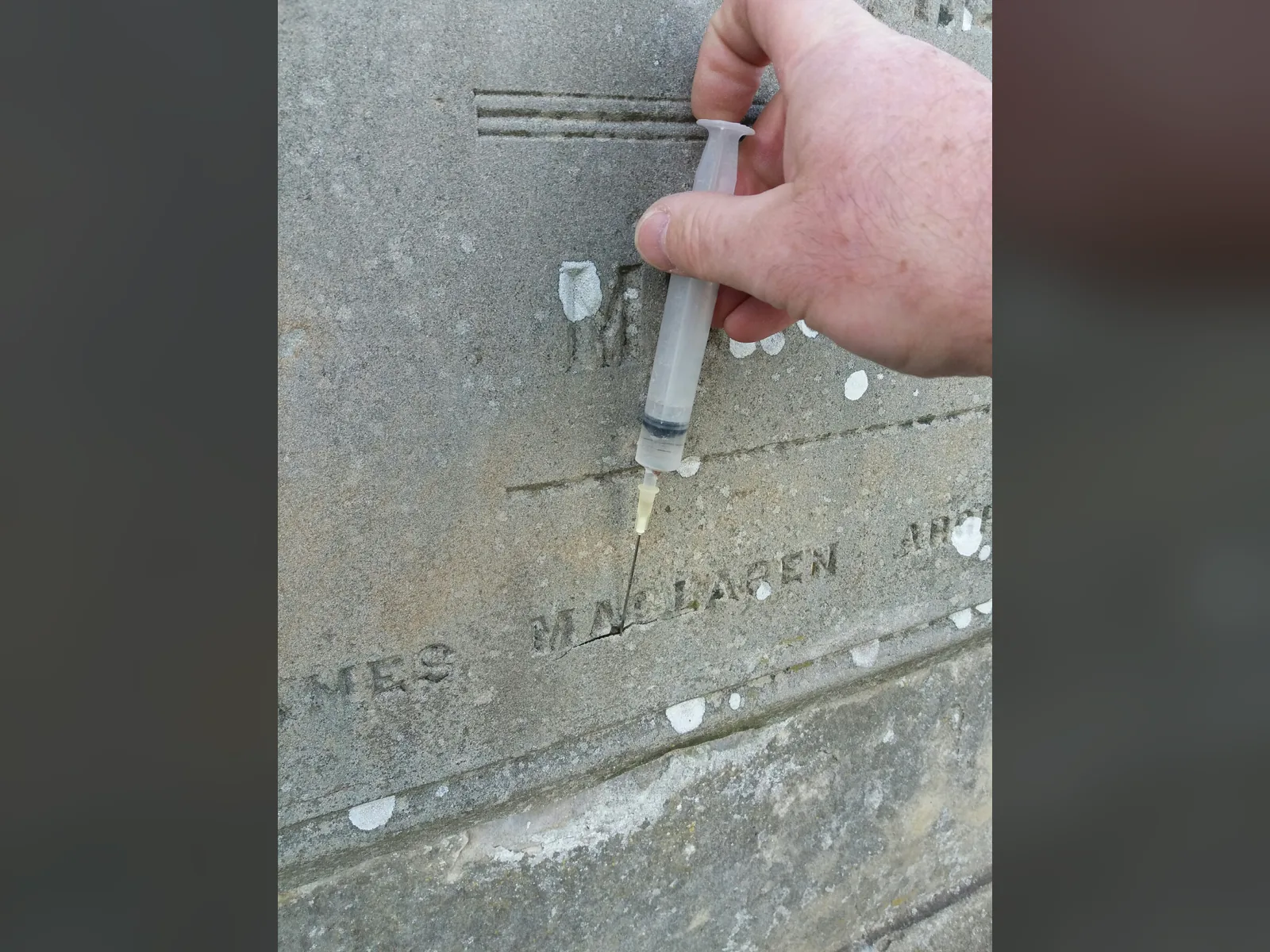
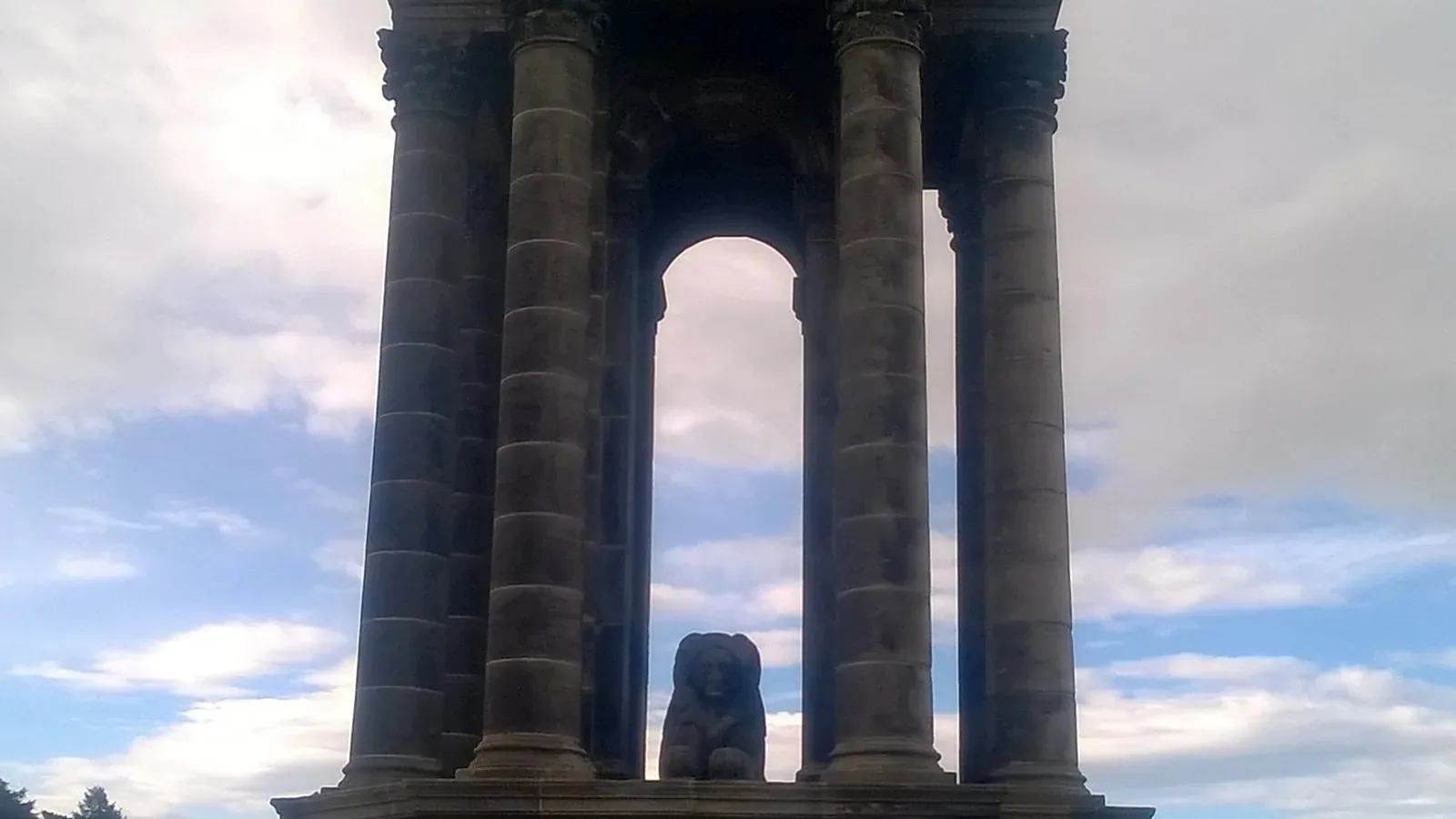
Conserving a stone means stabilising it where it stands, not replacing it. Delaminating faces and open fissures are cleaned out, secured and consolidated by injecting a solution of Paraloid B72 through fine needles until the loose layers are bound back to the body of the stone; hollow areas behind the face are found by sounding, reached through small drilled holes and filled the same way, and the open edges sealed with a pigmented lime or Paraloid and sand mortar so water can no longer get behind the surface. Where salts are forcing the layers apart, the stone is desalinated with repeated poultices first. On the Sir Robert Peel Monument in Forfar the carved inscription panel, cut with its grain running vertically and delaminating across its whole face, was consolidated in place this way and the repairs toned in; the medieval grave slab at Cromarty East Church, carved with two swords and a floriated cross and so far gone that it sounded hollow across most of its face, was taken through pre-consolidation, cleaning, desalination, consolidation and edge sealing.
Repairing carving and lettering
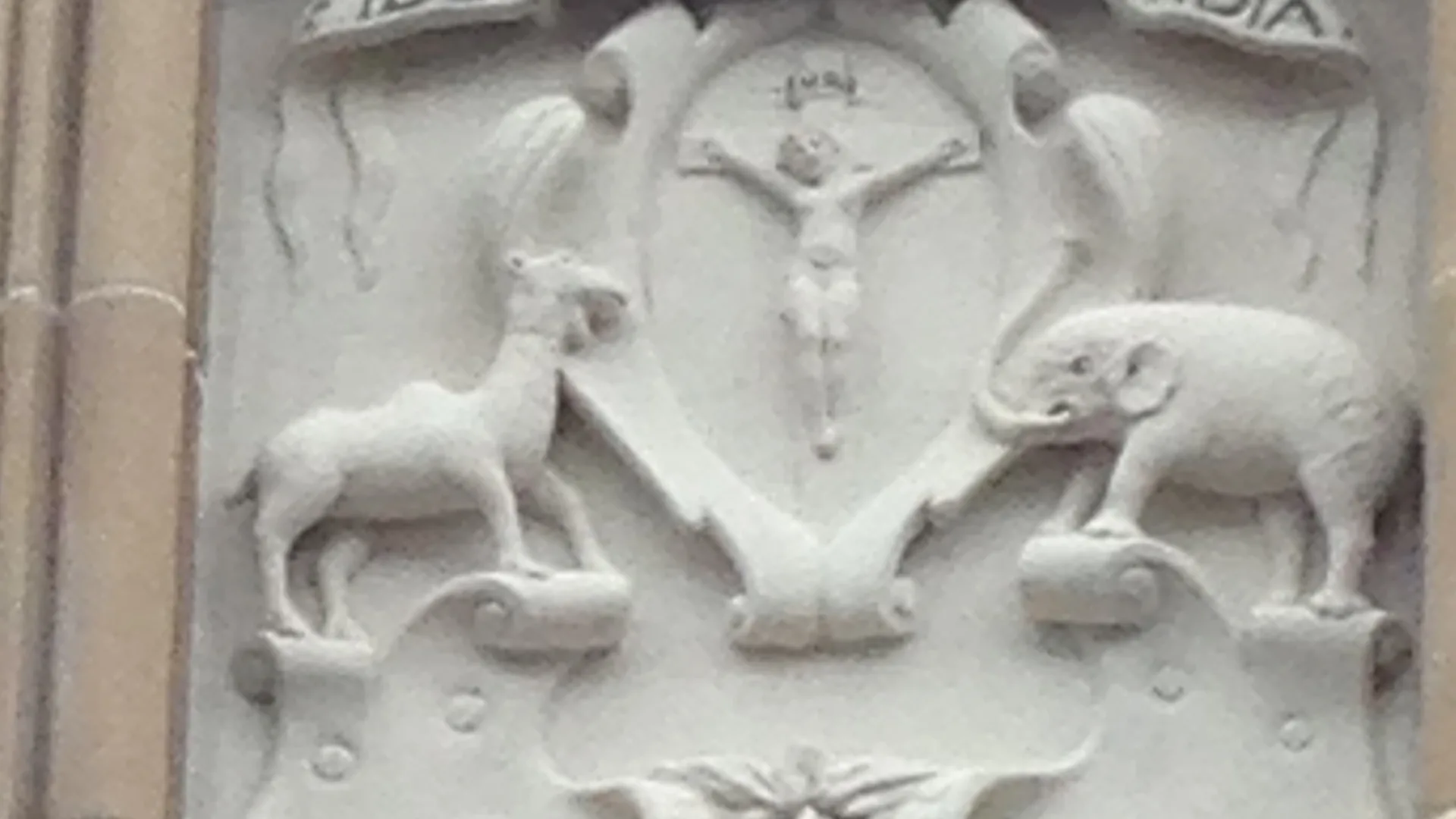
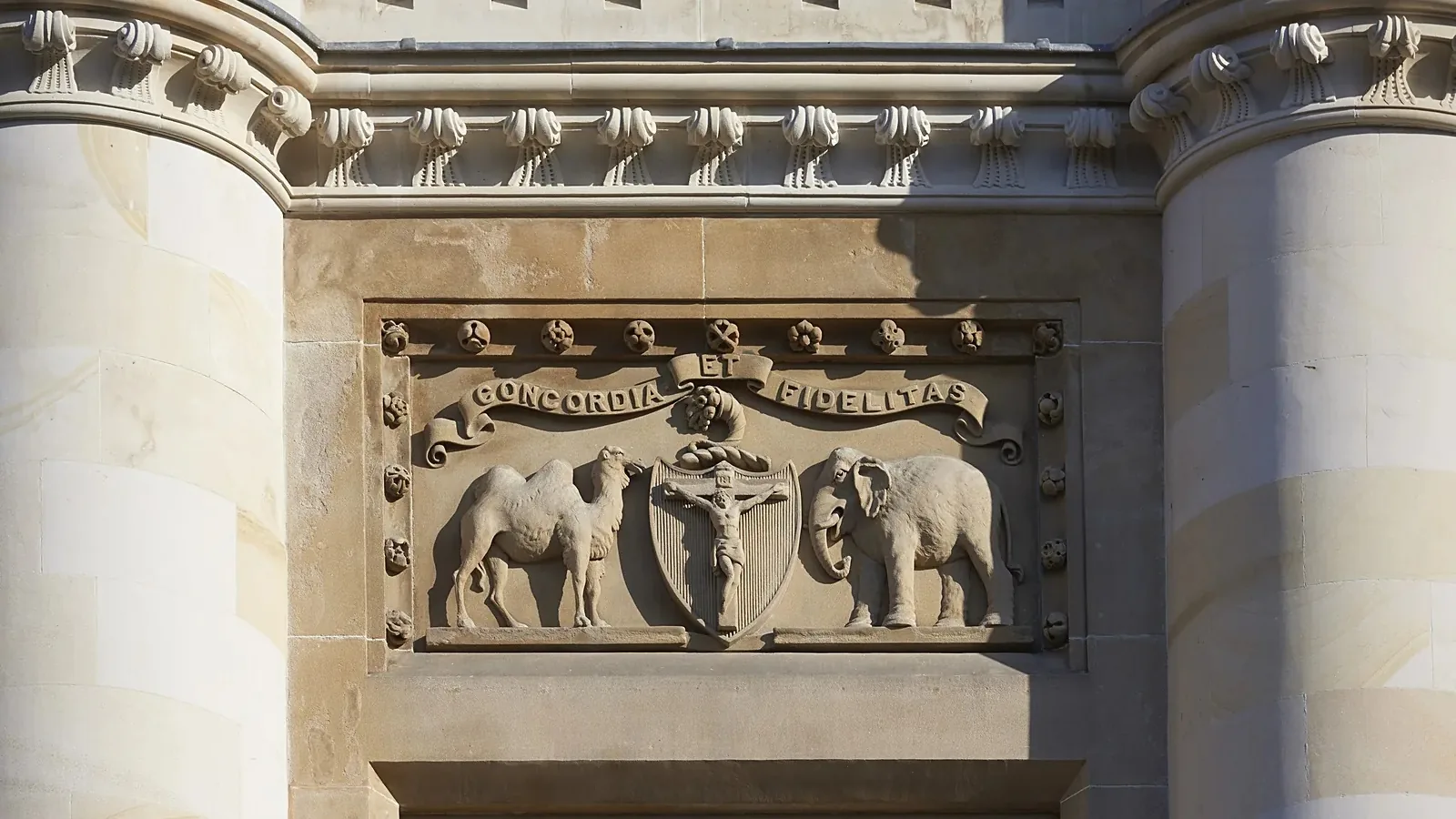
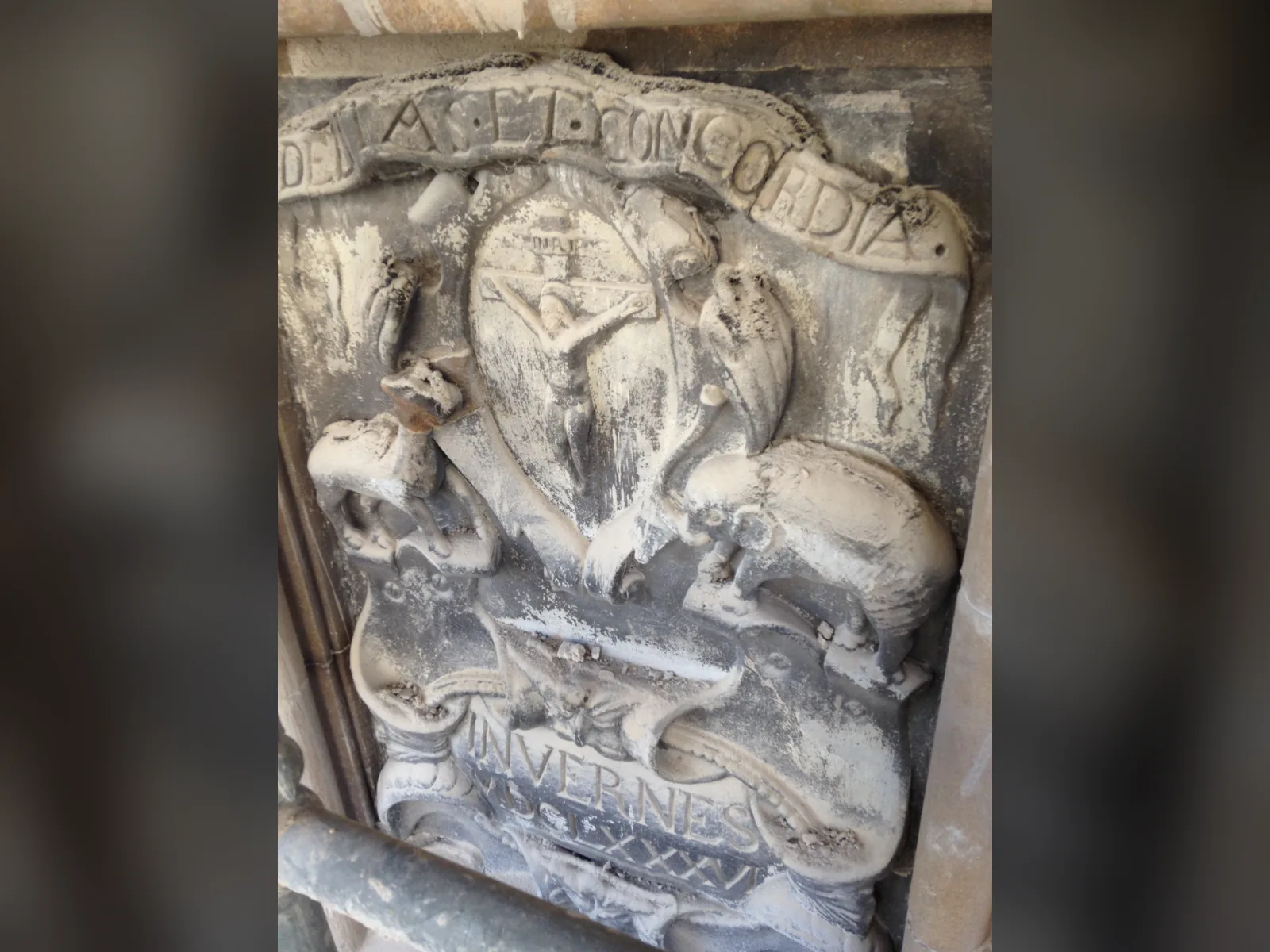
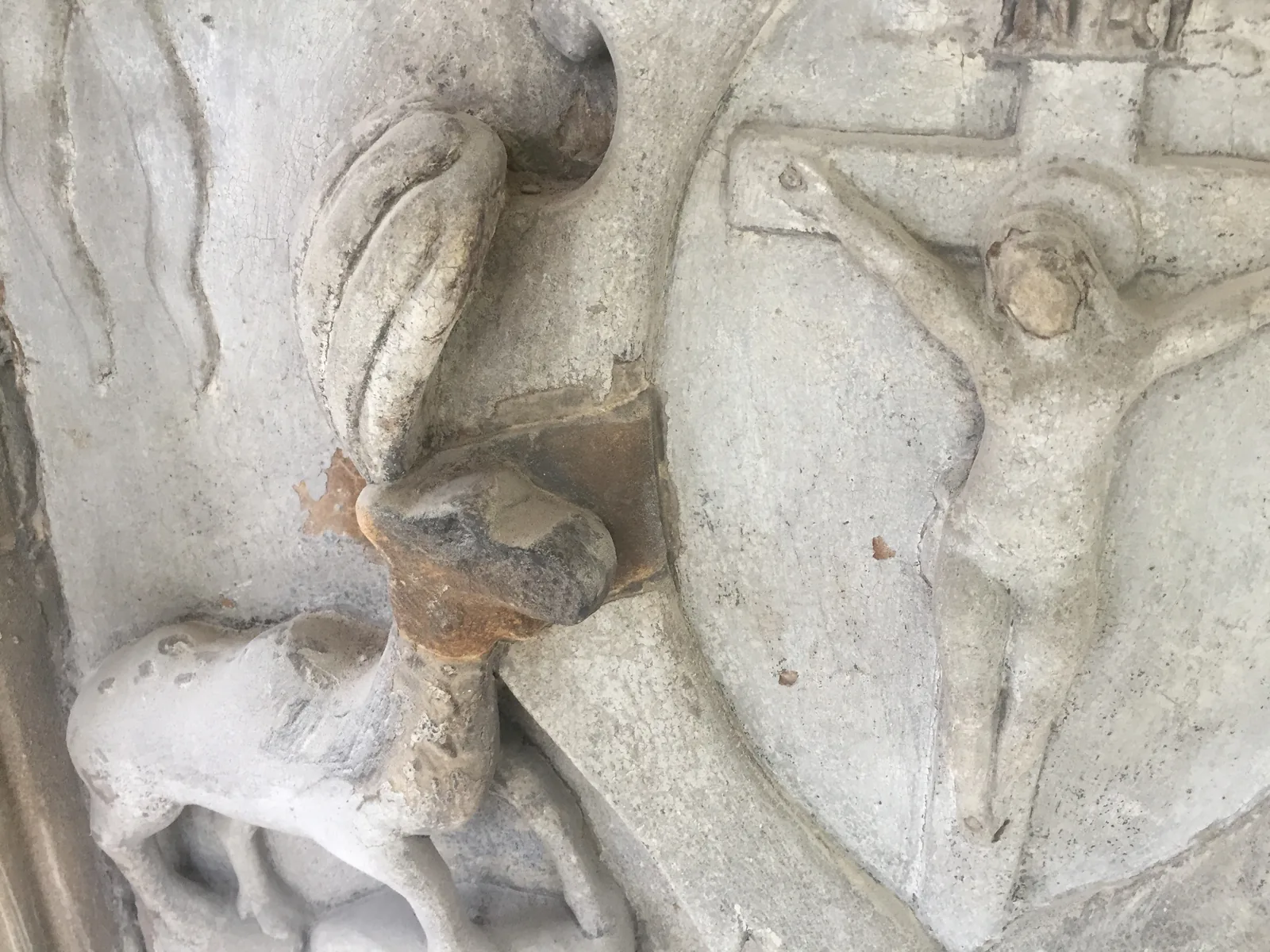
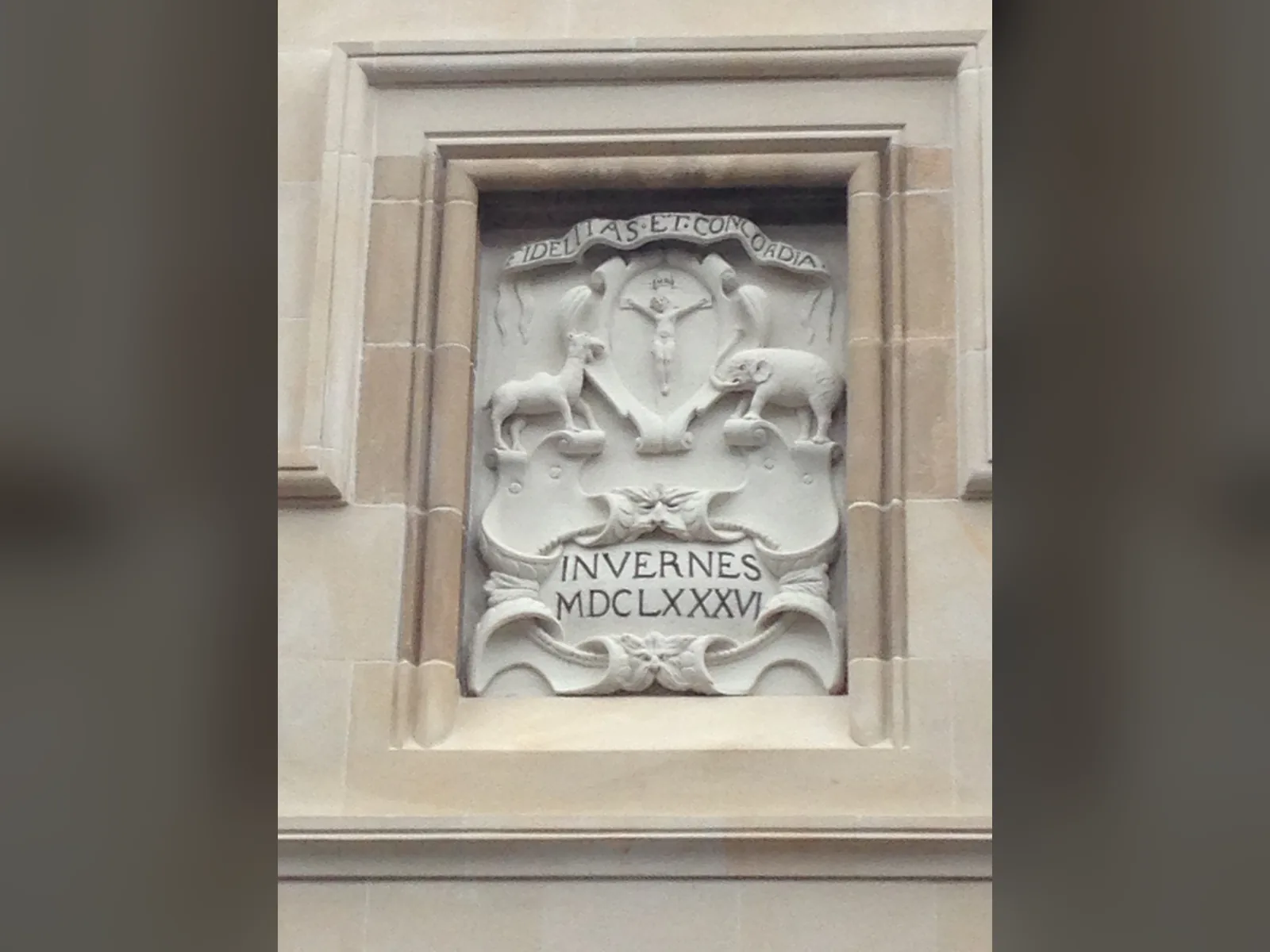
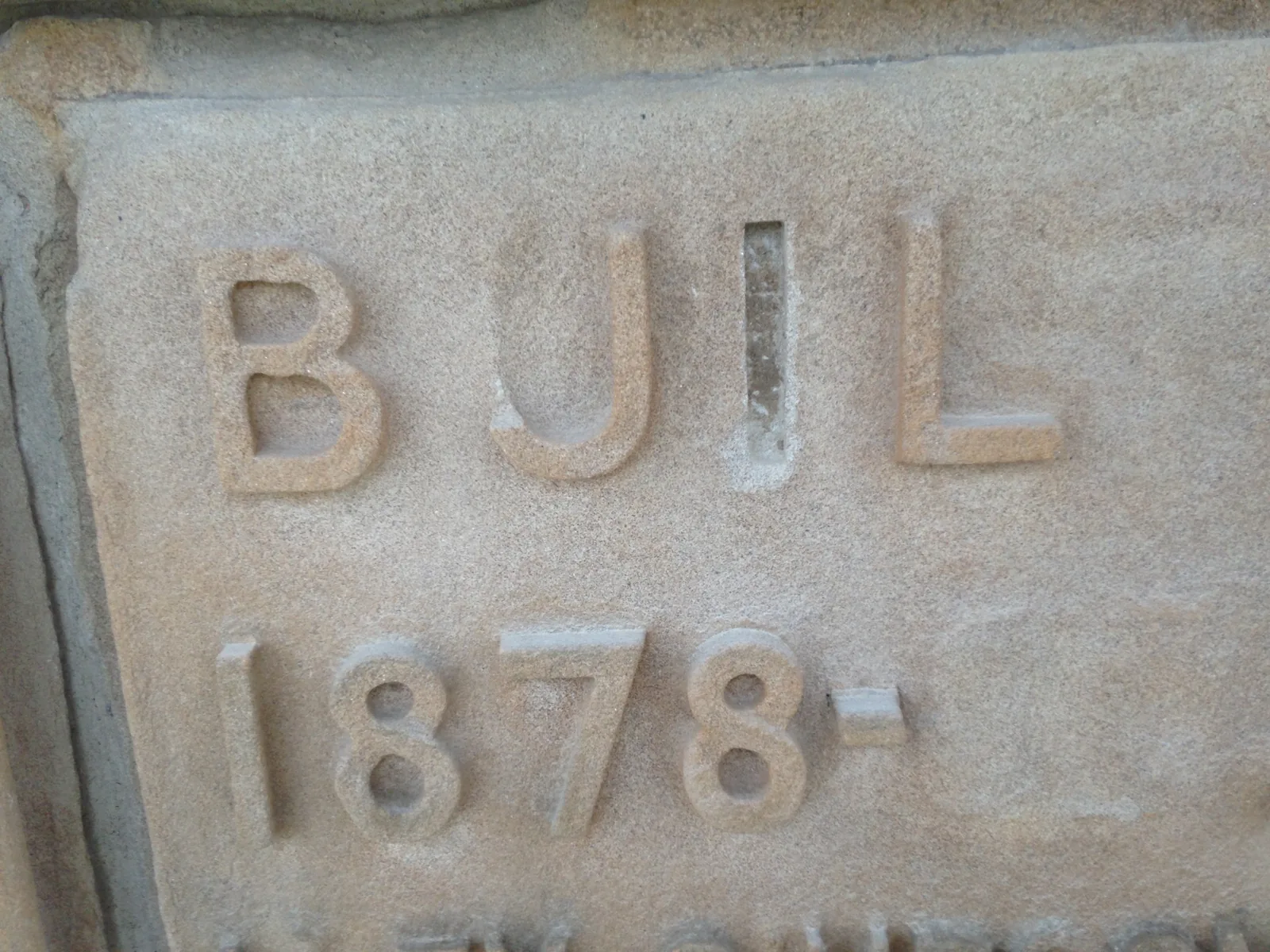
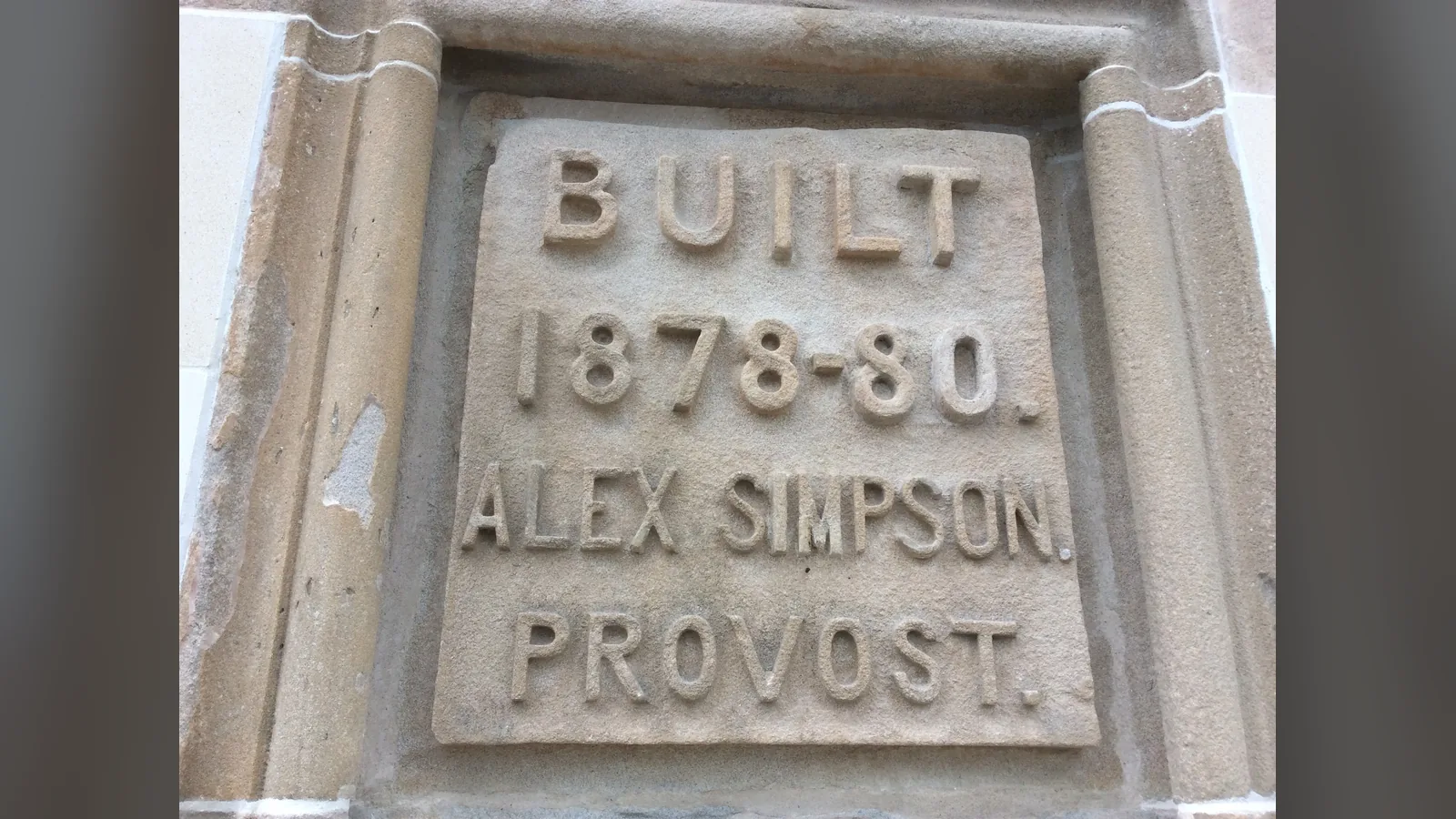
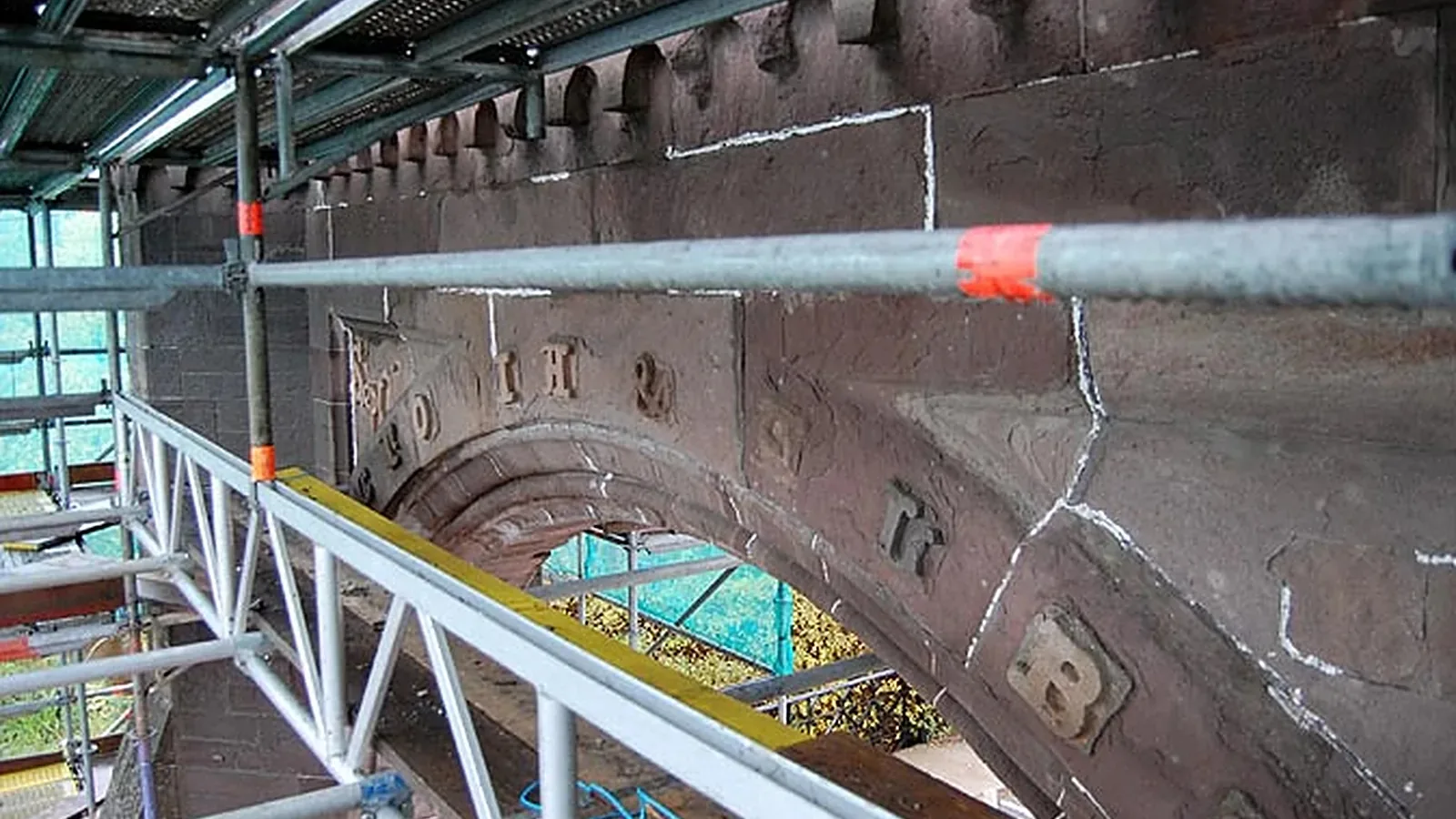
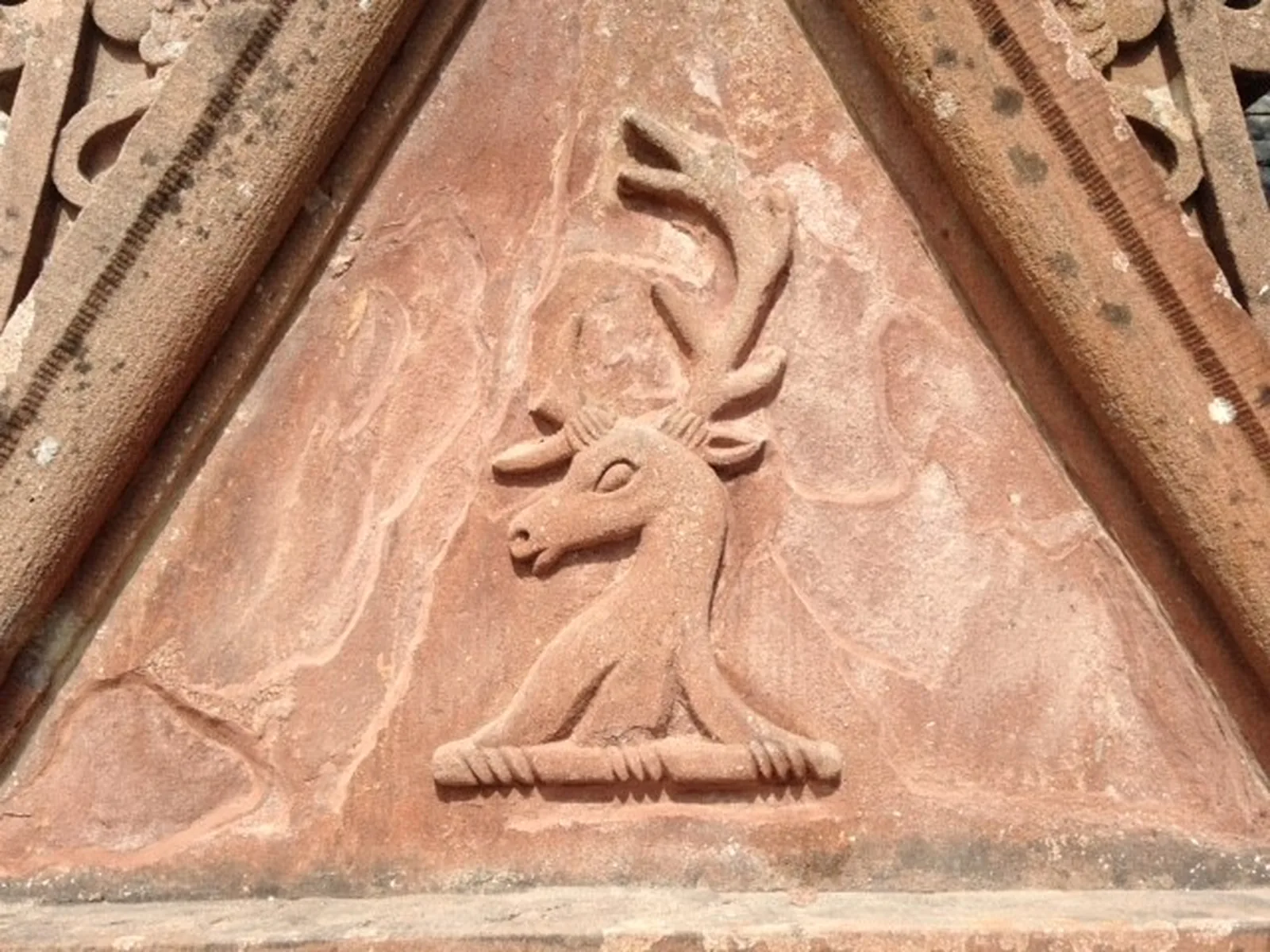
Where carving has been lost, the question is always whether to replace the stone or rebuild the detail. For a lost fragment of a figure or a moulding we pin in a small indent of matching stone and carve it back to the line of the original, as on the burgh arms at Inverness Town House. For raised lettering and fine detail, the lost letters are built up in a pigmented mortar over stainless steel pins and armatures and finished to the face, so the Town House date stone once more reads Built 1878 to 80, Alex Simpson, Provost. Fractured arrises are micro-pinned, as on the tower at Craiglockhart, and old plastic and cement repairs that are holding water against the stone are cut out and replaced in pigmented lime mortar matched to the host stone, as on the Royal Arch at Fettercairn. At Aldourie Castle the stag crest in the red sandstone pediment had lost its antlers, and they were modelled back on.
Cleaning that does no harm
Soiling, lichen, bird deterrent gel and old paint are removed with the gentlest method that works: soft brushes and clean water first, wooden scrapers and nylon brushes for carbon and growth, ammonium carbonate and sepiolite clay poultices to draw out staining, as on the carved finials, capitals and plaques of Inverness Town House, and a conservator's steamer and fine tools for modern paints. Nothing abrasive goes near carved or inscribed stone. Where whole elevations need cleaning, our teams are Stonehealth Rosette approved contractors for the DOFF and JOS/TORC systems, and the conservator decides where that work stops and hand cleaning begins. Rusting iron fixings, the commonest cause of split stone in memorials and plaques, are cored out and replaced in phosphor bronze or stainless steel.
A mortar repair that lasts: rebuilding a lintel in place
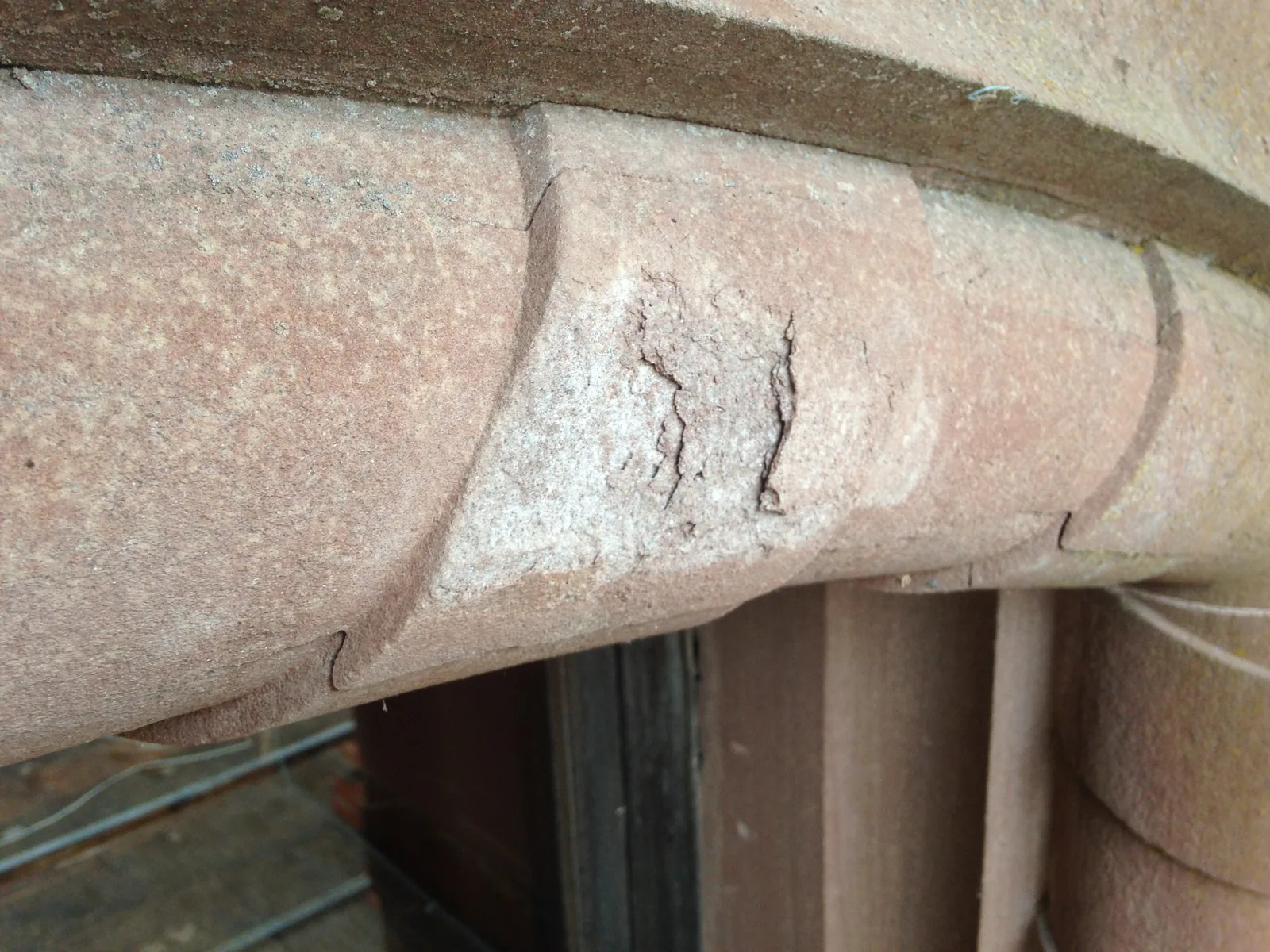
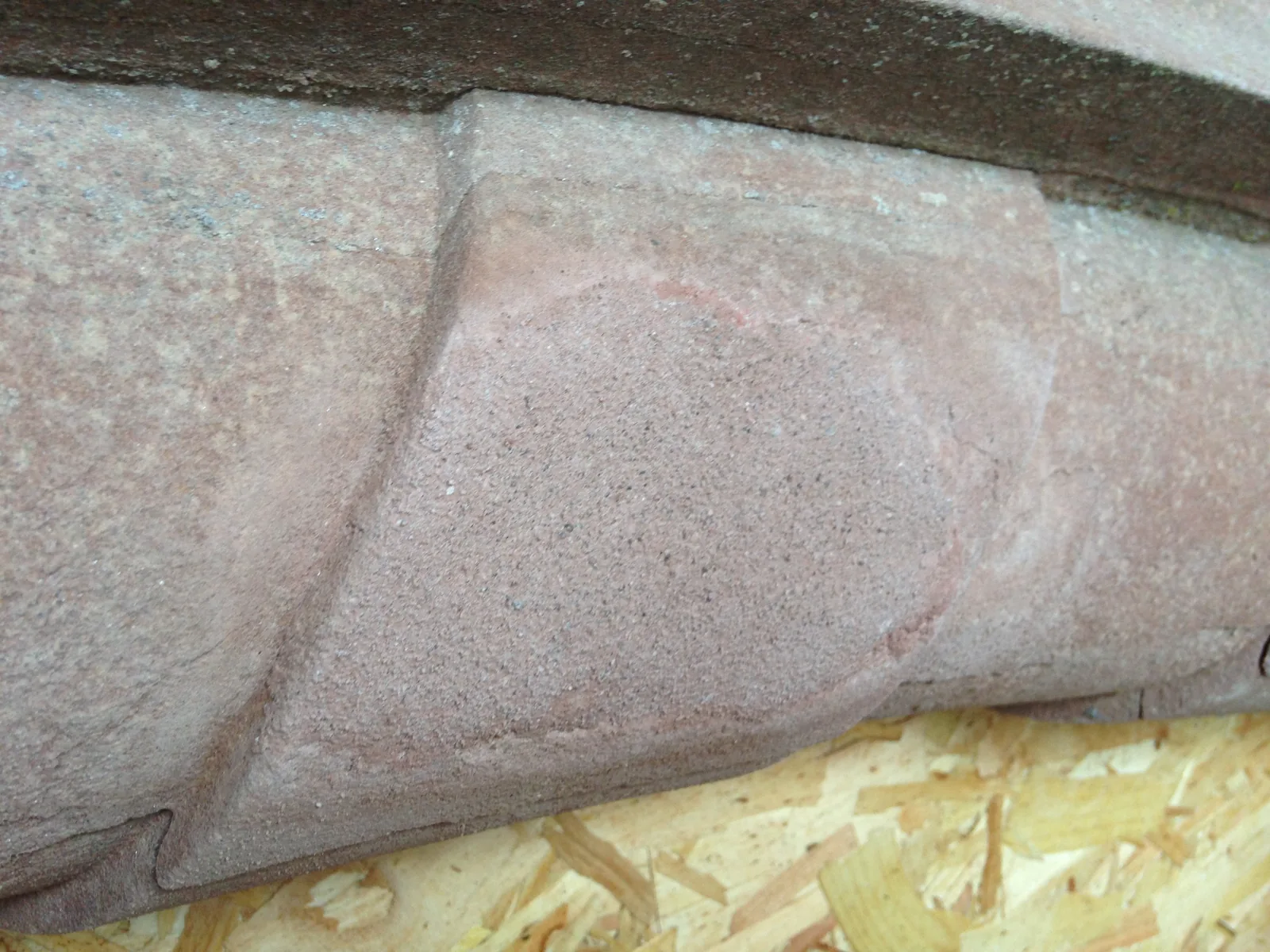
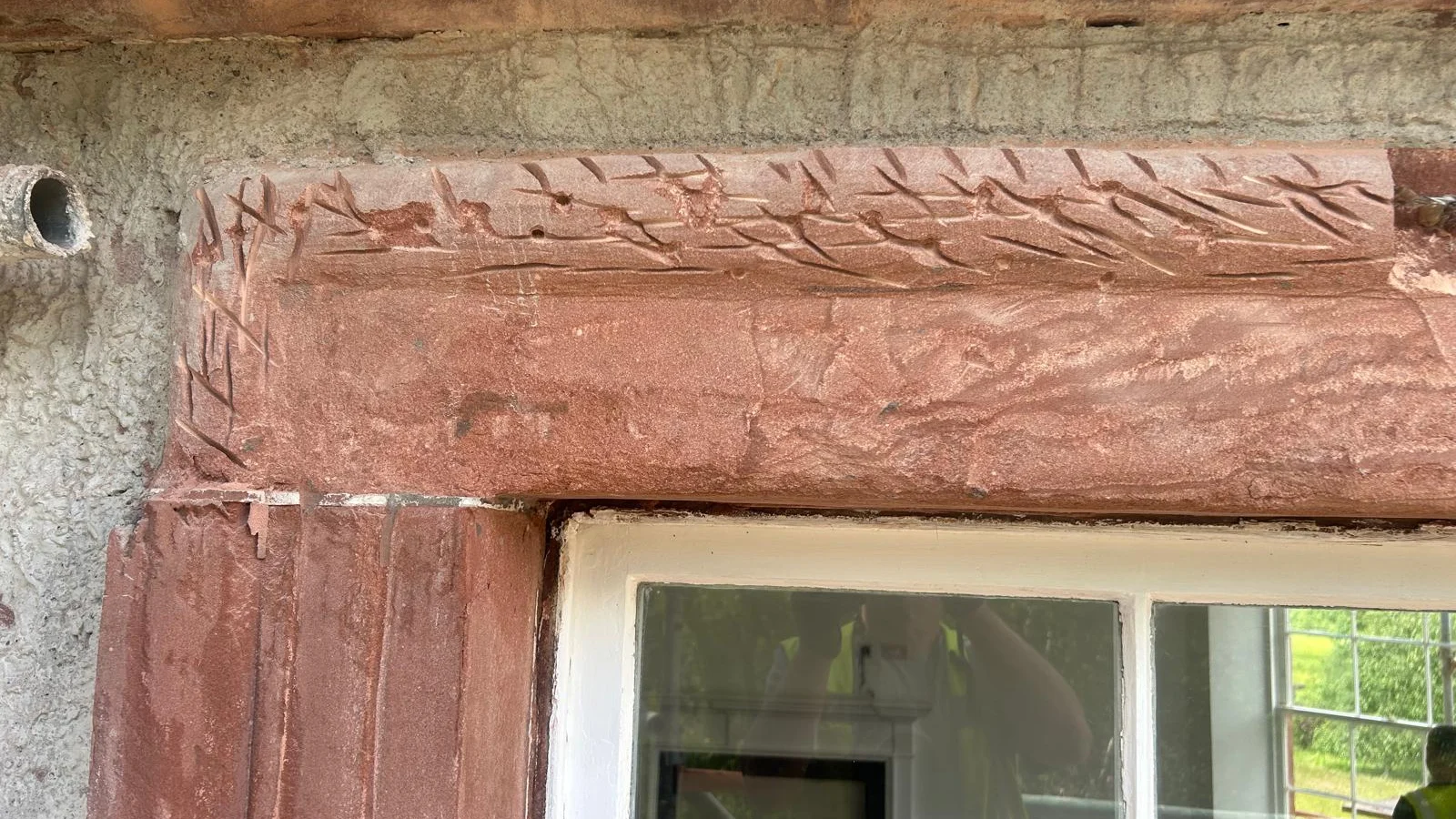
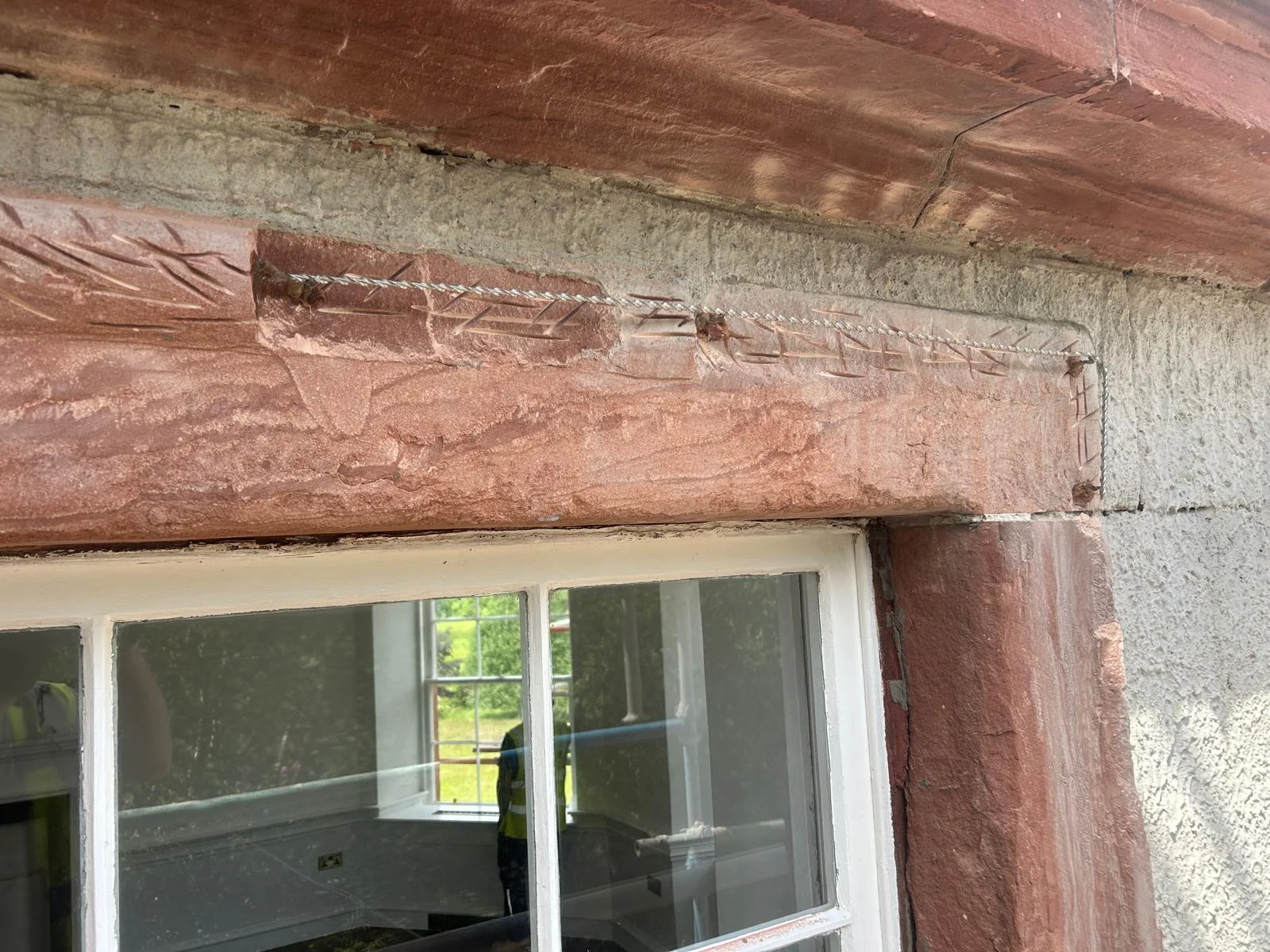
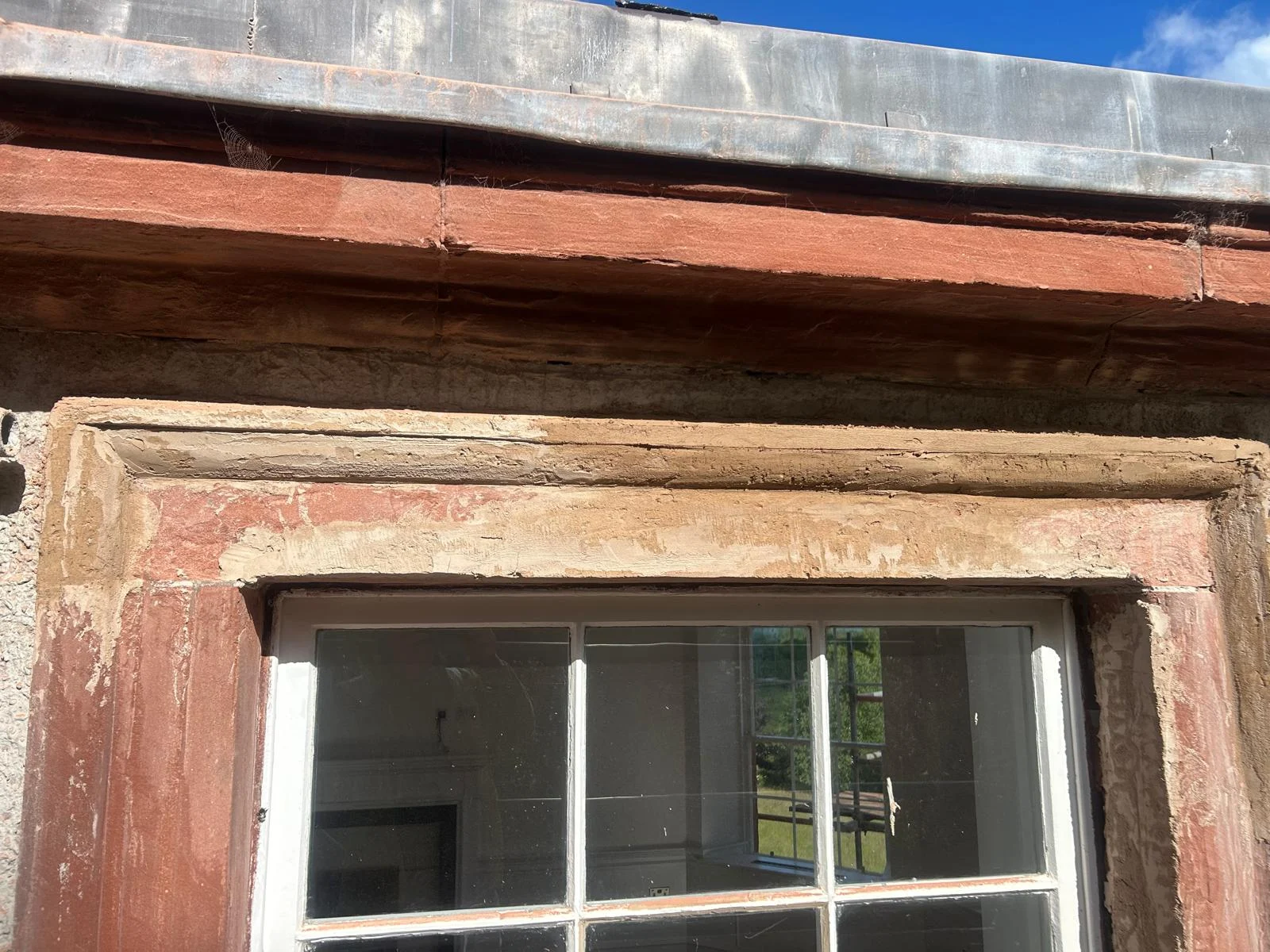
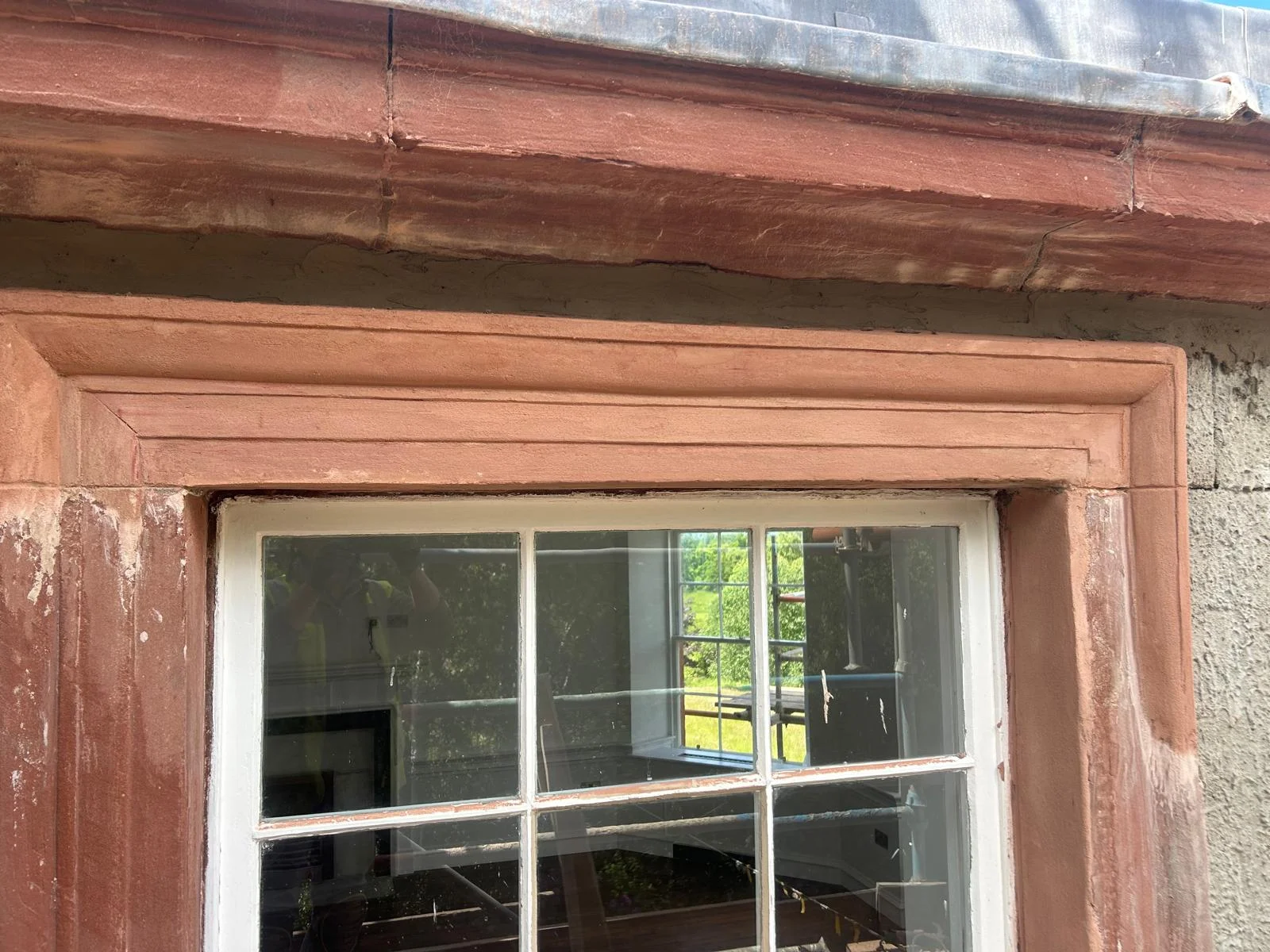
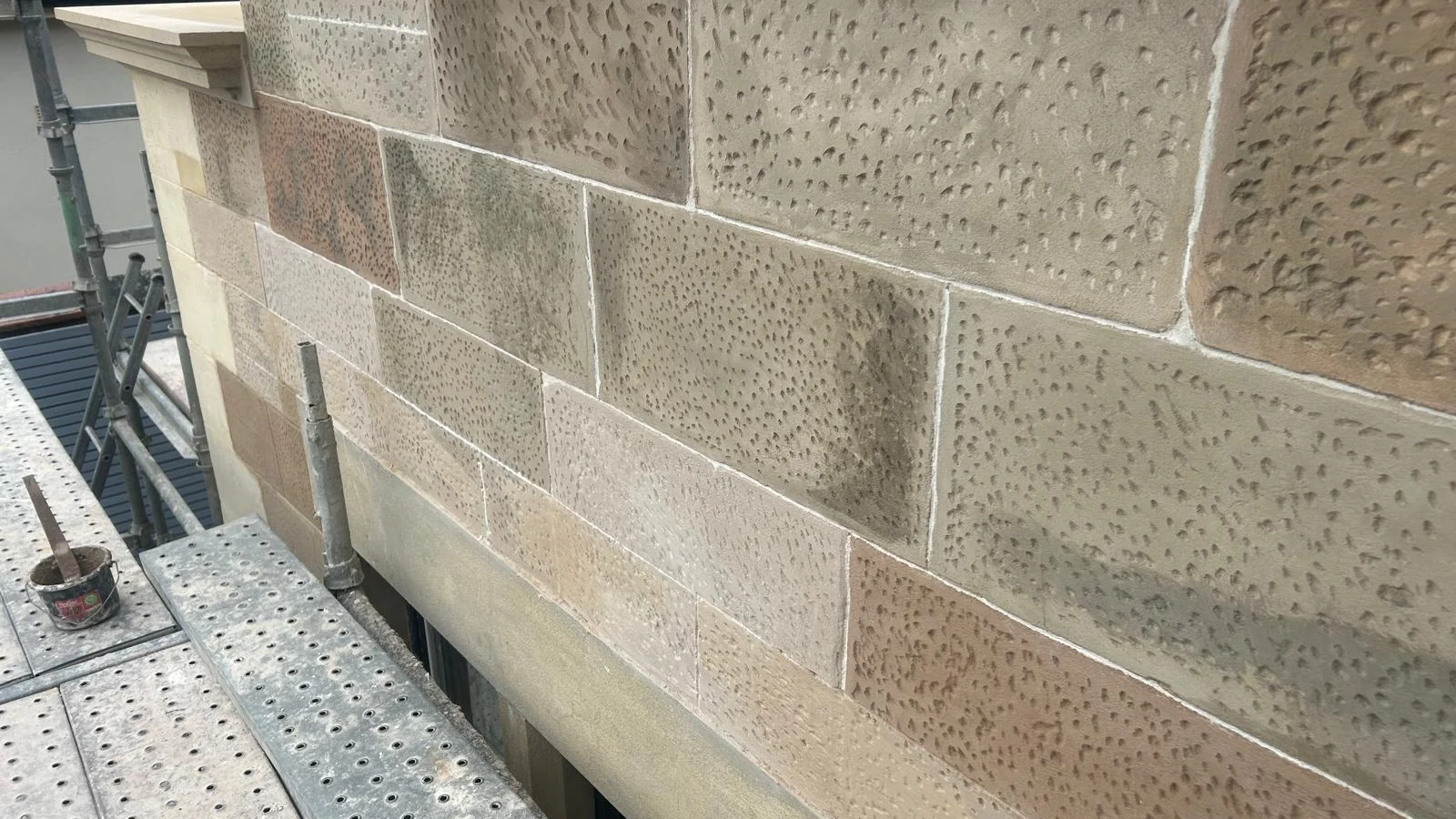
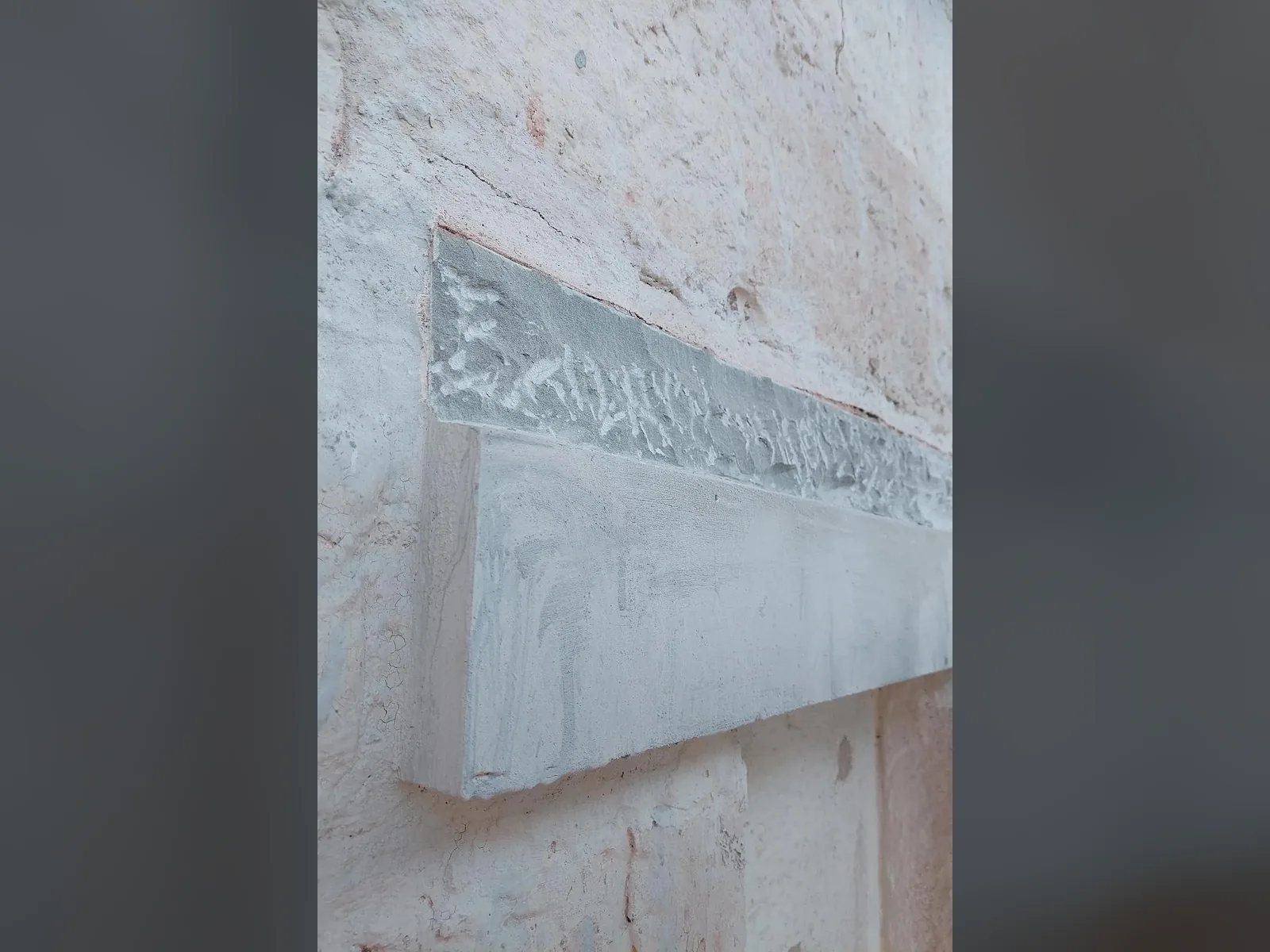
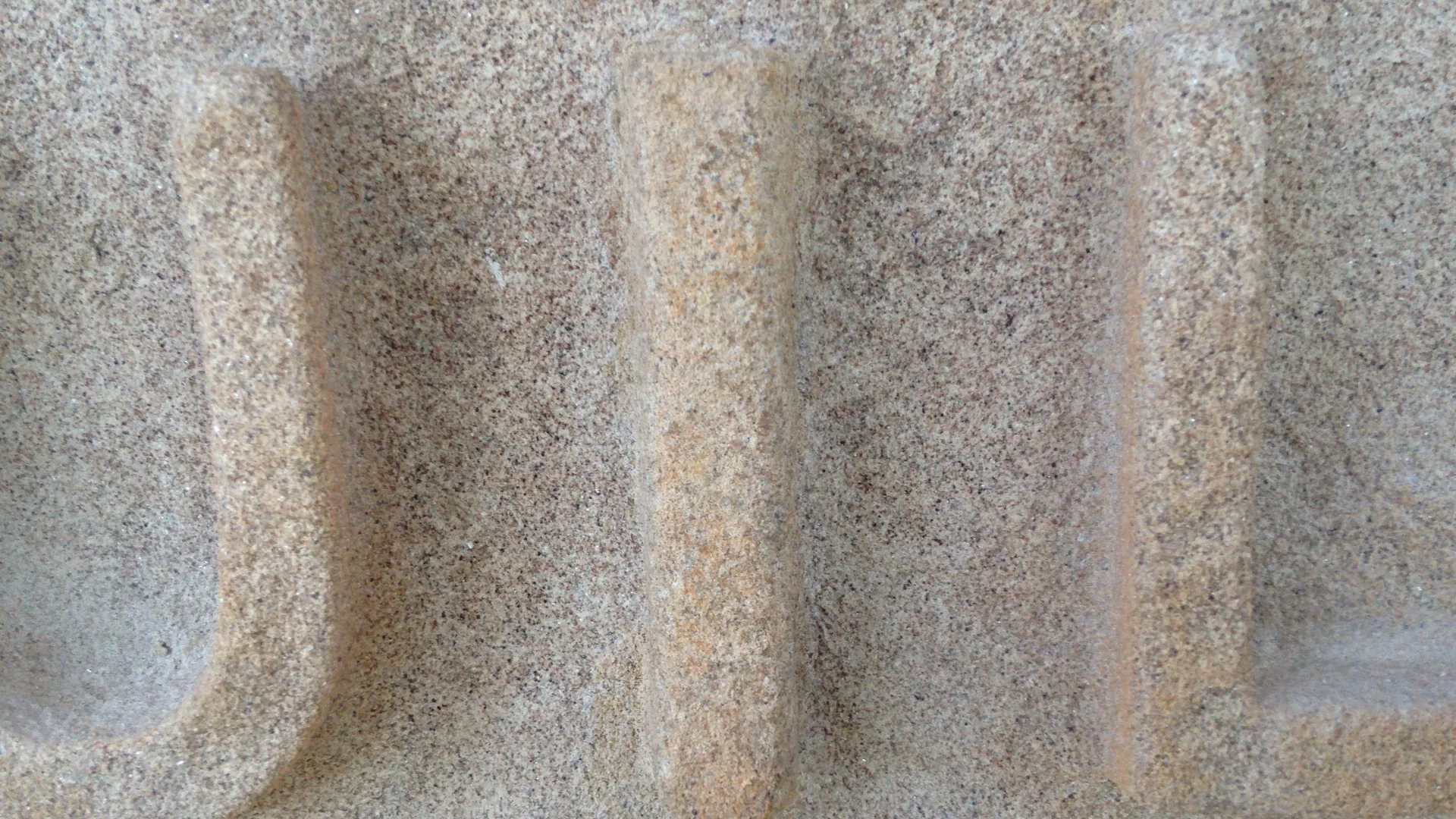
Most decayed dressings do not need to come out. Where the face of a lintel, a rybat or a moulded architrave has weathered back but the stone behind is sound, our conservators rebuild the profile in place. The decayed face is cut back to firm stone and keyed with the chisel so the repair has something to grip; stainless steel helical armatures are drilled and pinned into the body of the stone to carry the new work; and a lime mortar matched to the host stone in colour, texture and strength is built up over them in layers, each one allowed to take up before the next, then worked to the line of the original moulding and finished by hand. The repair is softer and more permeable than the stone around it, so it weathers sacrificially and can be renewed, where a hard cement patch would hold water and burst the stone. The red sandstone window surround shown above went from a keyed, pinned carcass to a crisp moulded architrave without a single stone being cut out, and that saves the client the cost and the carbon of new stone as well as keeping the original.
Bronze as well as stone: Flora MacDonald at Inverness Castle
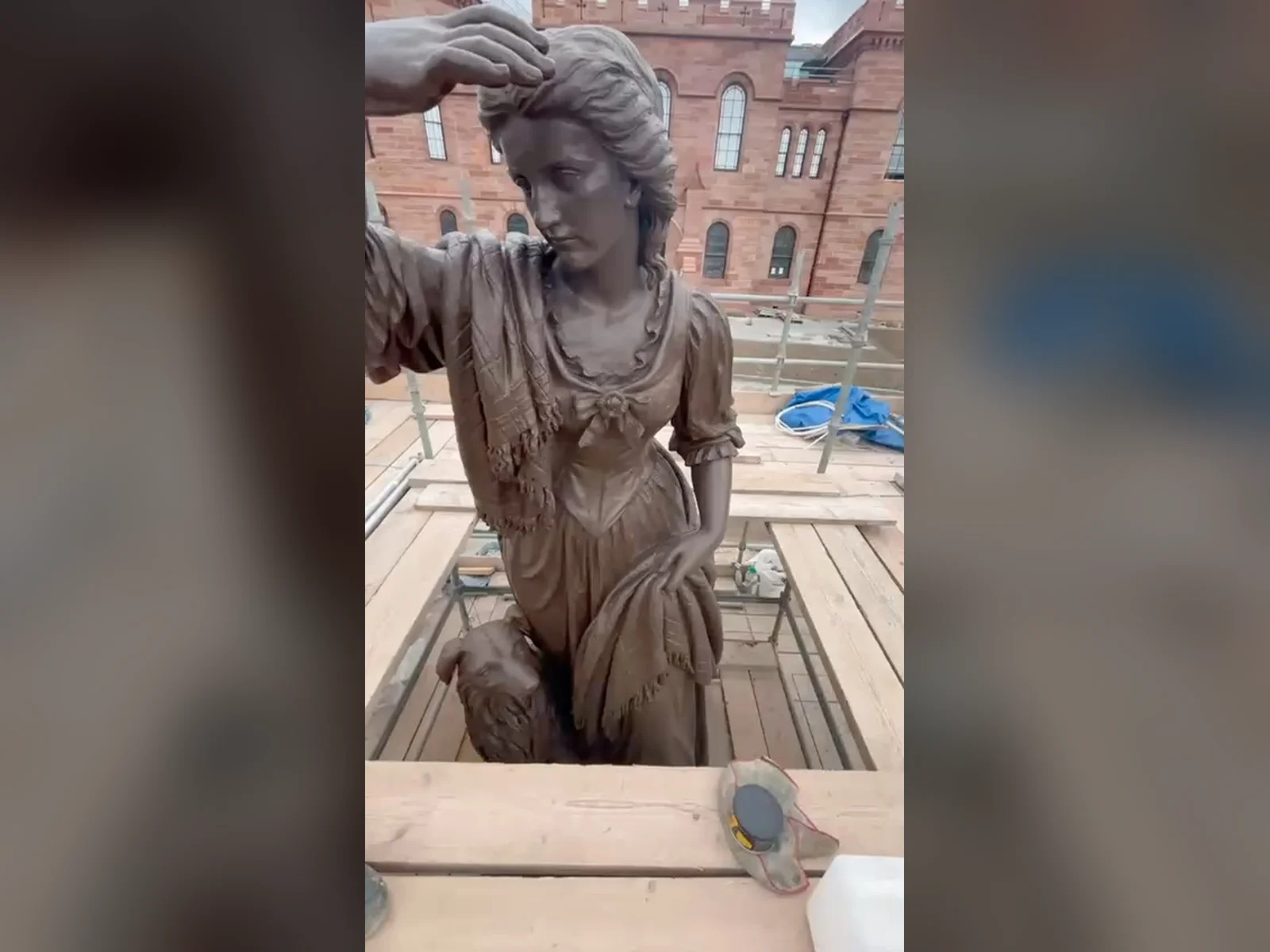
Our conservators look after the metalwork that stands with historic masonry too. On the esplanade at Inverness Castle, Andrew Davidson's 1899 bronze of Flora MacDonald shades her eyes and looks down the Great Glen with her collie at her side. With the castle under scaffold during our works there, the statue was scaffolded with it and cleaned and re-waxed from the deck. Bronze does not fail the way sandstone does, but it still needs its protective coat kept up: a sacrificial wax that sheds the rain and stops the patina streaking and running green. The statue was washed and brushed down to lift dirt, bird soiling and biological growth, the failed wax and loose corrosion products were removed without abrasion, and a fresh microcrystalline wax was applied warm to the clean, dry metal and buffed to an even sheen that lets the modelling of the figure read again. The same team then stepped straight back on to the stone. Memorials, war memorials, plaques and bronze lettering on stone all get the same treatment, as part of the masonry contract rather than a separate specialist visit.
Arbroath Courthouse: repair first, replace only where necessary
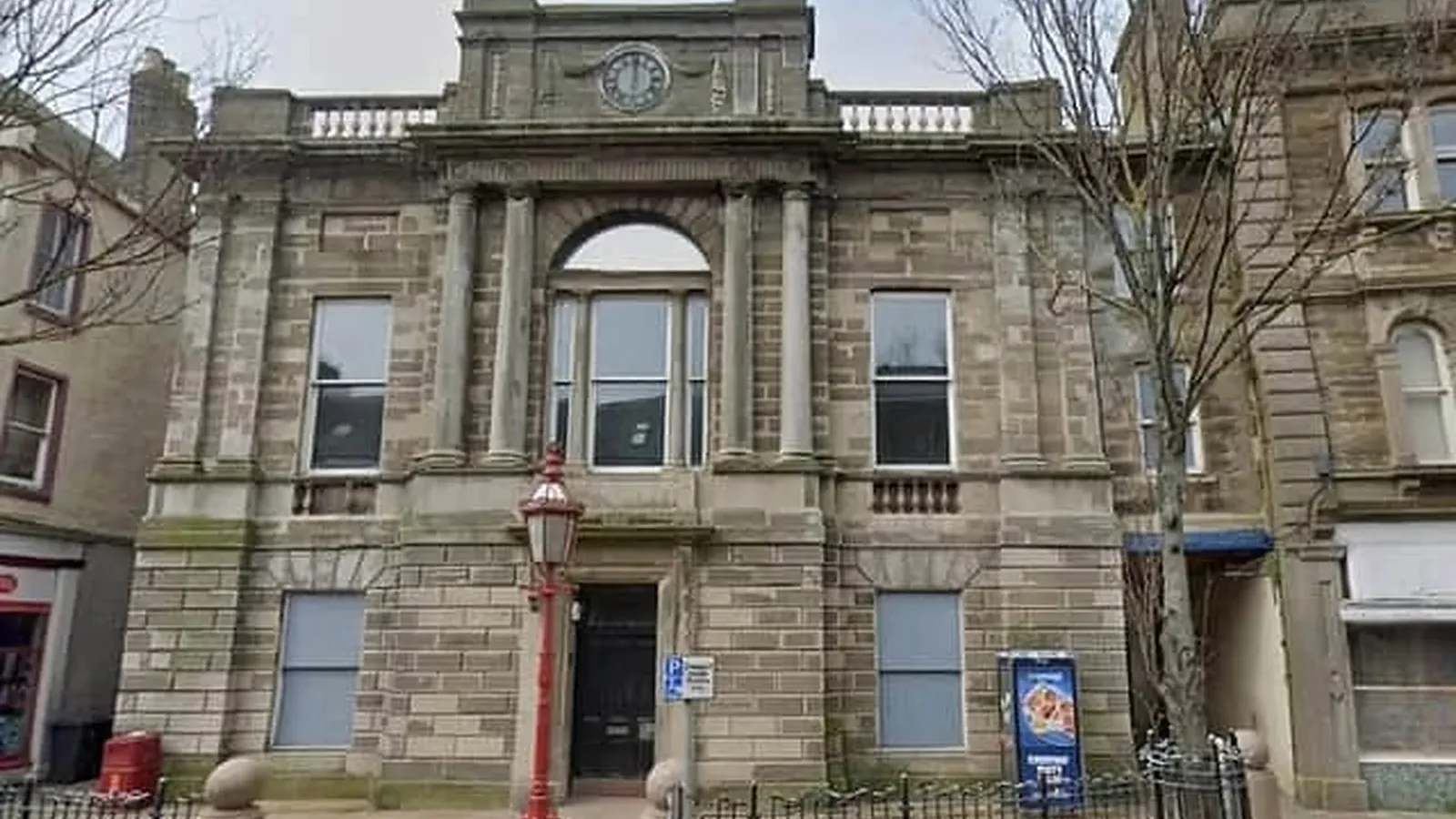
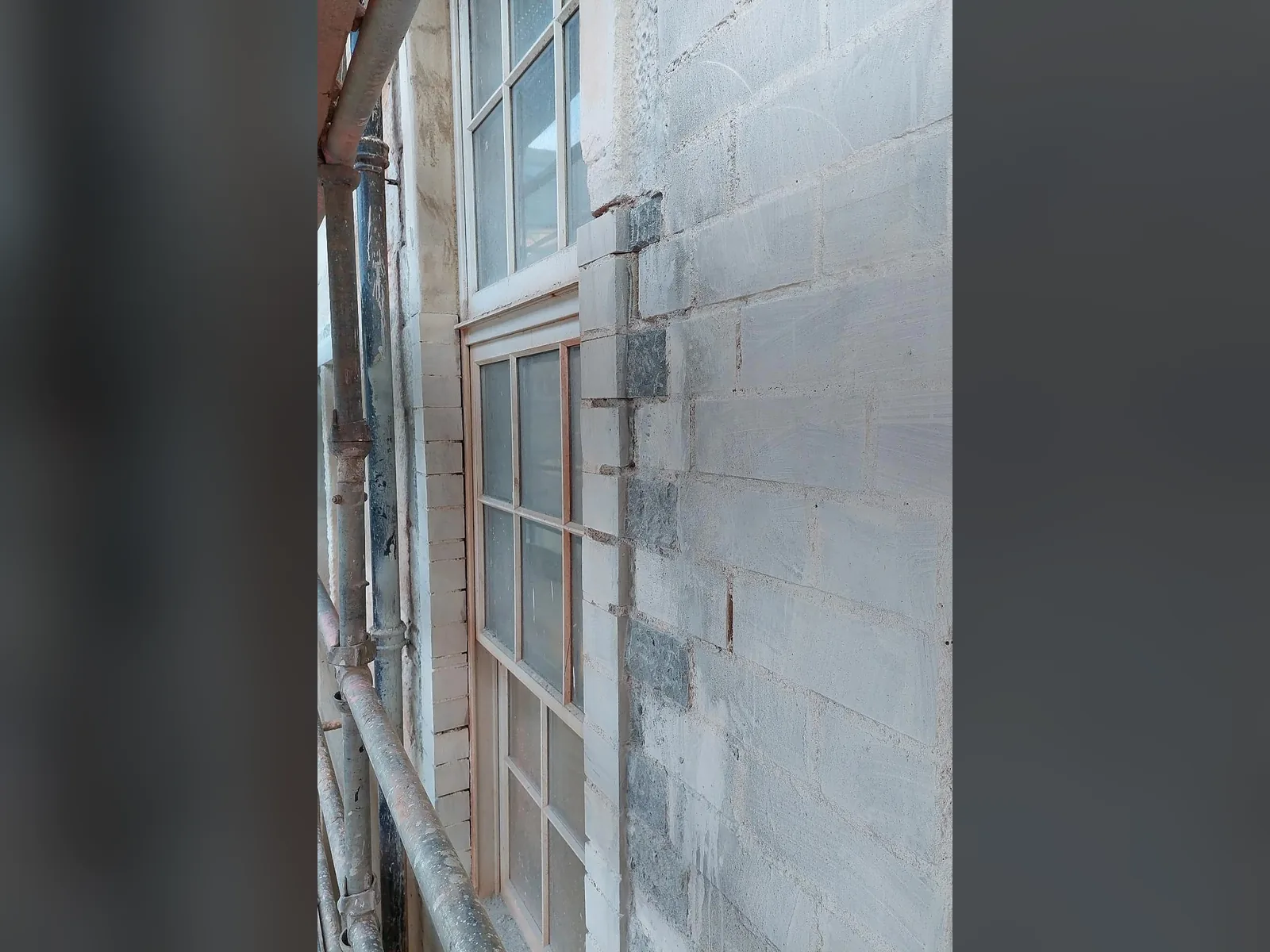
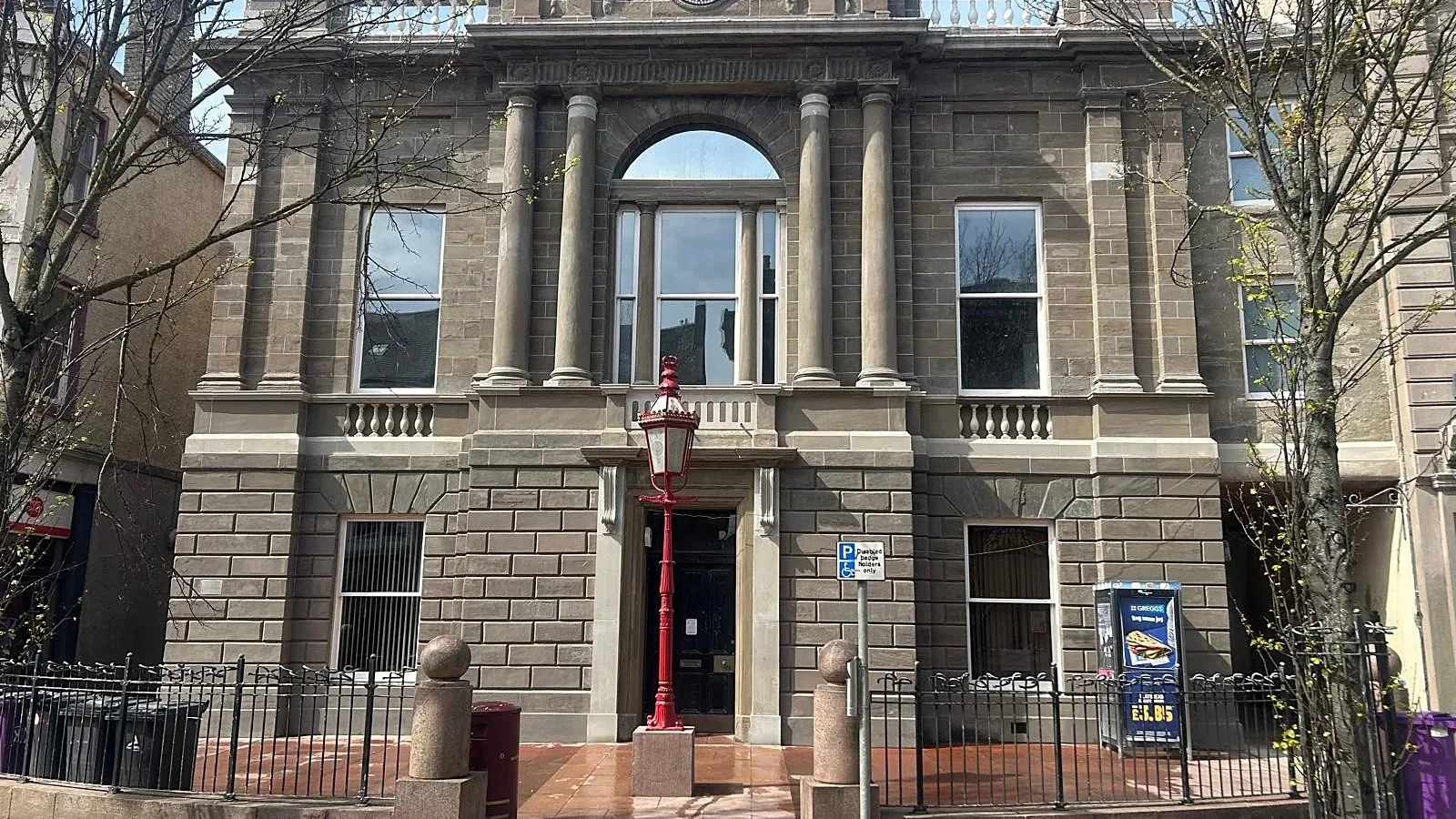
Arbroath Courthouse has stood on the High Street since the mid 1800s, built in the soft, clay-bound Angus sandstone that defines so much of the town. Decades of well-meant repairs had done real harm: hard cement coatings and Lithomex patch repairs had been applied to the sandstone, trapping moisture and accelerating decay from within. That is usually where an owner is told the only answer is wholesale stone replacement, which is costly, carbon-intensive and takes away the very fabric that makes the building historic. For the Arbroath Courthouse Community Trust, working as principal contractor with James F Stephen Architects, we took a conservation-first route instead. Every elevation was tap tested and recorded, the cement and defective Lithomex were removed by hand, the stone was descaled and cleaned with a high temperature, low pressure DOFF system, and a full condition survey set out which stones to keep, repair or replace.
Re-forming a formal ashlar facade
Our conservator then cut the eroded and blistered sandstone back to a sound face and dressed it back to crisp, regular ashlar courses with sharp arrises, so the front once again reads as the formal ashlar facade it was built as, made from its own original stone. Lost detail was rebuilt in bespoke, colour-matched lime mortar repairs, and only the copes, rybats, lintels and cills that had genuinely failed were renewed in new dressed sandstone. The ashlar was repointed in hot-mixed lime and the rear rubble elevations finished in breathable lime harl and limewash. The result is a building that looks revitalised, is structurally and environmentally healthier than it has been for decades, and kept most of its historic fabric at a fraction of the cost of replacement. Repair first, replace only when necessary, and use materials that respect the building: that is what our conservators bring to every job.
Castles, civic buildings and churches
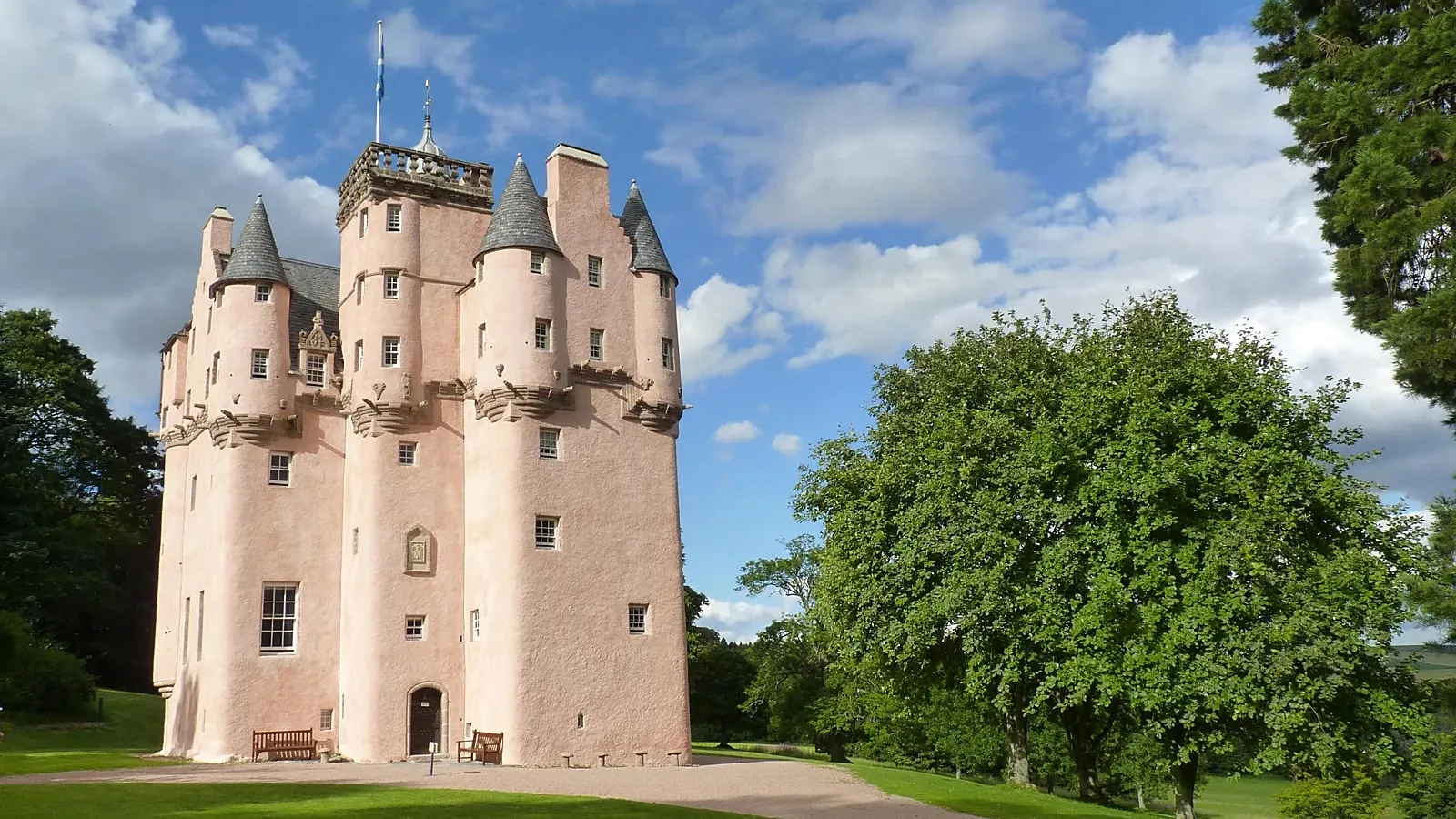
Our conservators work on the same contracts as the rest of LTM, which is why their work runs through so many of our case studies. At Craigievar Castle for the National Trust for Scotland our stone conservator conserved the castle's historic granite and sandstone carvings while our masons carved 23 new cannon spouts and the walls were re-harled in hot lime. At Inverness Town House, over a series of phased contracts for The Highland Council, the carved finials, capitals, plaques and armorial panels were poulticed, injected and rebuilt in pinned pigmented mortar while decayed ashlar was replaced around them. At the Sir Walter Scott Courthouse in Selkirk our conservators carried out mortar repairs wherever face-bedded stone could be kept once the cement render came off, and at the Ramshorn Theatre in Glasgow decaying mullions were consolidated, pinned in stainless steel and built back in tinted lime mortar.
Monuments, memorials and kirkyards
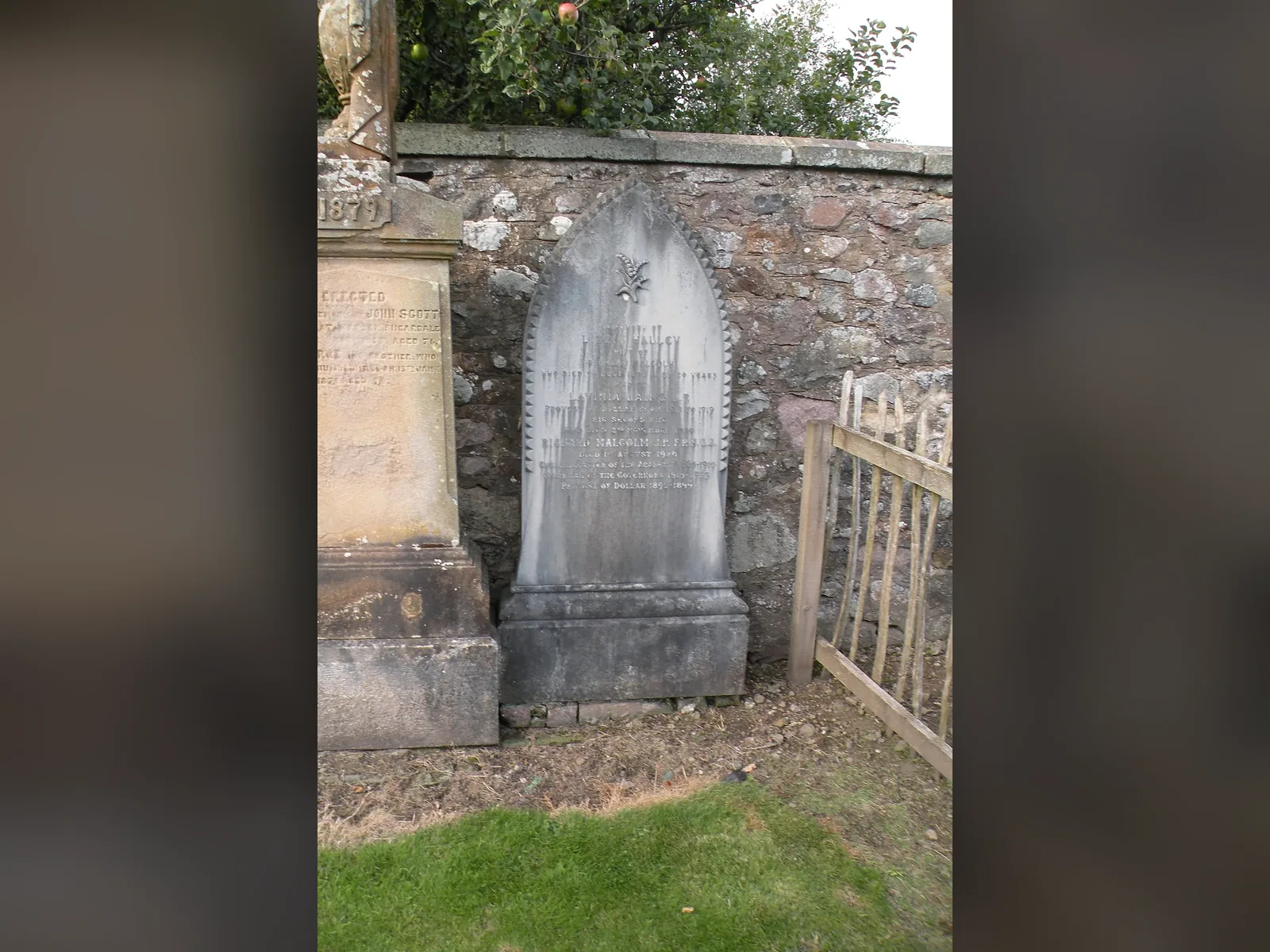
Monuments carry inscriptions and carved detail that people still come to read. On the Sir Robert Peel Monument the inscription panel was saved in place rather than replaced; on Fettercairn Arch, the royal memorial arch, delaminating stone was descaled and consolidated, earlier plastic repairs were cut out and replaced in pigmented lime mortar, and failed repairs to the spirelets were redone in stone. In the Hillfoots kirkyards unstable gravestones and monuments were topple tested, lifted, and re-erected on dowels and lime beds; at Teampull na Trionaid, a remote medieval church on North Uist, gravestones and plaques were straightened and repaired by masons able to cut, build, point and carry out conservator work in the same visit, which gave the client value for money; and at Old Deer an 1831 gravestone was secured, consolidated and cleaned so its lettering can be read again.
What it means for your building
The original survives
The carved, inscribed and ashlar stone that makes your building what it is stays in the wall, stabilised, legible and dressed back to a sound face, or rebuilt in matched mortar over stainless pins, rather than being cut out and replaced. Repair first; replace only where necessary.
In-house conservators, one team
Our conservators are LTM's own, working beside our masons and carvers every week, so conservation decisions are made with the masonry repairs and nothing is lost between a consultant's report and a contractor's programme.
Approved methods, recorded
Approved conservation methods and materials, a survey before, a method statement during and a written record after, so your architect, the planning authority and the next generation know exactly what was done.
Over 25 years of heritage work
A multi-award-winning team with its own SQA-approved traditional skills academy, training the next generation of masons and conservators.
Carved or inscribed stone that is losing its face?
Send us photographs of the panel, the memorial or the inscription and we will tell you whether it can be consolidated where it stands, what needs repairing and what it should cost to keep.
Conservation on site
Conservation case studies
- Inverness Town HouseCase study →
- Arbroath CourthouseCase study →
- Inverness CastleCase study →
- Craigievar CastleCase study →
- Sir Robert Peel Monument, ForfarCase study →
- Craiglockhart Parish ChurchCase study →
- Fettercairn ArchCase study →
- Sir Walter Scott Courthouse, Selkirk
- Aldourie CastleCase study →
- Cromarty East ChurchCase study →
- Teampull na Trionaid, North UistCase study →
- Hillfoots Kirkyards
- Dunyvaig CastleCase study →
Next service
Stone Production
Workshop manufacture, from sawing to hand dressing