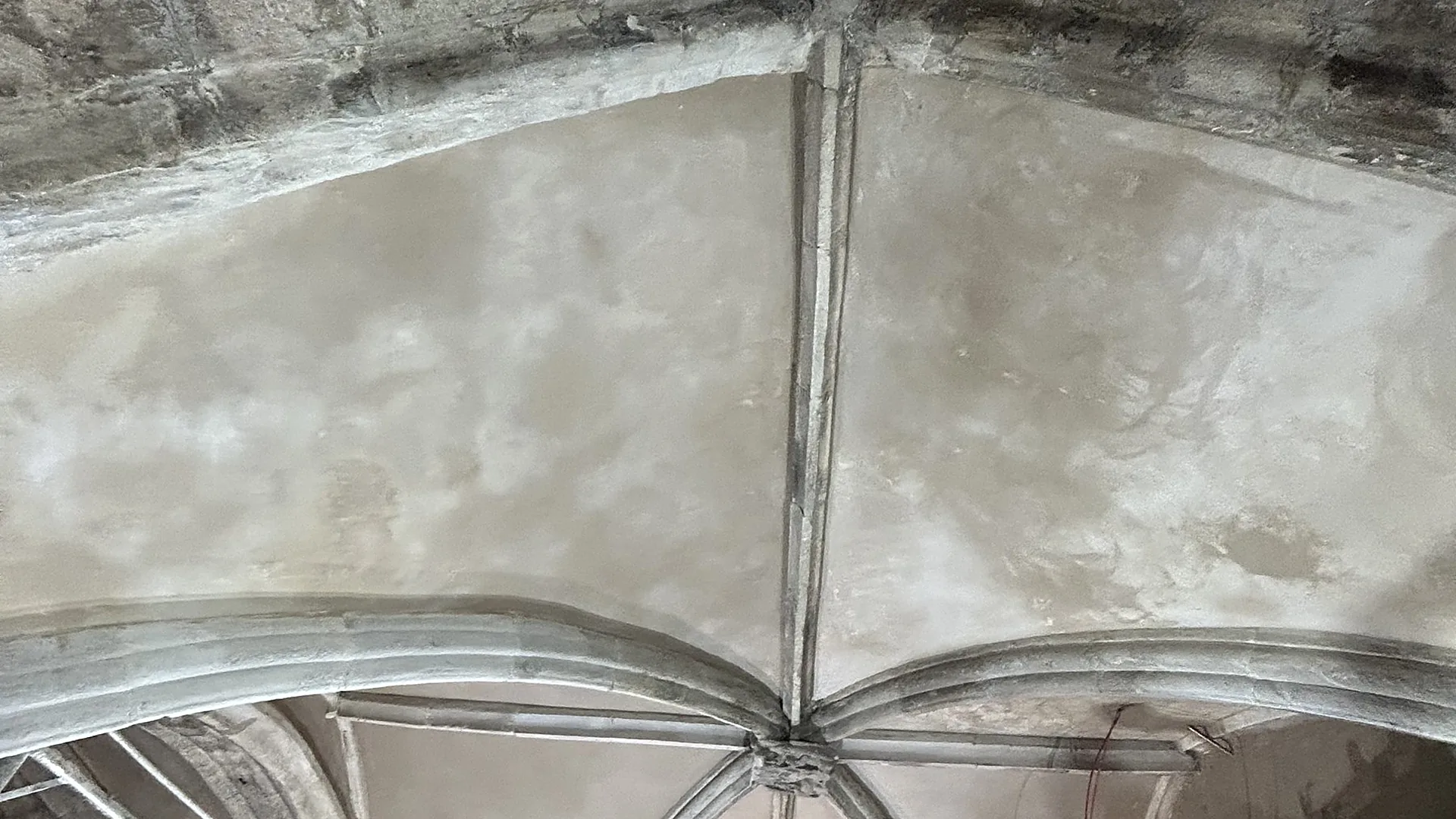
Lime plaster and pointing:
St Mary's Chapel
Aberdeen · 2024
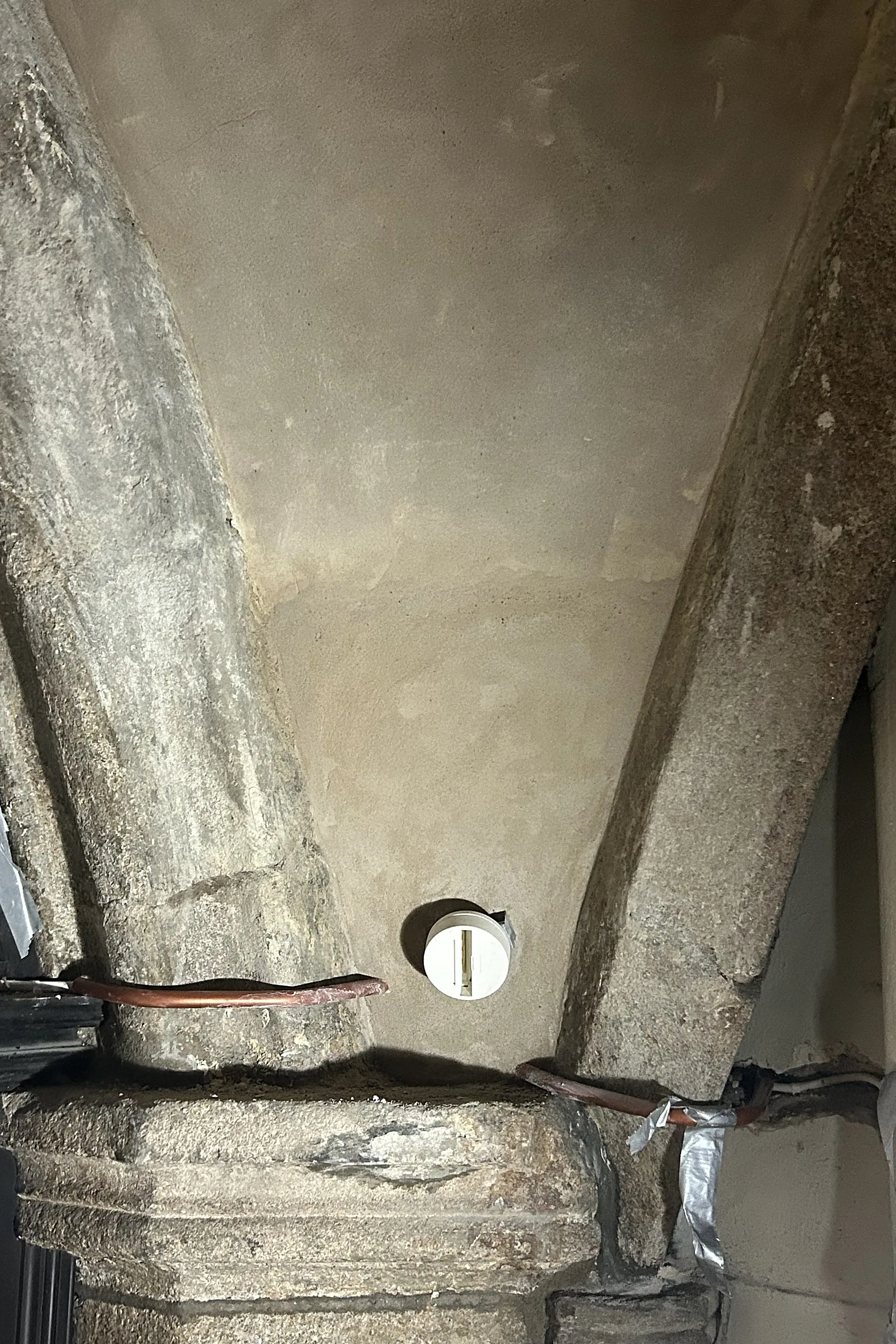
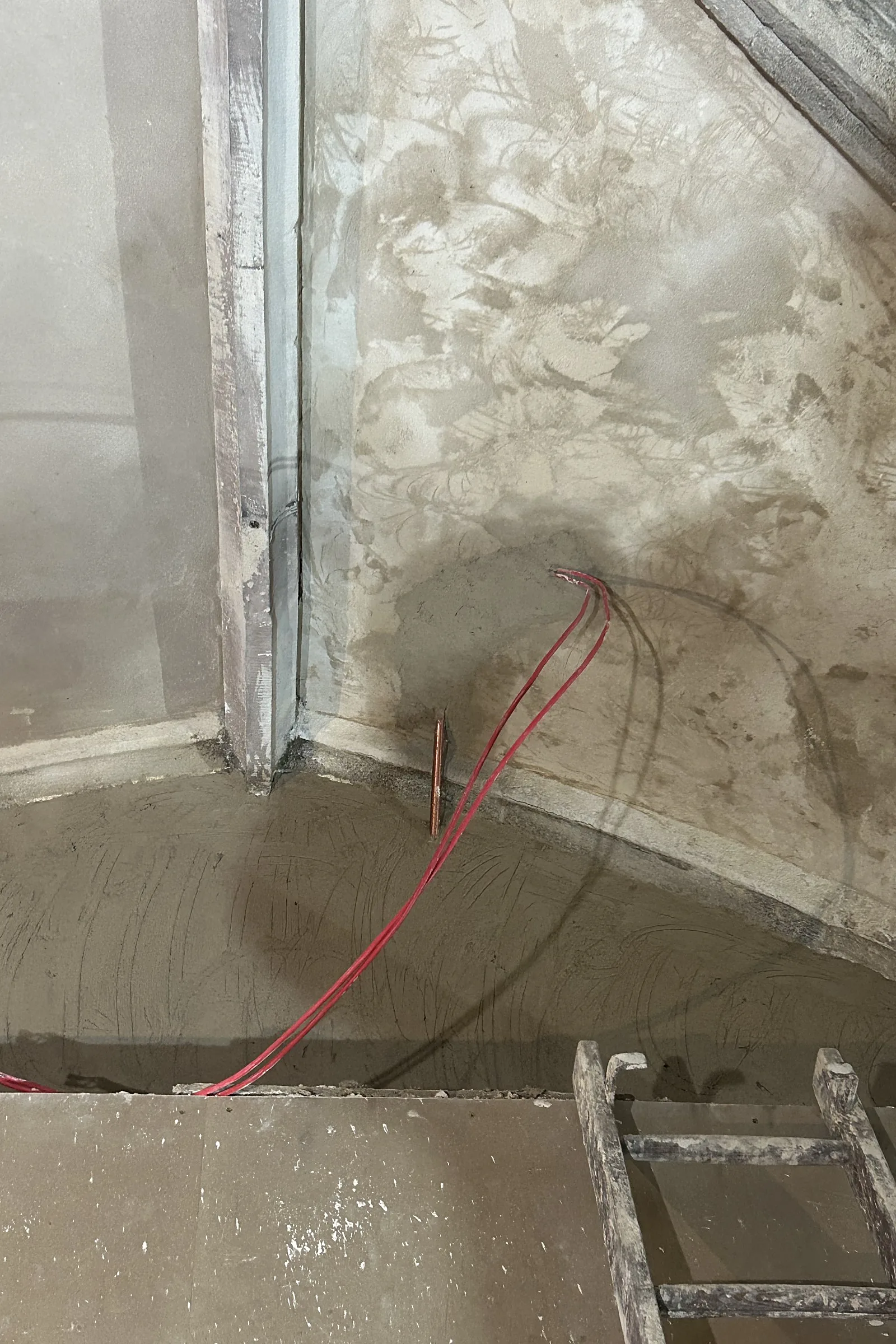
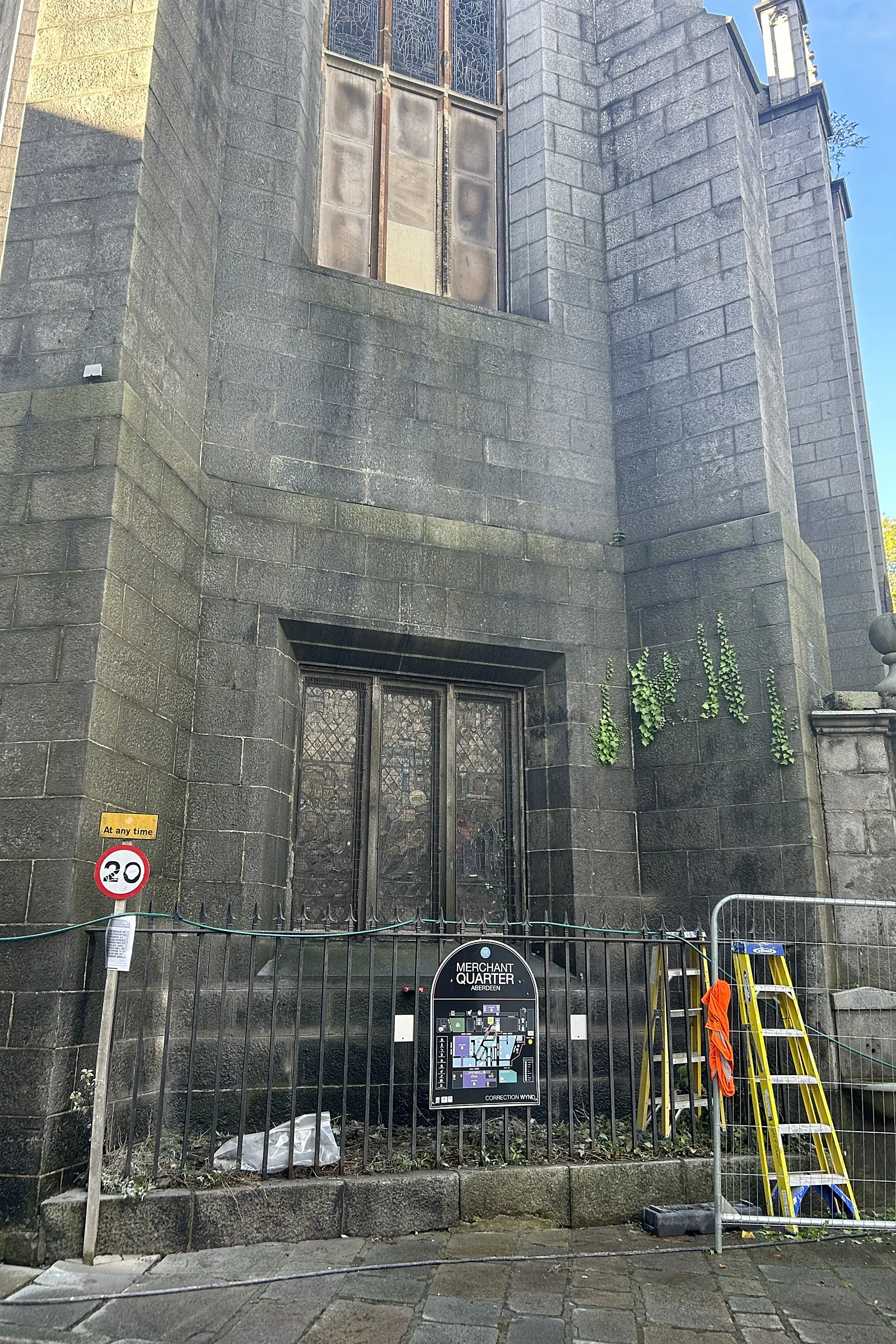
St Mary's Chapel forms part of the Mither Kirk of St Nicholas in the centre of Aberdeen, a Category A listed building. The chapel is a rare 15th century medieval vaulted space of particular importance. We were engaged to strip the later cement and gypsum plaster from the walls and vaults, repoint the exposed masonry in lime and reinstate lime plaster to the architect's specification.
The challenge
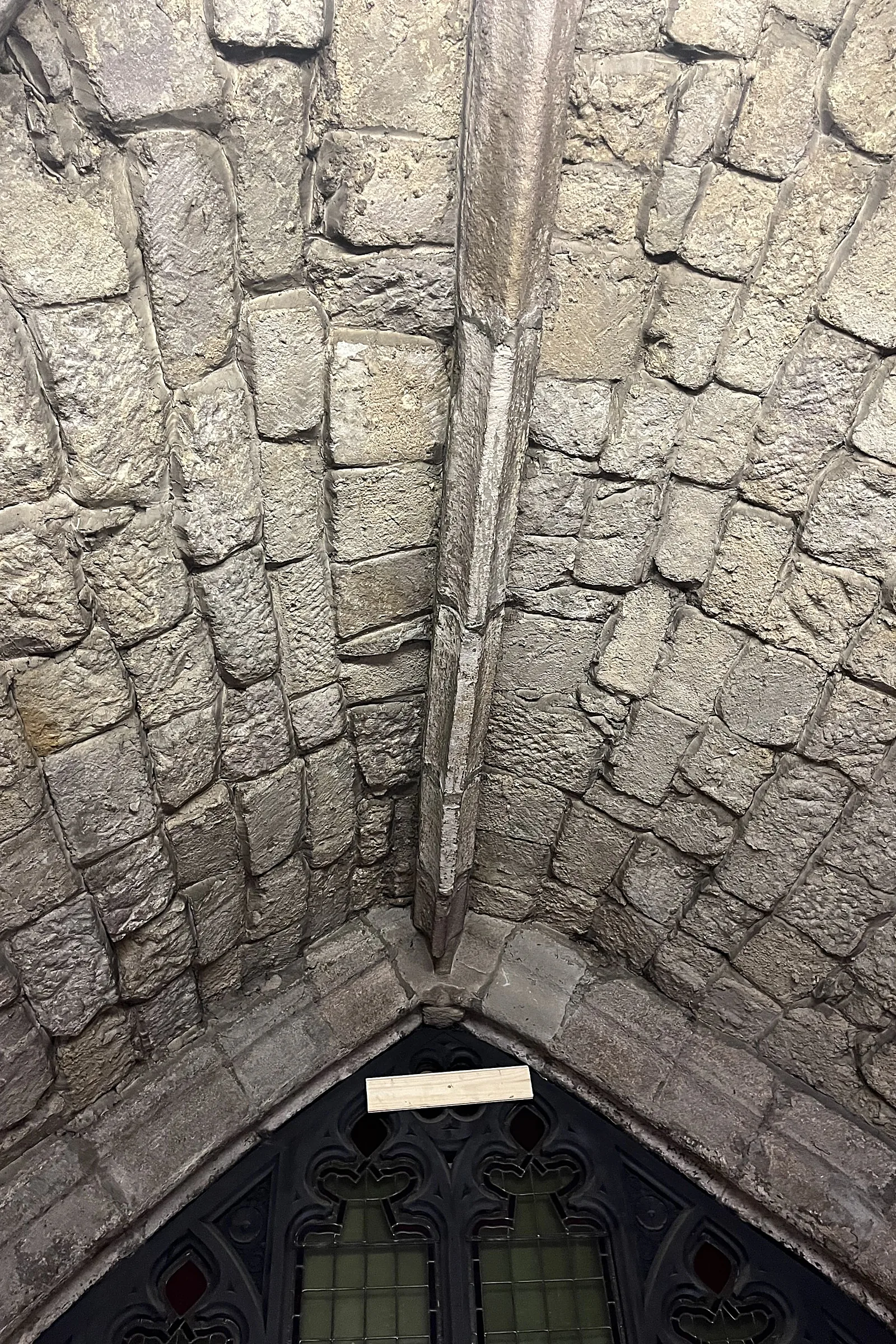
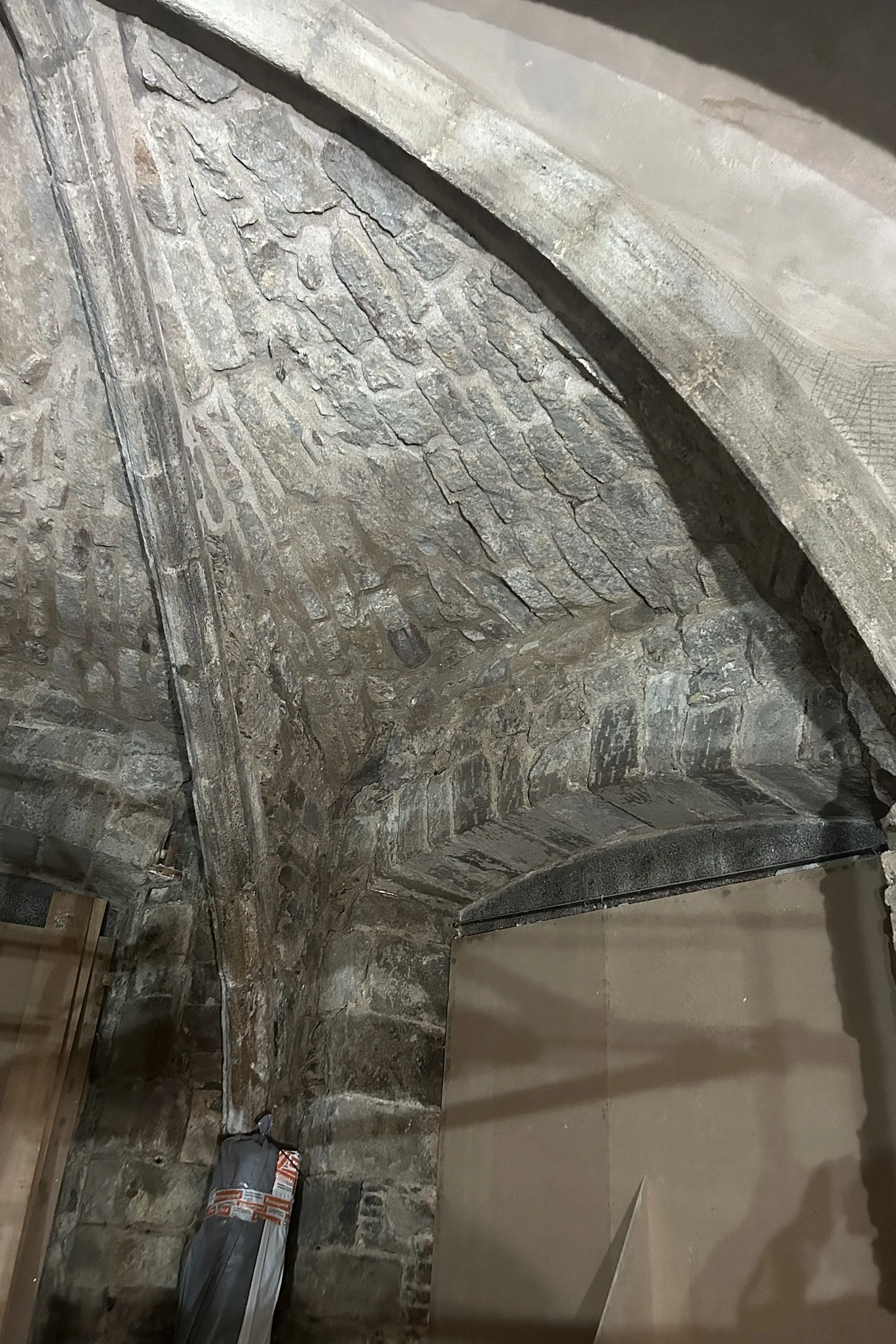
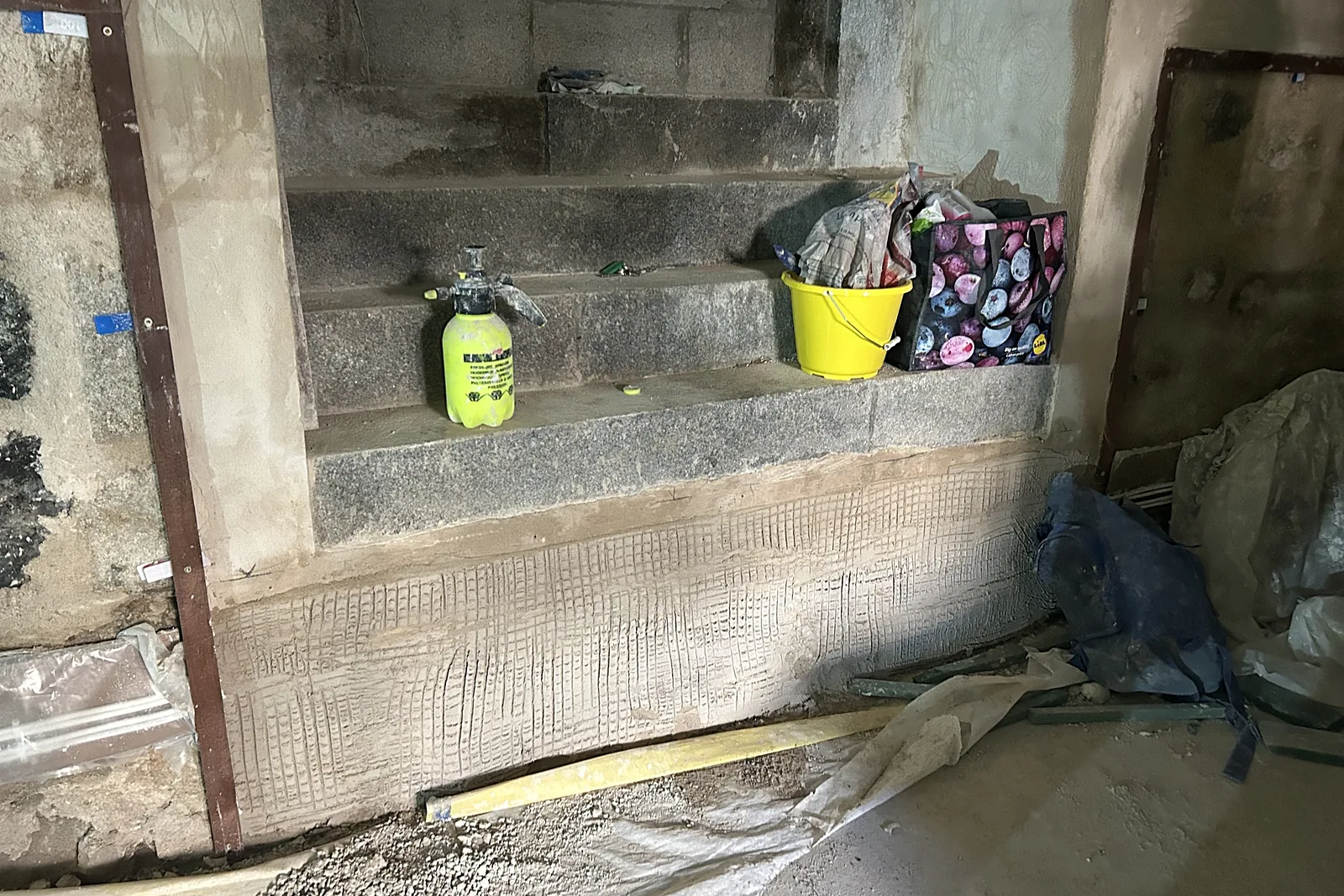
The walls and vaults carried hard gypsum and cement-based plaster over rubble masonry, with cementitious pointing in the joints. Neither suits a medieval masonry structure, and the plaster had to come off without bruising the dressed stone ribs, string courses and openings it ran up to. The new plaster also had to be feathered to those stone margins and meet the existing Victorian timber linings cleanly. With roughly 270 square metres of wall and vault surface to treat, and tight geometry in the vaults, the work had to be done carefully and by hand.
Our solution
Plaster was taken off by hand, with power tools prohibited, to protect the dressed stonework. The cementitious pointing was then raked out by hand to the depths set in the specification, and the joints were cleaned out and repointed in lime in layers, finished recessed to key the plaster. Bedding mortar samples were to be submitted to the Scottish Lime Centre Trust for analysis and specification of the repointing mortars. New plaster followed the specified traditional three-coat system: a first and straightening coat of non-hydraulic lime putty and coarse sand reinforced with animal hair, then a thin, smooth finishing coat of fine sand and a higher proportion of lime putty, applied in stages to the ceiling vaults and walls. Plaster was feathered into the stone margins of openings and the ribs, and patched in around new fixtures, with protection in place while the lime cured.
Outcomes
Cement and gypsum removed
Hard, incompatible plaster taken off the walls and vaults by hand without damage to the dressed stone.
Lime pointing reinstated
Cement-based joints raked out and replaced with lime mortar suited to the medieval masonry.
Traditional lime plaster
Three-coat lime plaster reinstated to the vaults and walls, feathered to the ribs and stone margins.
Have a similar building?
Tell us about it and we’ll come back to you with how we’d approach it.
One of 1,000+ projects
More places of worship
- Barony Hall Steps, GlasgowCase study →
- Ben Alder ChapelCase study →
- Craiglockhart Parish Church, EdinburghCase study →
- Cromarty East ChurchCase study →
- Cultarlann Inbhir Nis, InvernessCase study →
- Fearn AbbeyCase study →
- Greyfriars Church, AberdeenCase study →
- Inveraray Parish ChurchCase study →
- Kildrummy ChurchCase study →
- Kilmorie ChapelCase study →
- Kirriemuir Parish Church, AngusCase study →
- Larbert East Parish ChurchCase study →
Next project
St Margaret's House
Dunfermline