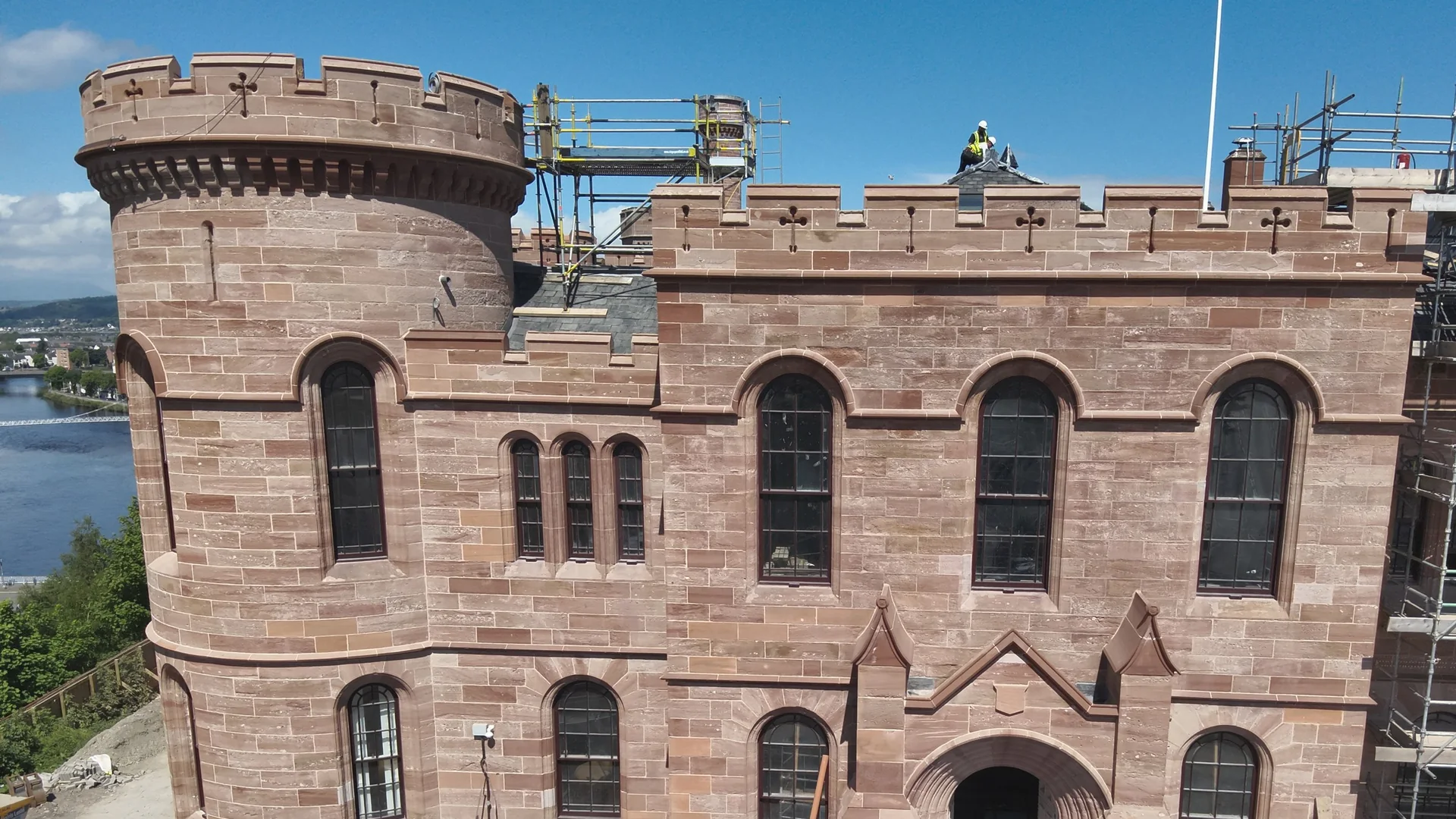
Stone cleaning:
Stone Cleaning
DOFF and TORC cleaning, approved by Stonehealth
We are approved by Stonehealth Rosette for the DOFF and JOS/TORC stone cleaning systems: gentle yet effective methods that clean stone without damage, preserving its historic character. Cleaning is the one job on a building where the wrong tool, or the right tool in the wrong hands, does harm that cannot be undone, so we do it ourselves. Our operatives are trained on the DOFF and TORC systems, they work within LTM's own masonry teams, and they clean to an approved trial panel, not to a hose. The result is stone that looks like stone again: soiling, growth, paint and cement gone, the surface, the arrises and the tooling marks intact, and the wall left dry and breathing.
Two systems, one approved standard
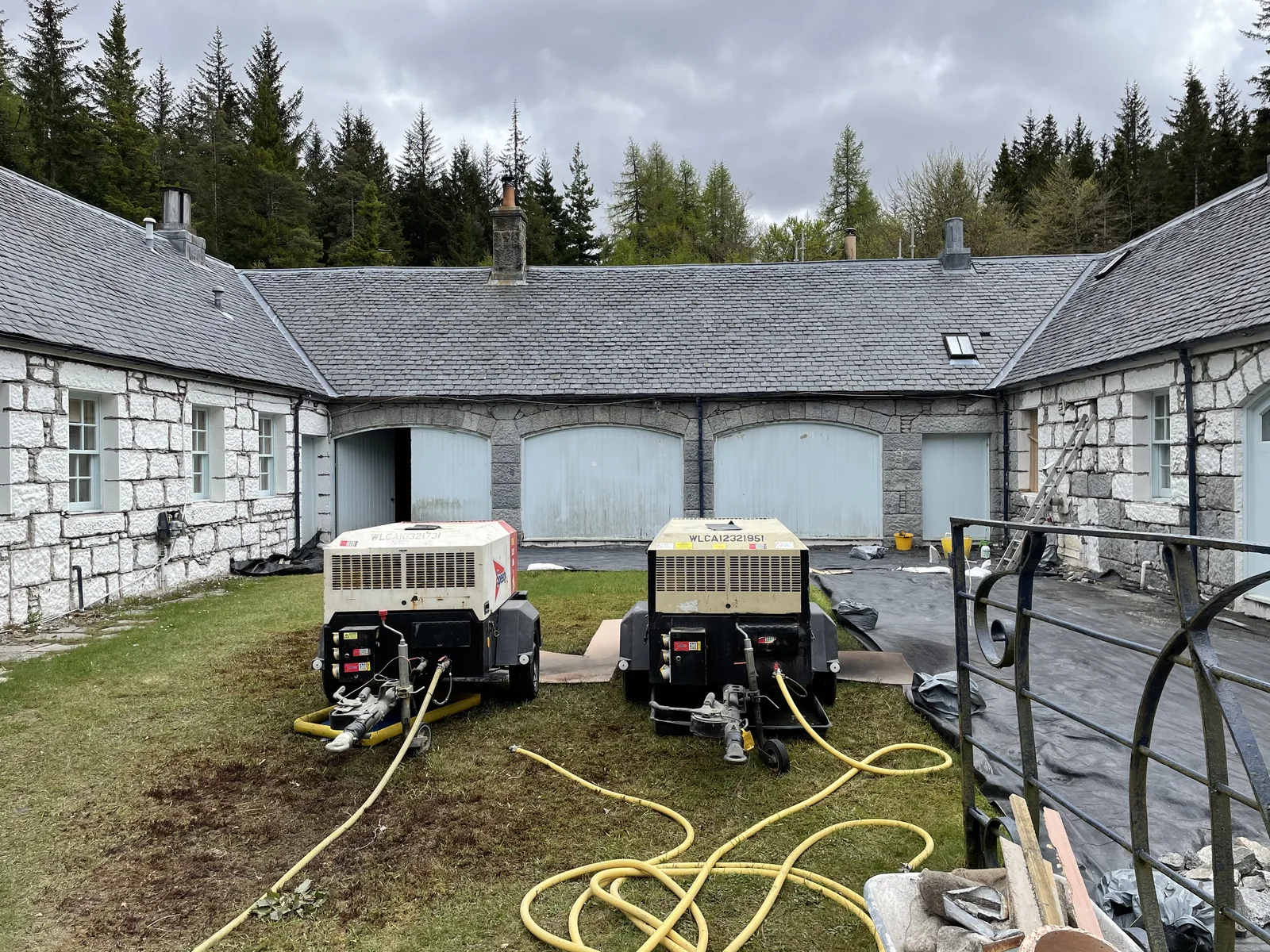
DOFF and TORC do different jobs, and knowing which to use, and when to use neither, is the skill. DOFF delivers a low volume of superheated water and steam, up to 150 degrees, through a nozzle at three to five litres a minute: enough heat to kill algae, moss and lichen at the root, lift bird fouling, chewing gum, wax, oil and most paint coatings, and sterilise the surface, without damaging pressure, thermal shock or deep saturation, so the wall dries within minutes. TORC is not a blasting system. Its nozzle creates a gentle swirling vortex of low volumes of water, air and a fine inert granulate, with apertures from 5 to 13 millimetres, and in trained hands it takes off carbon sulphation, lime and cement paints, plaster and cement residues, limescale and efflorescence from ashlar or fine carved detail while leaving the patina where that is wanted. Both are Stonehealth systems, and our approval under the Stonehealth Rosette scheme means our operatives have been trained and assessed in using them properly.
Trial panels first, then the whole wall
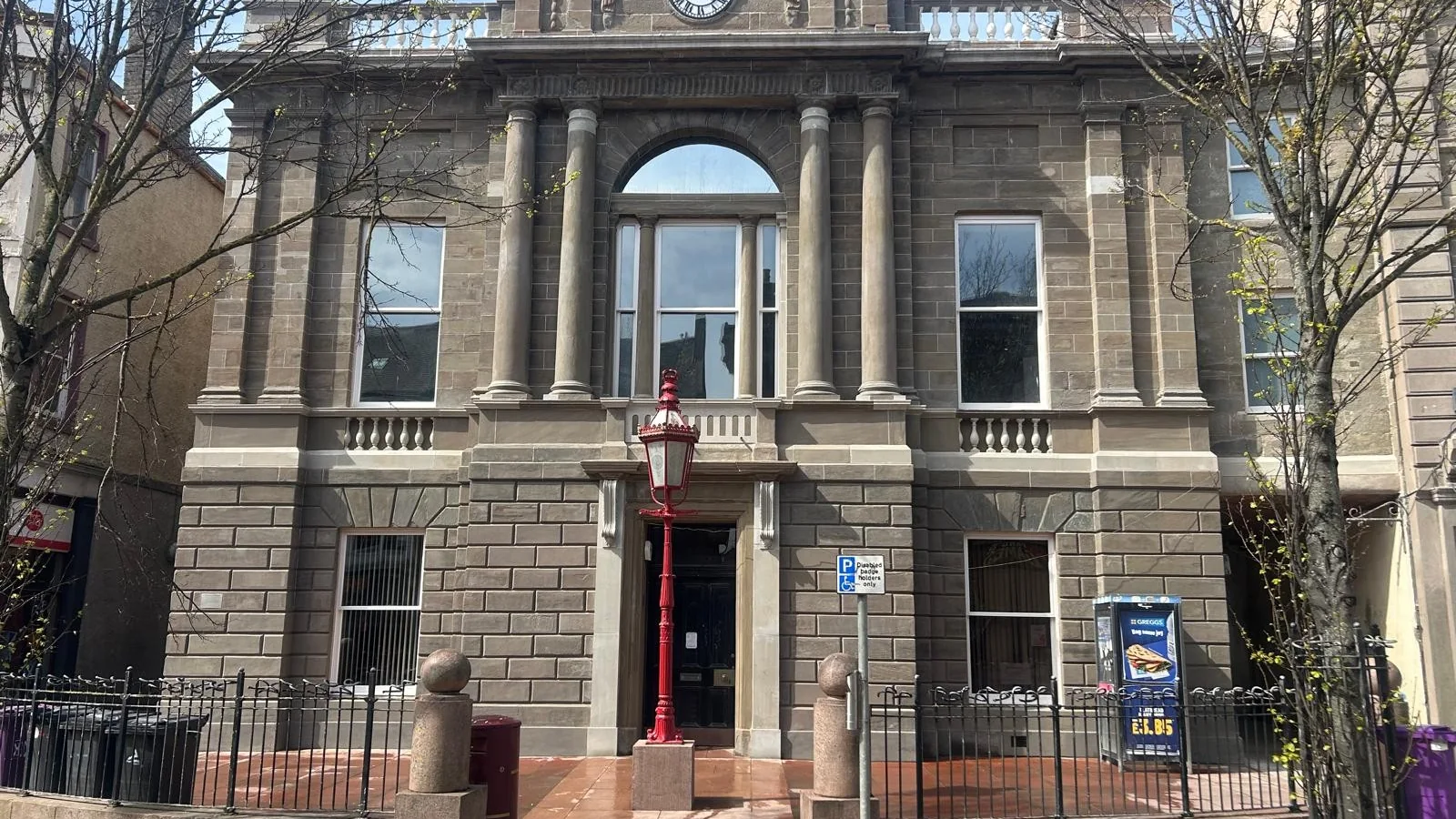
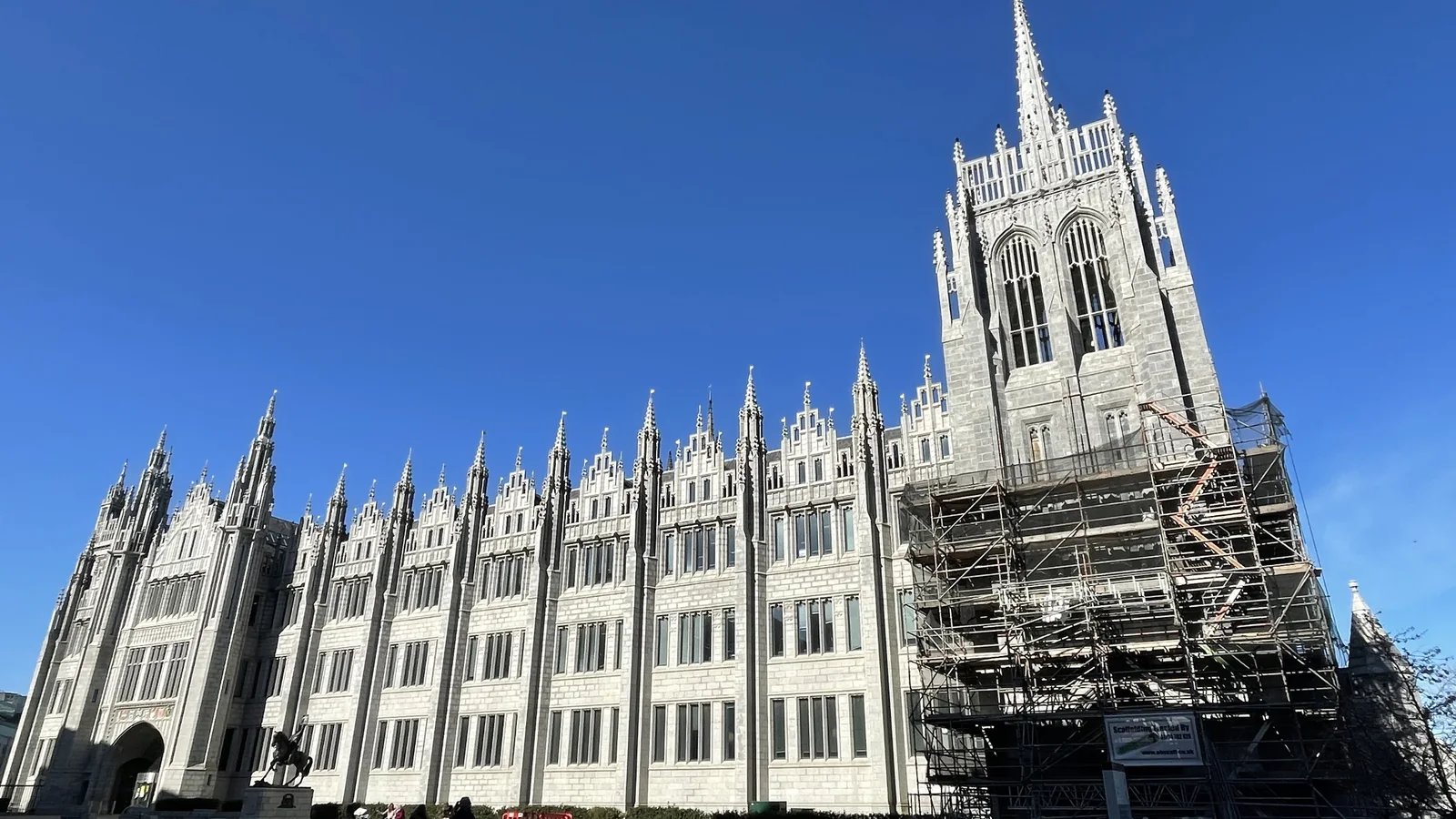
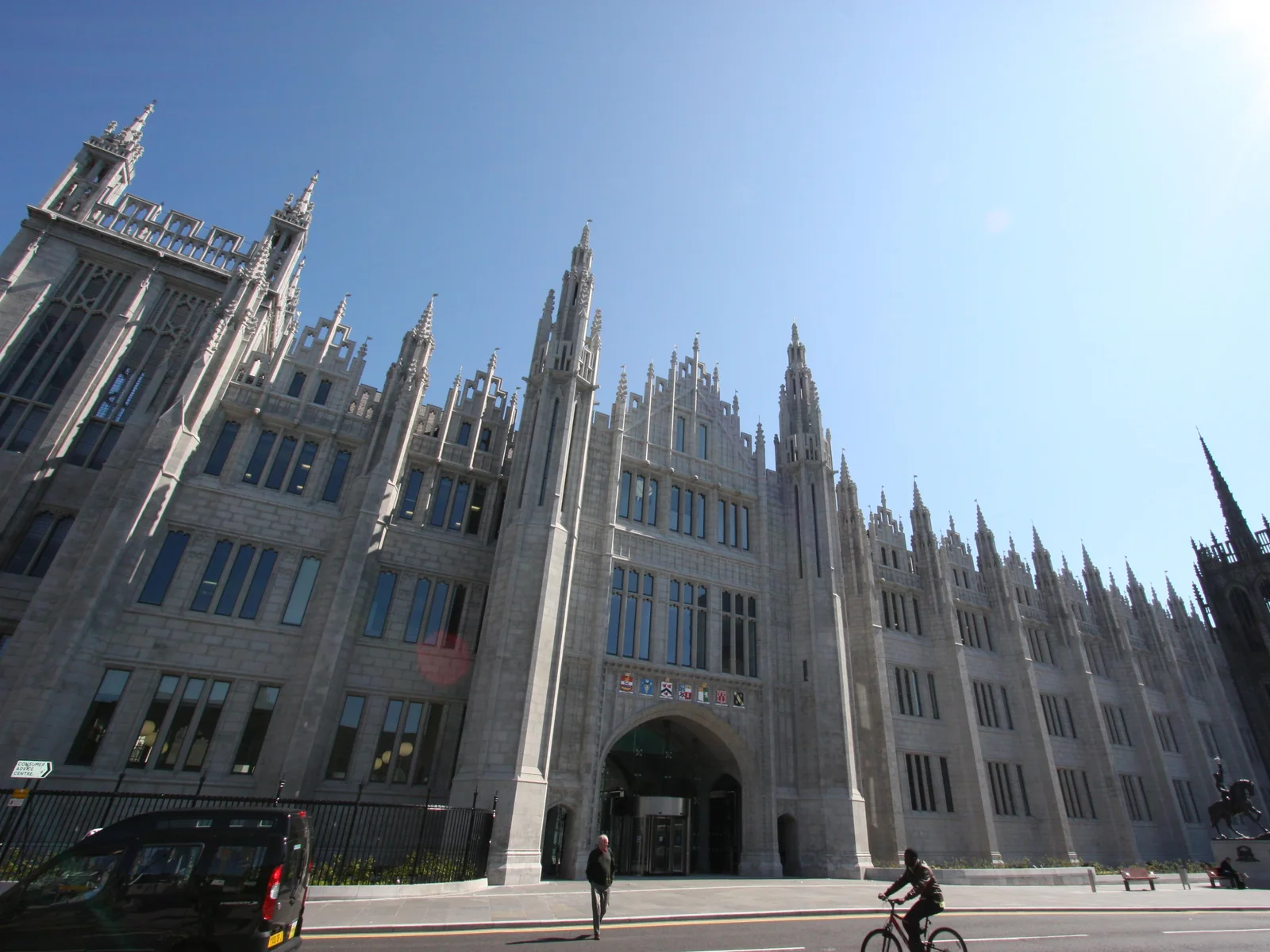
No elevation is cleaned until a trial panel has been agreed. Cleaning in Scotland can need listed building consent or planning permission in its own right, and the specification, usually to BS 8221-1, will set the standard the panel has to reach. We clean the sample areas with the methods proposed, let them dry, and reassess them with the architect or stone consultant before the sample becomes the datum for the whole contract. At Greyfriars Church in Aberdeen twelve sample areas were cut out across tracery, ashlar and entrance for the masonry consultant to approve before the Kemnay granite was steam cleaned and then taken down with a low-pressure wet slurry to match the adjoining Marischal College facades. At Clackmannan Town Hall the red sandstone was cleaned with DOFF against an agreed trial panel and the method adjusted surface by surface; at Fairburn Tower sample areas and trial cleaning were agreed with the architect before each process began. The panel also protects the client: what was approved is what the building gets.
Paint and cement off, lime back on
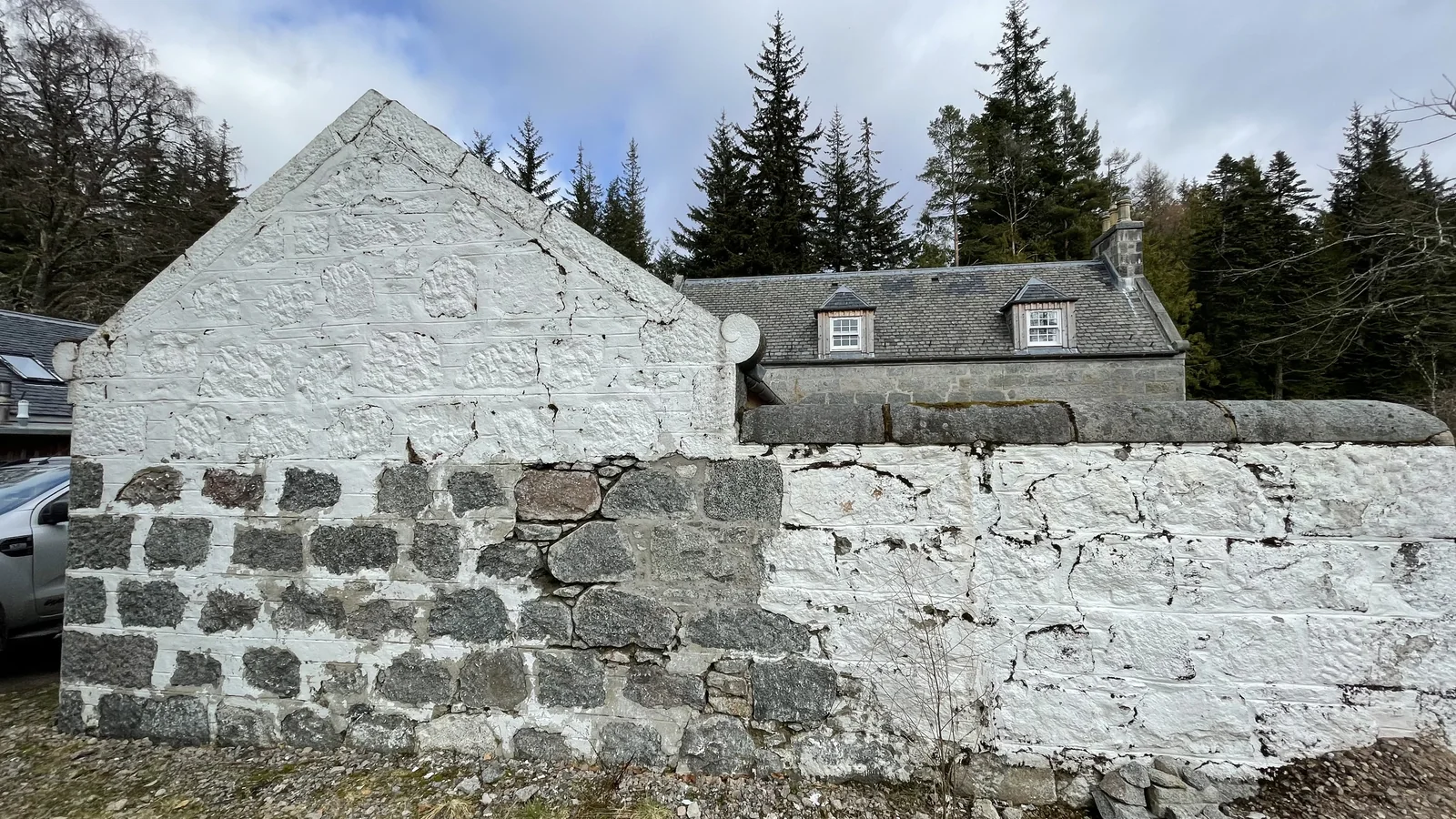
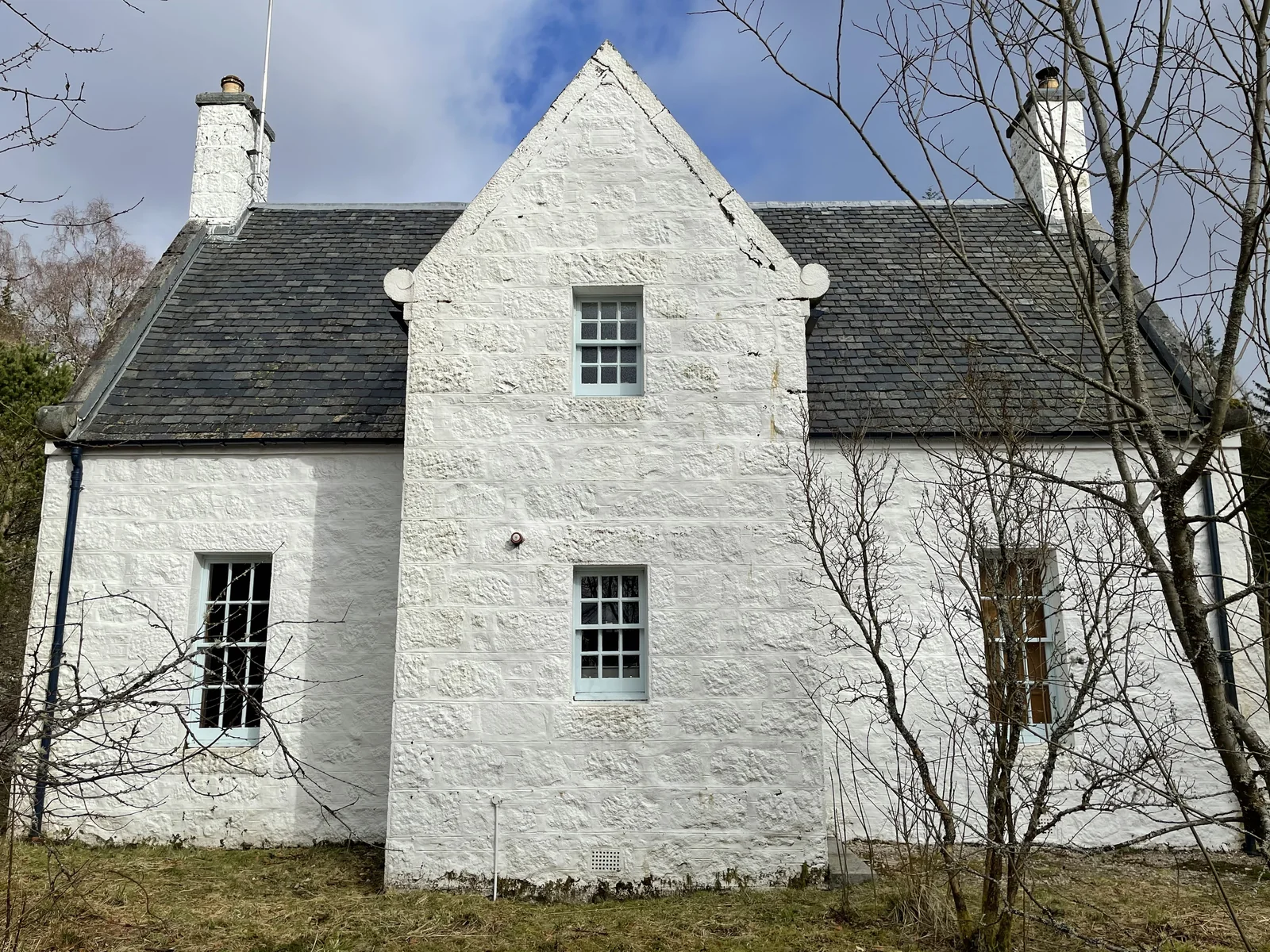
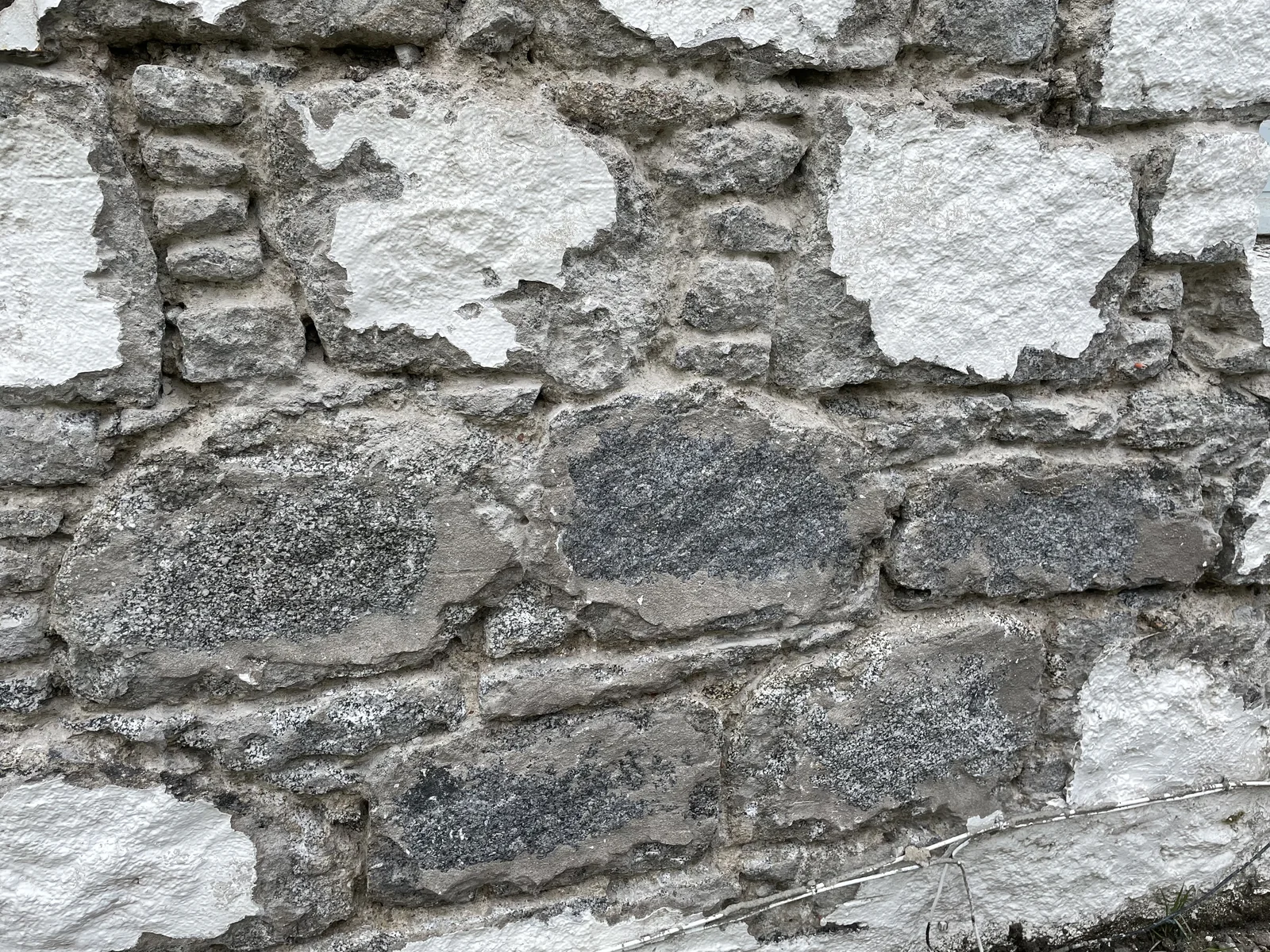
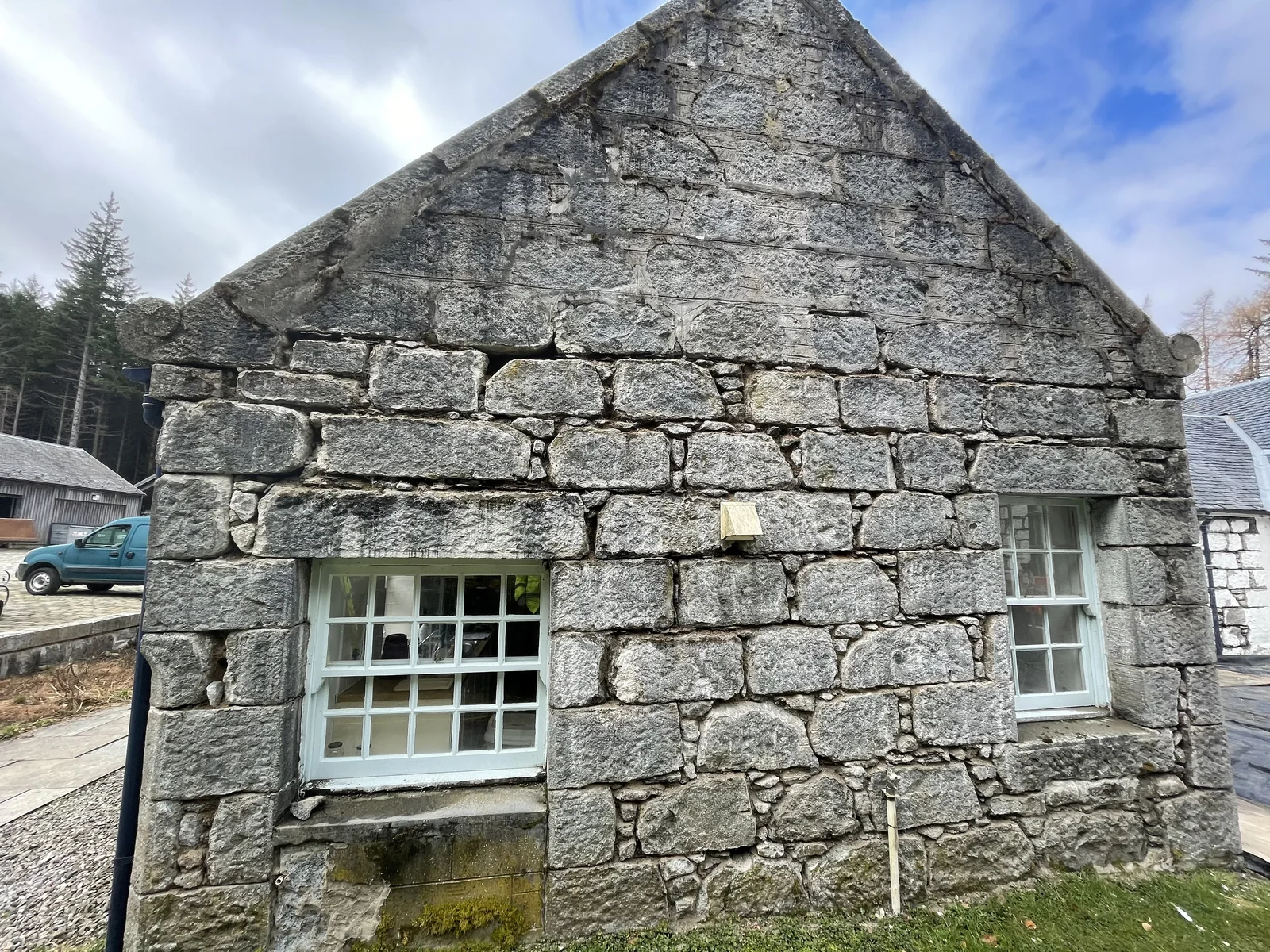
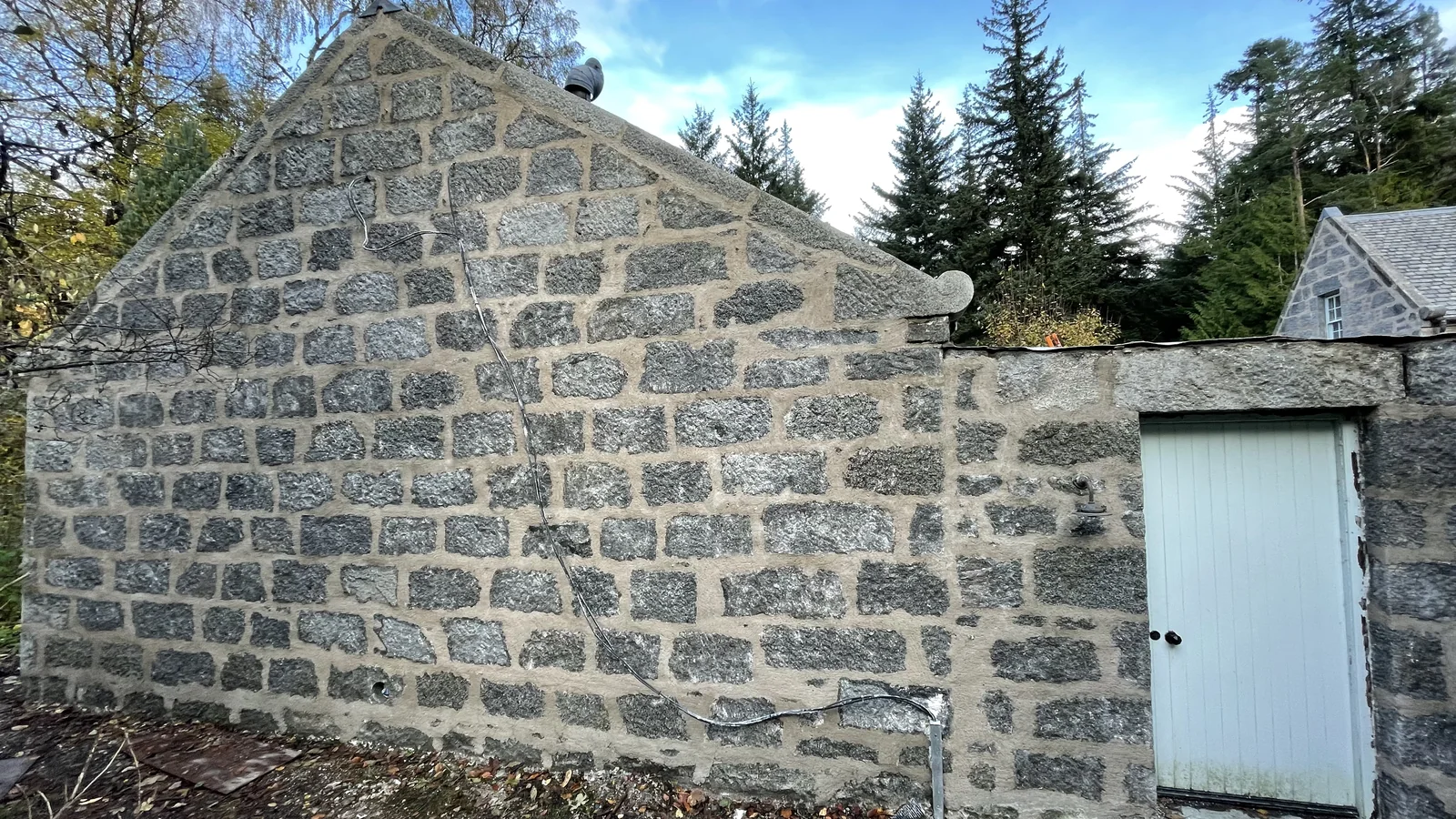
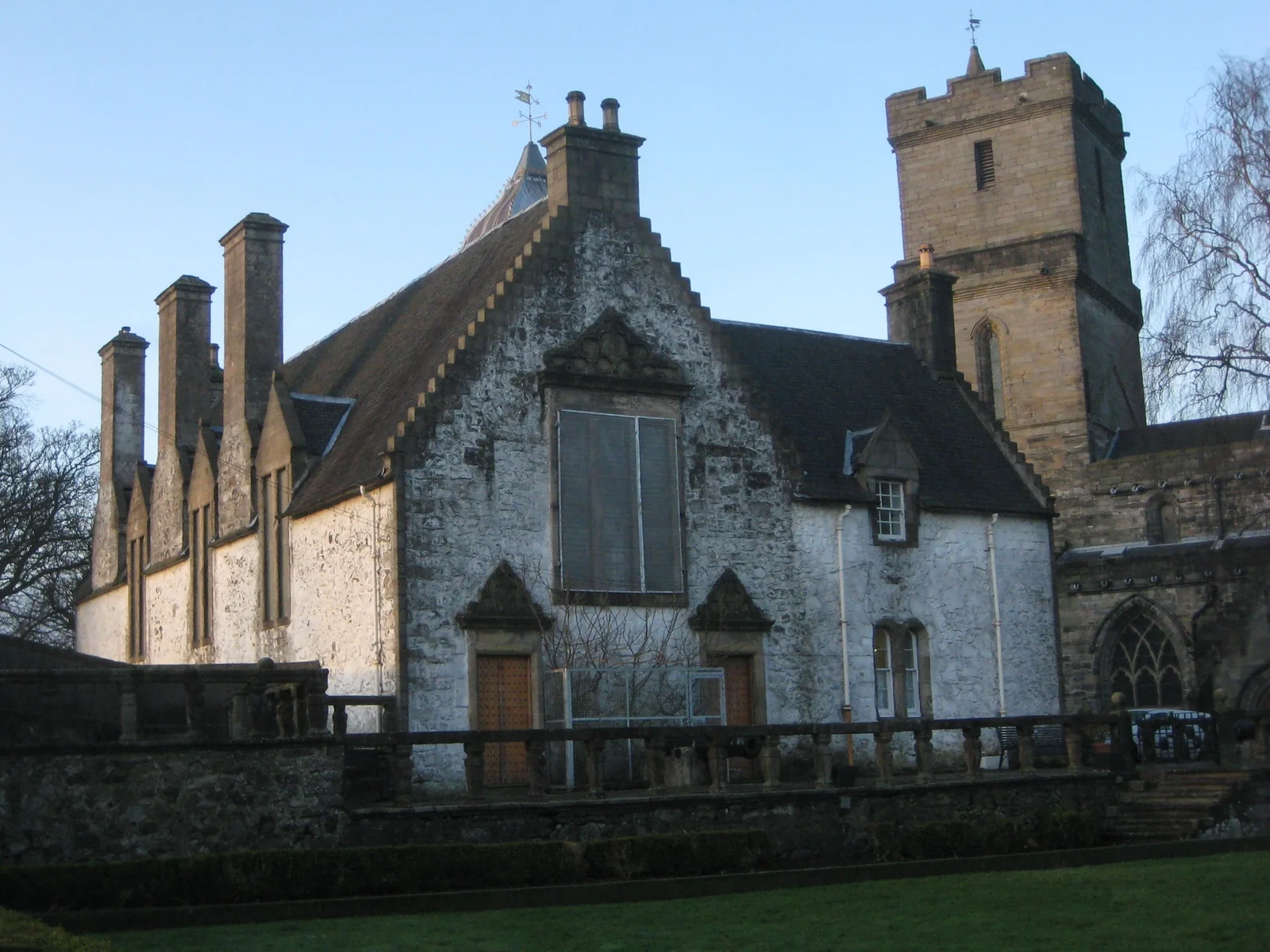
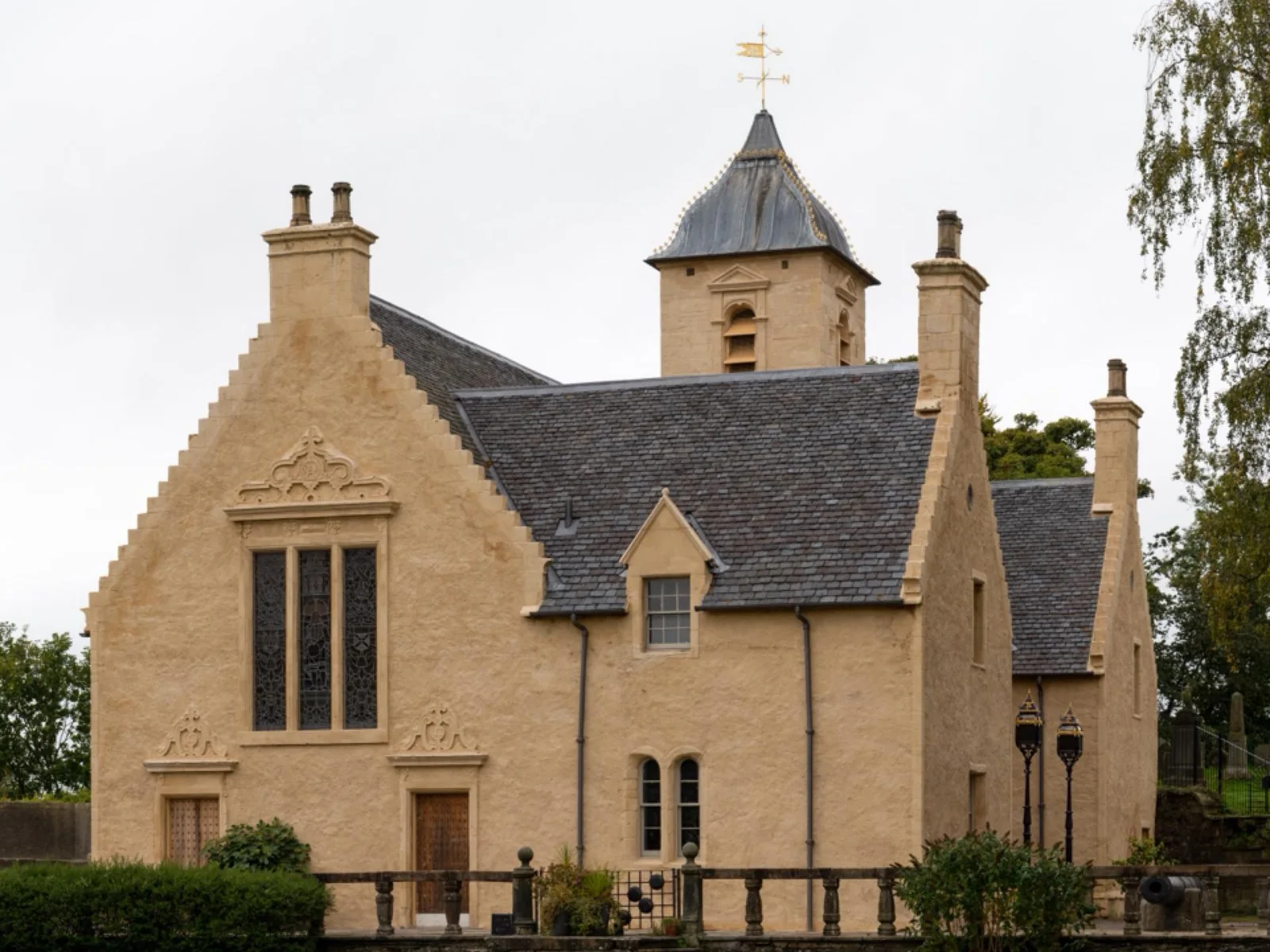
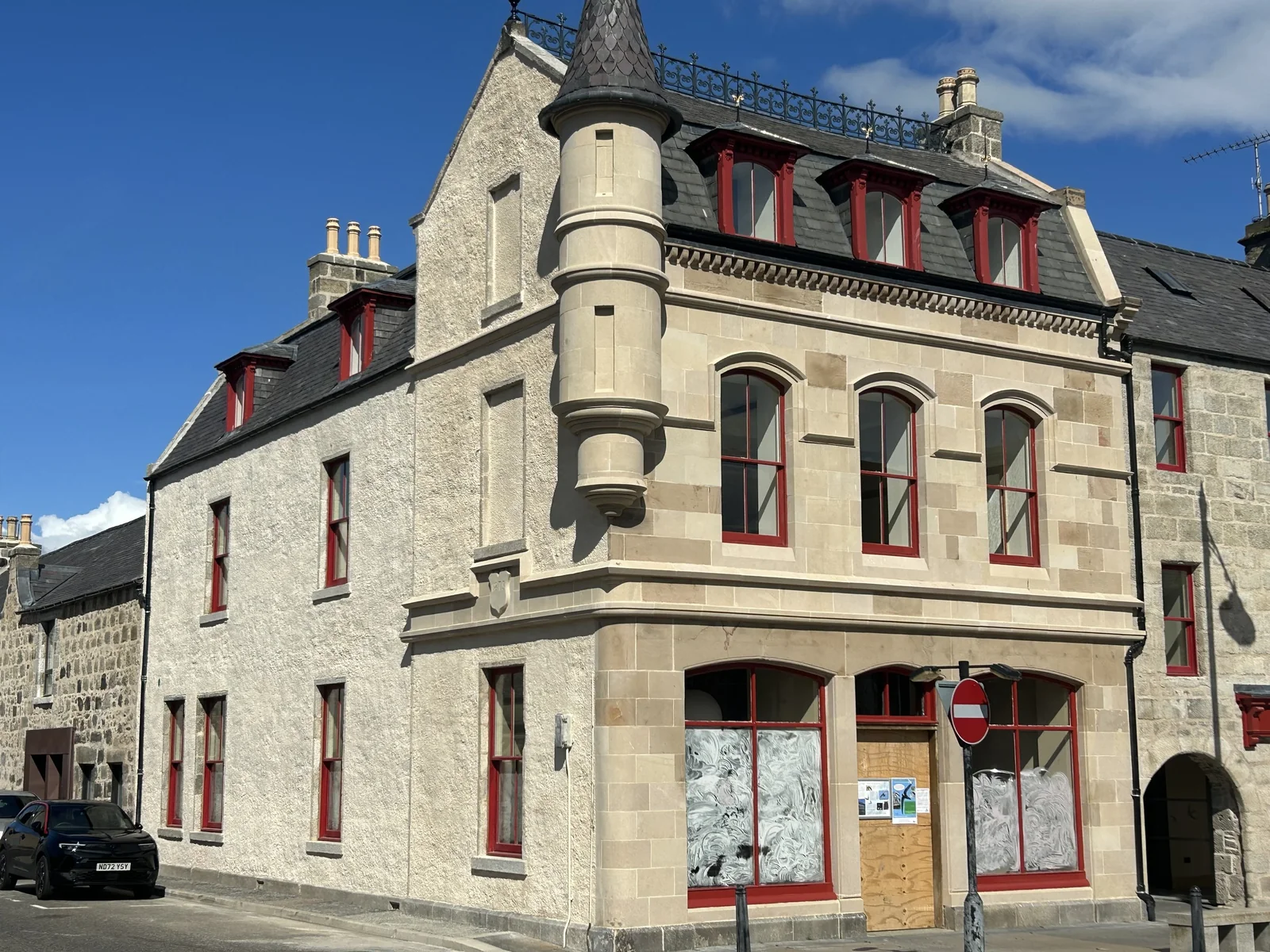
The most common reason we are asked to clean a historic building is that someone painted it. Masonry paint and cement pointing seal a wall that was built to breathe, and the damage shows as damp inside and spalling outside. At Corrour Estate, a remote Highland village of granite estate buildings reached by rail or a long track, five buildings had been cement pointed and painted; the paint was taken off the granite, the cement raked out, the wallheads and chimneys rebuilt and every joint repointed in a hot-mixed lime mortar, all under a NatureScot bat licence. At Cowane's Hospital in Stirling paint removal was trialled with DOFF, then carried out with TORC, which proved more effective on the coatings found, before the walls were lime harled and limewashed. At Finnich Malise House the sandstone was DOFF cleaned and the failed masonry coatings taken off with TORC before new Cove red sandstone indents went in, and at Cromwell Tower in Old Aberdeen TORC took the thin cement laitance off the brick face to give the new lime harl a clean, absorbent substrate. At 30 The Square in Huntly paint and grime came off the granite and sandstone frontage with DOFF before the corner turret was rebuilt.
Cleaning as the first repair
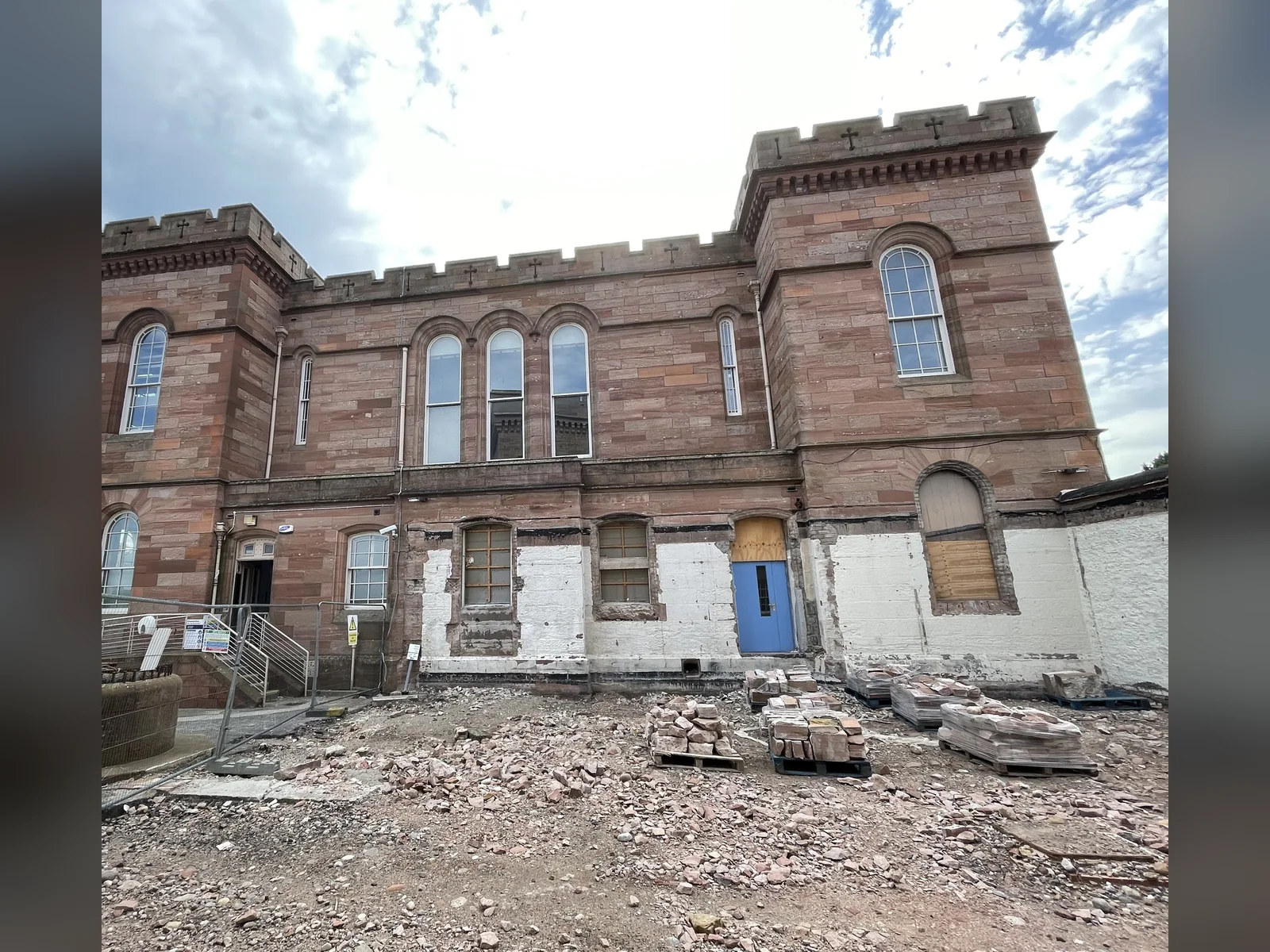
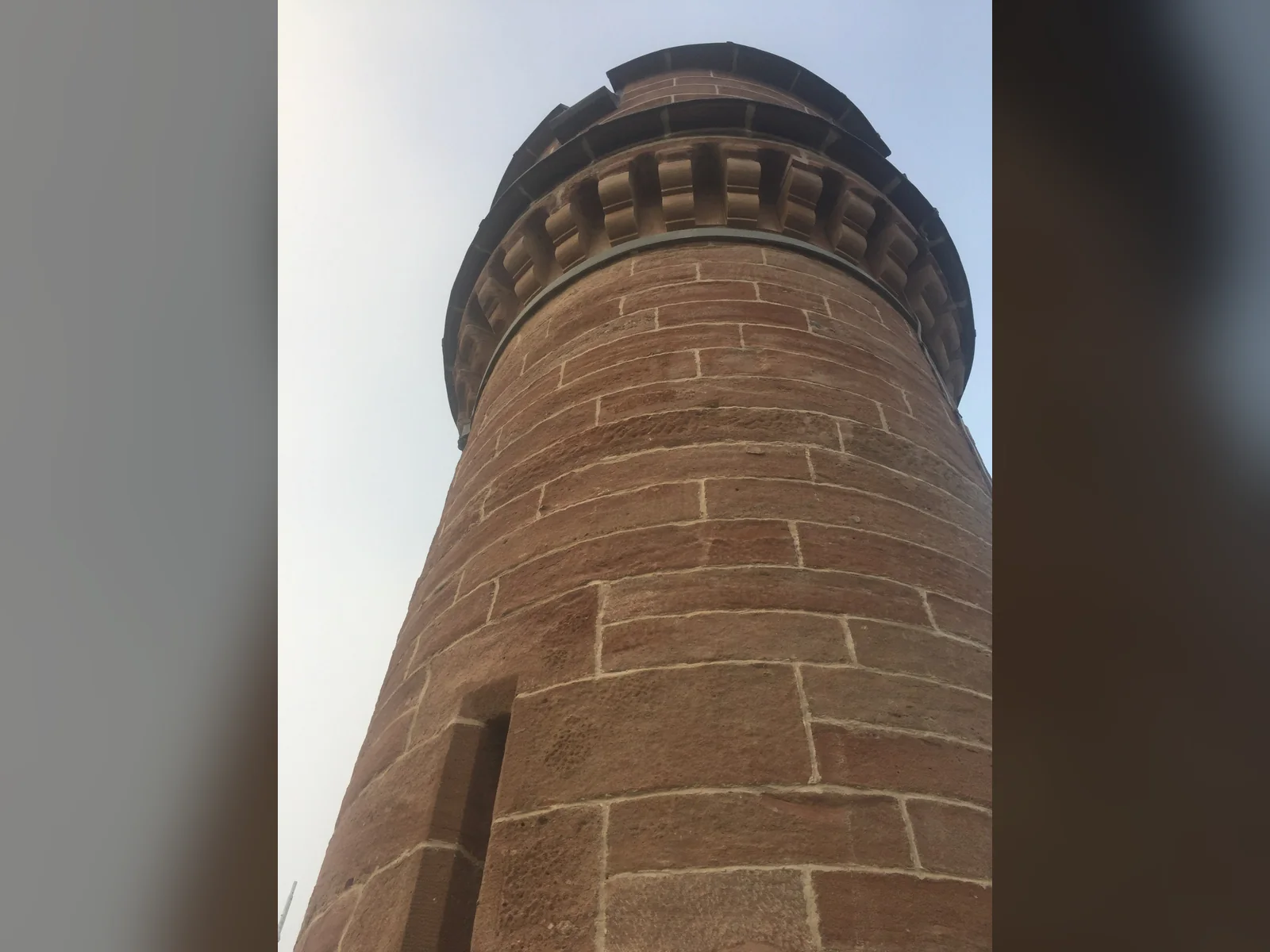
Cleaning is also diagnosis. Until soiling, growth and old coatings are off, nobody can see what the stone is really like, which is why on our masonry contracts the DOFF goes on before the survey is finalised. At Inverness Castle, a Category A listed building being restored for The Highland Council, vegetation was removed by hand and the sandstone cleaned with DOFF before the cement repairs were taken out, the stone defrassed and the decayed blocks replaced. At 1a Pumpgate Street in Inverness and at St John the Evangelist Church in Portobello, selective DOFF cleaning exposed the flaws in the stone and set the repair schedule; at Arbroath Courthouse the sandstone was descaled and cleaned with DOFF so that most of it could be kept through consolidation and colour-matched lime repairs rather than replaced. Where there is no masonry package, DOFF and TORC cleaning is a specialist package in its own right, as it was for Hadden Construction at Clackmannan Town Hall, with wash water collected and controlled on a narrow one-way street.
Granite, sandstone and brick
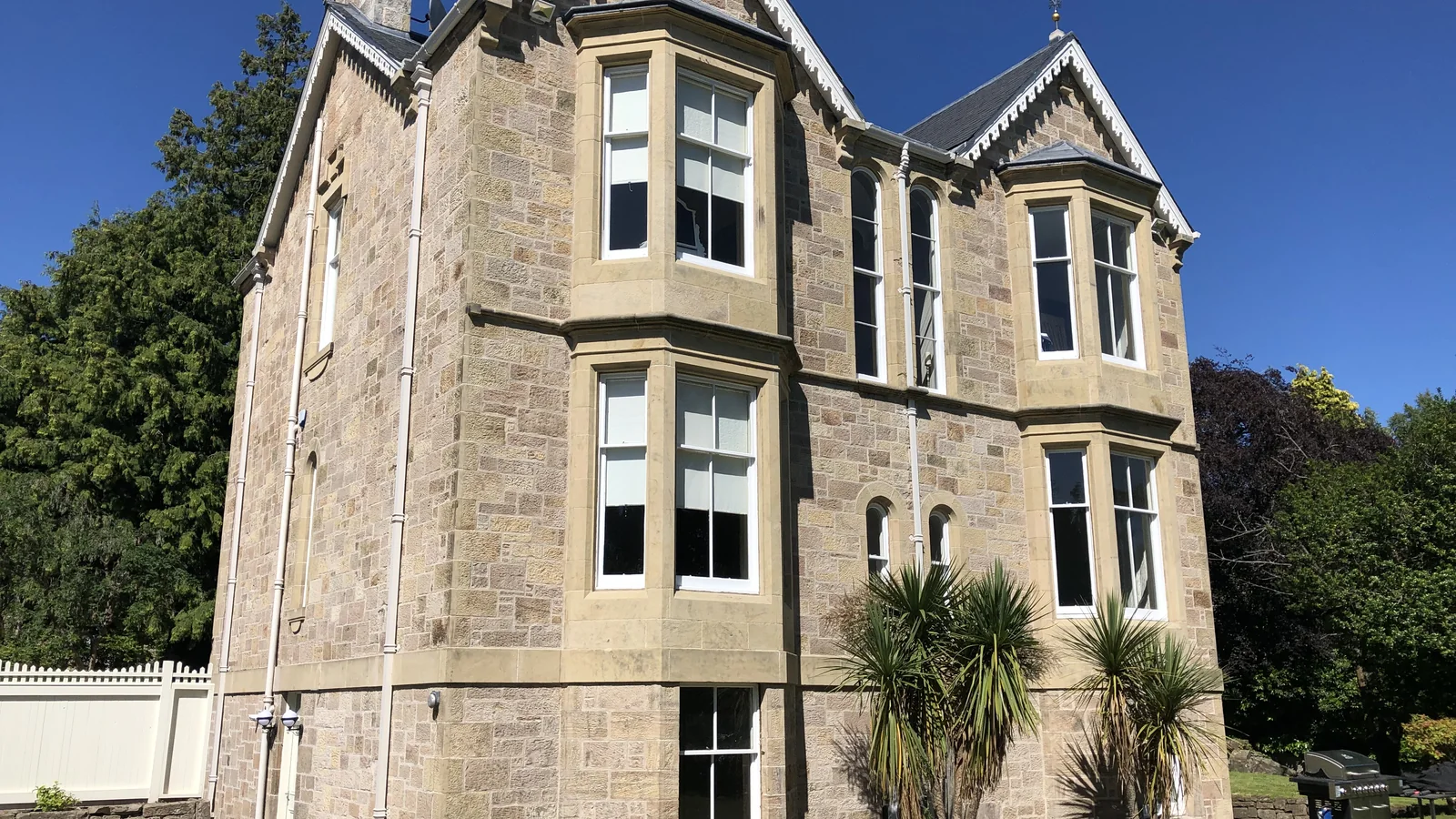
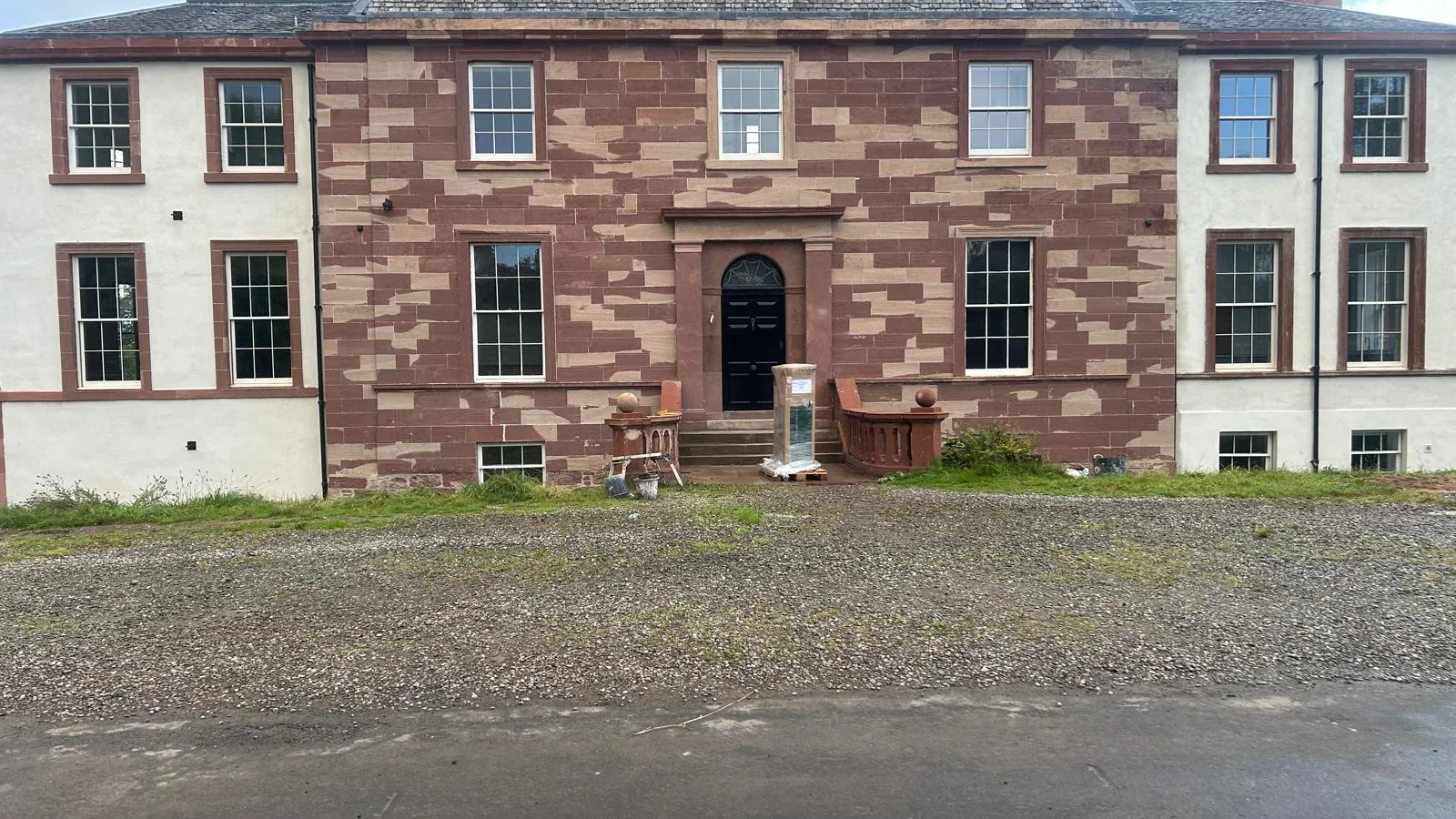
Each stone soils and cleans differently. Kemnay granite has a rough surface that holds dark particulate soiling and black gypsum crusts; it is hard enough to take a low-pressure wet slurry, and the Greyfriars Church specification called for steam to lift the organic growth and loose soiling first, then a wet slurry through a small straight nozzle to all granite surfaces, with run-off collected at three levels of the tower and bagged for disposal. Soft red and blonde sandstone will not take an abrasive at all, so it gets DOFF, hand scraping of crusts and biocide, as at Inverness Castle, Rose Street Foundry in Inverness and the sandstone villas and civic buildings we work on across central Scotland. Brick and terracotta take TORC for cement and paint residues. On bridges, such as Elgin's Bridge at Huntly, DOFF and hand work remove moss, efflorescence and calthemite before repointing. And at 1a Pumpgate Street, Silk House in Falkirk, Balgray House and Clebrig Lodge the cleaning sat inside a wider lime repair contract, which is where it usually belongs.
Containment, protection and record
Cleaning a building in a city centre is as much about what does not happen as what does. Windows, doors and rainwater goods are protected, scaffolds are sheeted and boarded lifts tanked so that slurry and water are redirected and collected rather than running down the facade or on to the pavement, gutters are kept clear, and residues are bagged and disposed of through the local authority's agreed route. Passers-by and neighbouring buildings are kept clear of every part of the process. Water flow and, on TORC, the granulate ratio, nozzle size and working distance are recorded against each elevation so that the standard set by the trial panel is held from the top of the building to the bottom. Where the specification asks for it, a biocide wash follows the clean, and a breathable water repellent impregnation can be applied once the walls have dried out and any repairs have cured.
What it means for your building
Clean, not scoured
Soiling, growth, paint and cement come off; the face of the stone, its arrises and its tooling stay. Nothing abrasive goes near soft stone or carved detail.
Our own operatives, Stonehealth approved
DOFF and TORC cleaning by LTM's own trained teams under the Stonehealth Rosette scheme, working within the same contract as our masons, harlers and conservators.
Agreed before it starts
Trial panels approved with your architect or stone consultant to BS 8221-1, consent in place where cleaning needs it, and the approved panel held as the standard for the whole building.
Over 25 years of heritage work
A multi-award-winning team with its own SQA-approved traditional skills academy, cleaning and repairing stone from castles and cathedrals to estate cottages.
Stone that has lost its colour?
Send us photographs of the elevation and tell us what is on it, soiling, growth, paint or cement, and we will tell you which system will take it off safely, whether consent is needed and what a trial panel will show.
Cleaning on site
Stone cleaning case studies
- Inverness CastleCase study →
- Greyfriars Church, AberdeenCase study →
- Corrour Estate
- Cowane's Hospital, StirlingCase study →
- Marischal College, AberdeenCase study →
- Arbroath CourthouseCase study →
- 30 The Square, HuntlyCase study →
- Finnich Malise HouseCase study →
- Cromwell Tower, Old AberdeenCase study →
- Clackmannan Town HallCase study →
- Fairburn TowerCase study →
- Rose Street Foundry, Inverness
- Elgin's Bridge, HuntlyCase study →
- 1a Pumpgate Street, InvernessCase study →
- St John the Evangelist Church, Portobello
- Silk House, FalkirkCase study →
- Balgray HouseCase study →
- Clebrig Lodge, AltnaharraCase study →
Next service
Stone Conservation
Preserving stone heritage, with our own in-house conservators