Drawing out the damp:
Bannockburn House
Bannockburn, Stirling · 2026
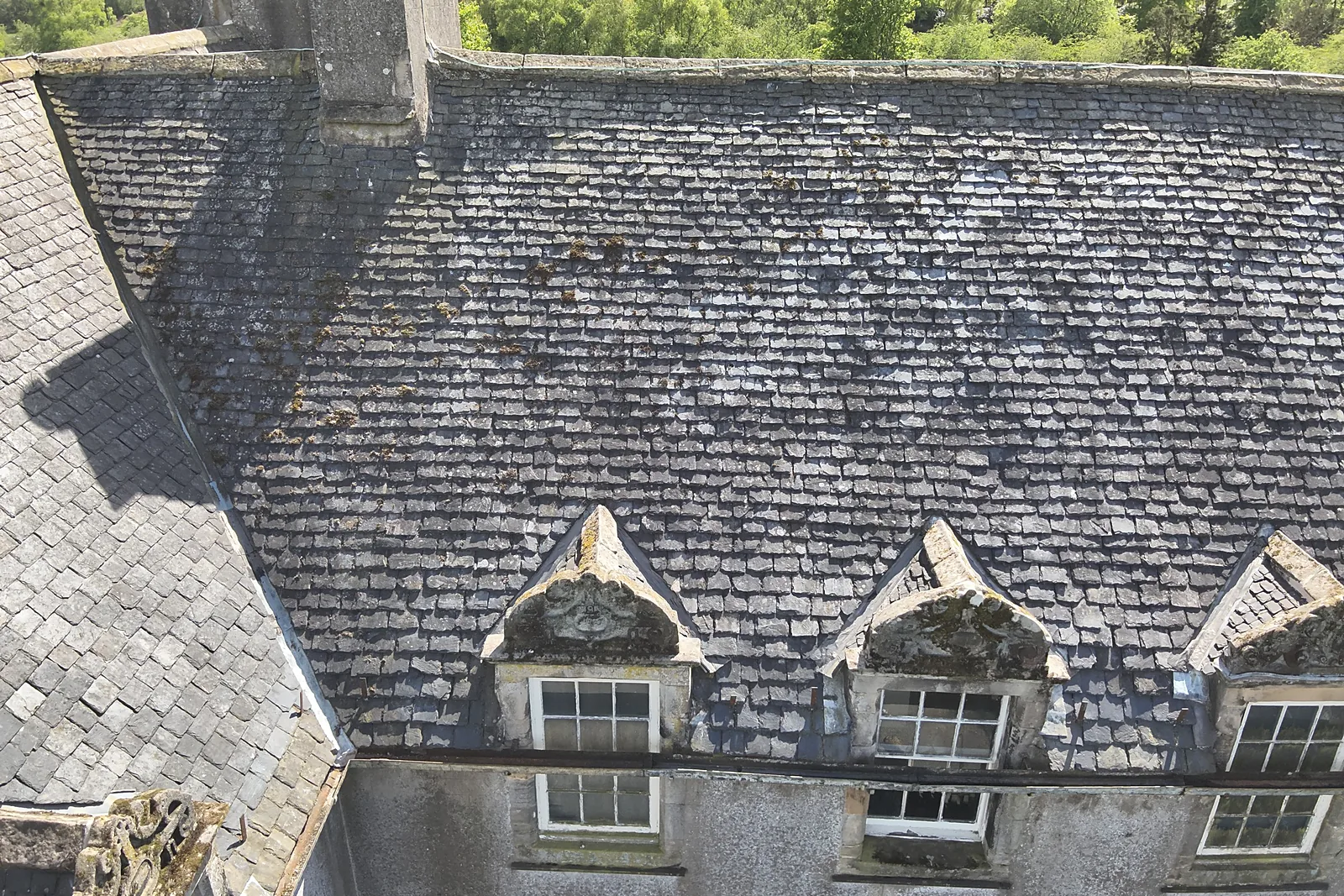
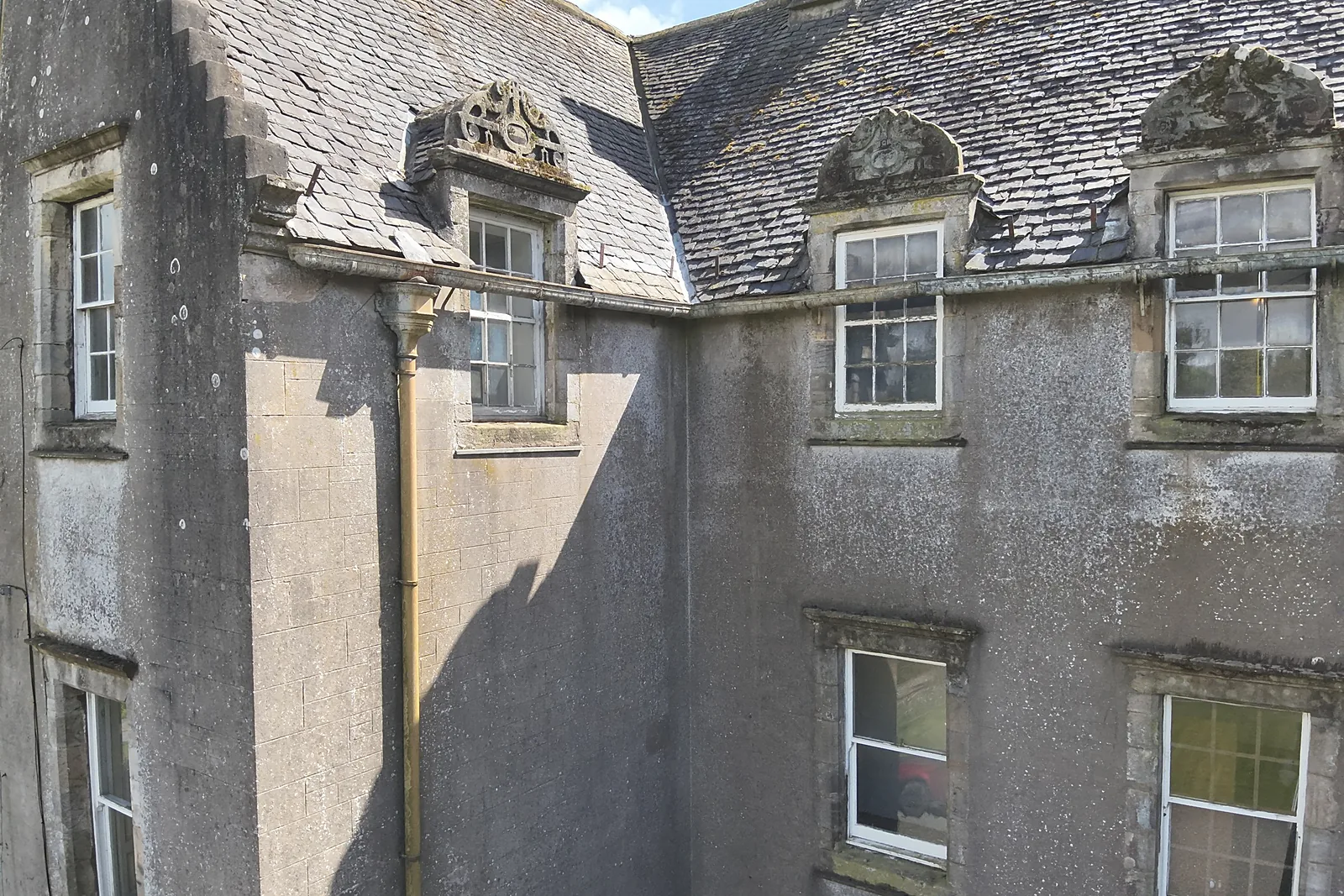
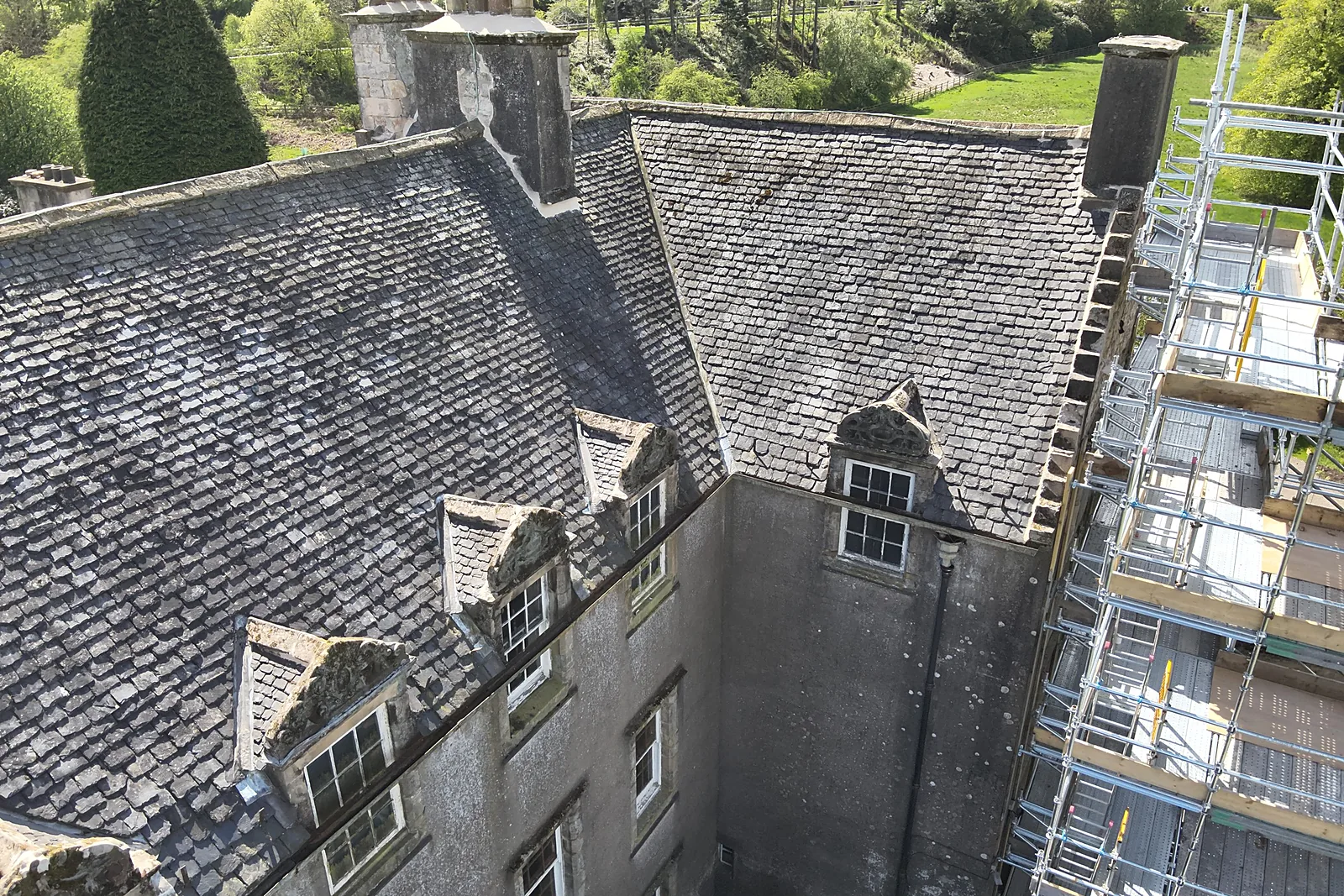
Bannockburn House is one of Scotland's most important surviving late seventeenth-century houses, with interiors that remain remarkably untouched and a place in history as the house where Prince Charles Edward Stuart stayed in 1746. Now in community ownership, it is being rescued by the Bannockburn House Trust. Working alongside the Trust, the design team and main contractor Reigart, we carried out emergency stabilisation of the north gable, using hot lime to draw moisture out of the walls.
The challenge
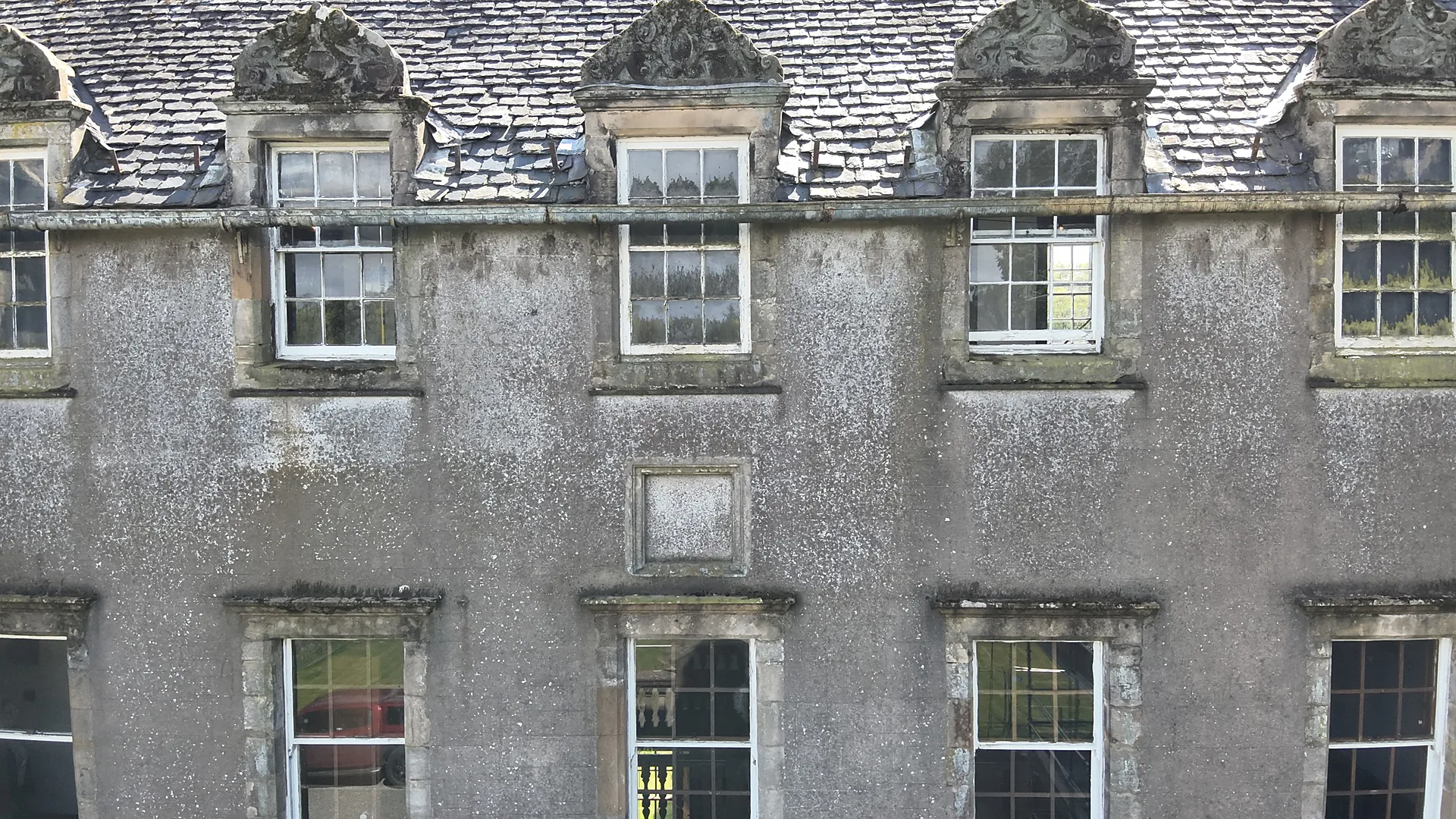
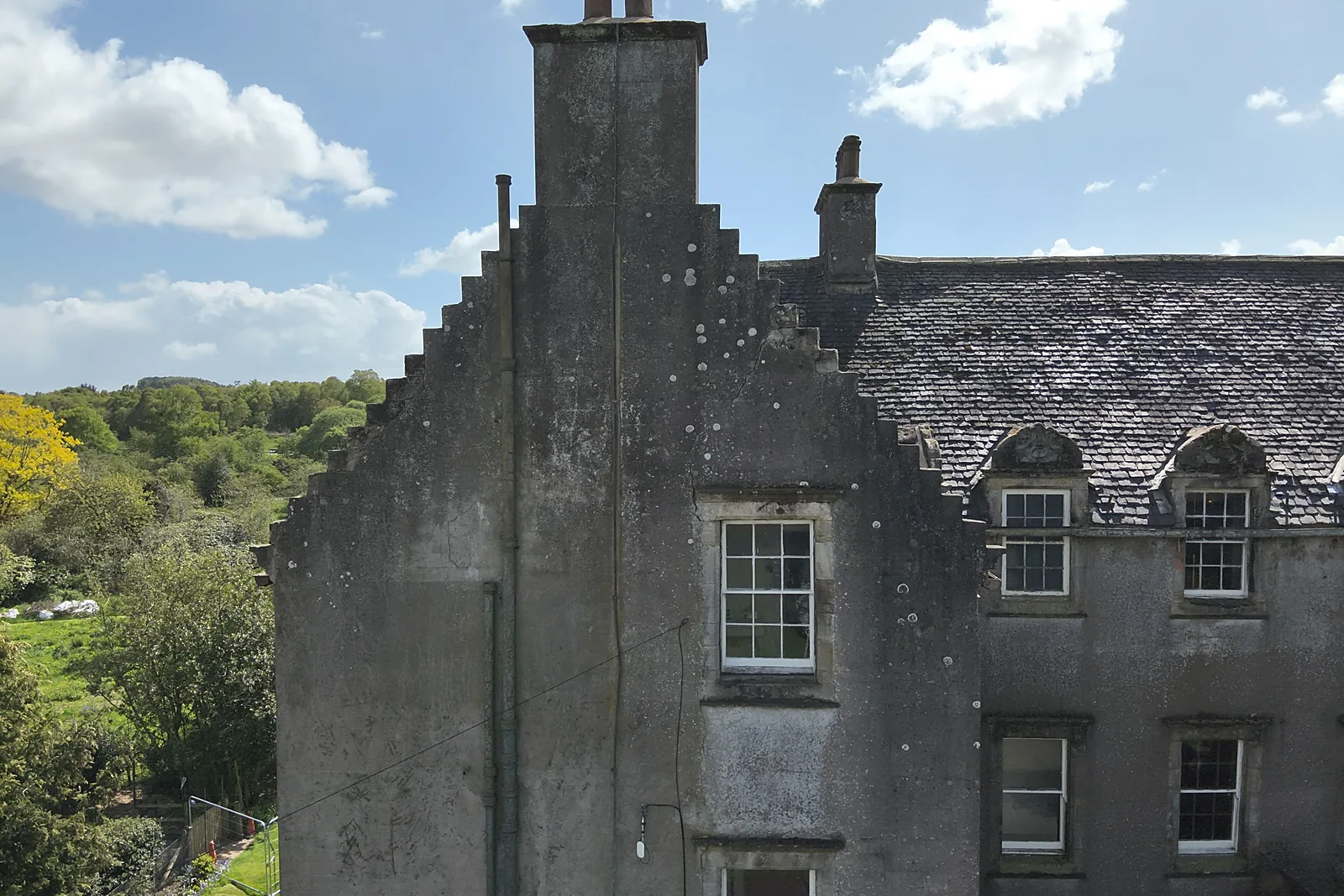
The north gable had been coated in hard cement render that was trapping water in the rubble walls, letting damp reach the historic interiors and driving decay from the inside. Behind the render the masonry was saturated, the crowsteps were open to the weather, and nobody could say for certain how sound the wall would be until the cement came off.
Our solution
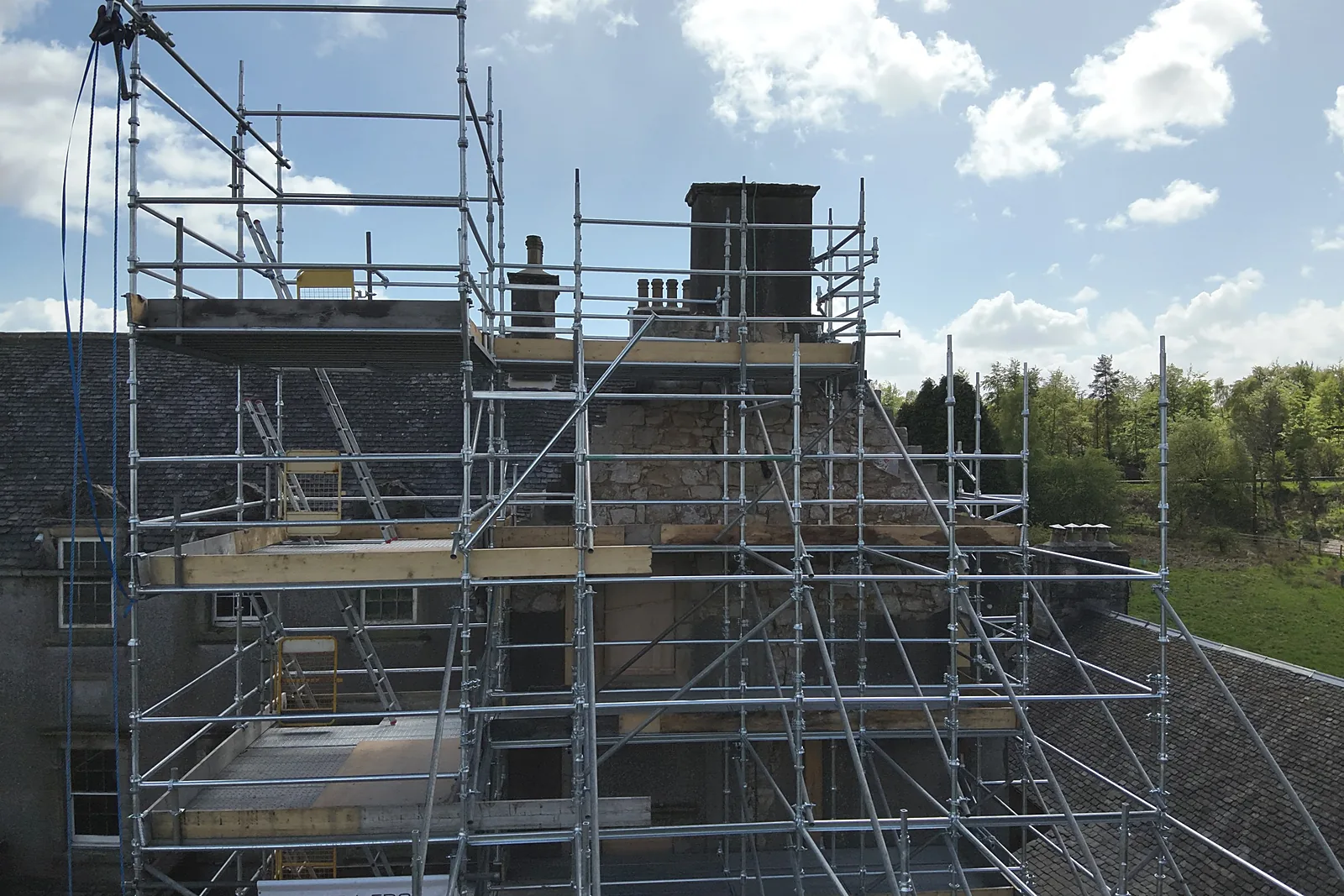
Every area of the gable was tap tested and the boss render removed by hand, a section at a time, so the rubble could be inspected and stabilised as it was exposed. With the client and design team on site, it was agreed to take off as much cement as possible so the wall could dry, and no rebuilding proved necessary. Mortar samples were analysed by the Scottish Lime Centre Trust, which found an eminently hydraulic, hot-mixed lime with crushed brick, and we matched it with a hot mix of Otterbein quicklime, St Astier NHL 3.5, local Cambusmore sands and brick dust. The rubble was deep packed, pinned and pointed, defective cement was cut out of the crowsteps and repointed in lime, and a weaker, open-textured hot lime harl was spray applied as a sacrificial coat to poultice moisture out of the masonry and draw it to the outer face.
Outcomes
Walls able to breathe
Cement render removed so the saturated rubble core can dry out and protect the interiors.
A sacrificial, renewable coat
An open-pored hot lime harl draws moisture and salts out of the wall and can be renewed as part of ongoing conservation.
Teamwork on a tight budget
Scope agreed on site with the Trust, Simpson & Brown, Narro and Reigart, with extra render removal and crowstep repointing delivered within the awarded budget.
Have a similar building?
Tell us about it and we’ll come back to you with how we’d approach it.
One of 1,000+ projects
More country estates
- 41 Newington Road, EdinburghCase study →
- Ardverikie HouseCase study →
- Asknish House, ArgyllCase study →
- Balgray House, LockerbieCase study →
- Balnacraig HouseCase study →
- Celtic Cross HouseCase study →
- Clebrig Lodge, AltnaharraCase study →
- Cruiksfield Garage, DunsCase study →
- Detached House, CambusbarronCase study →
- Drimlee, Glen ShiraCase study →
- Ellangowan, BanchoryCase study →
- Finnich Malise House, DrymenCase study →
Next project
Brodie Castle
Forres, Moray