Railway viaduct arch repairs:
Edinkillie Viaduct
Dunphail, Moray · 2009
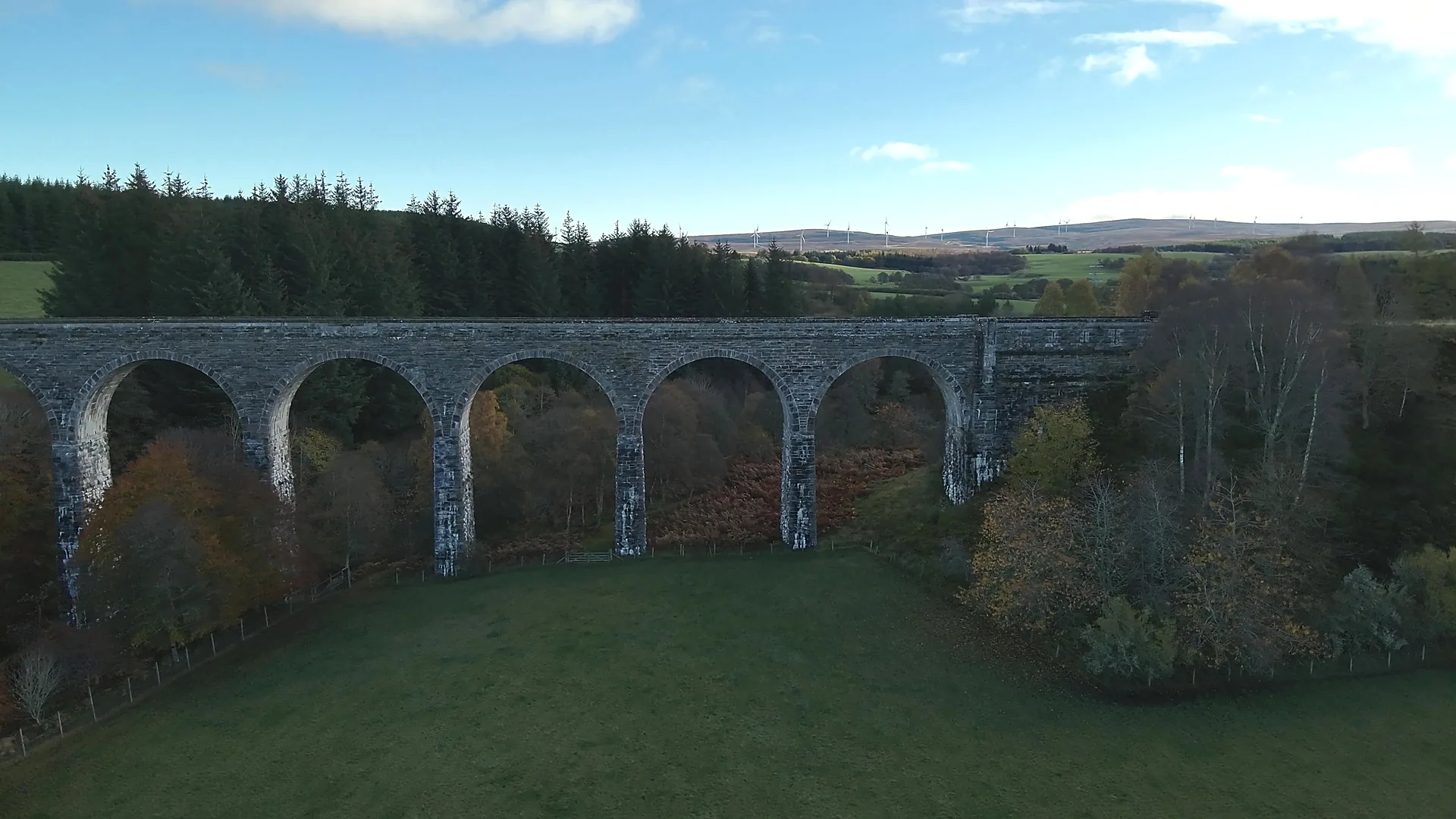
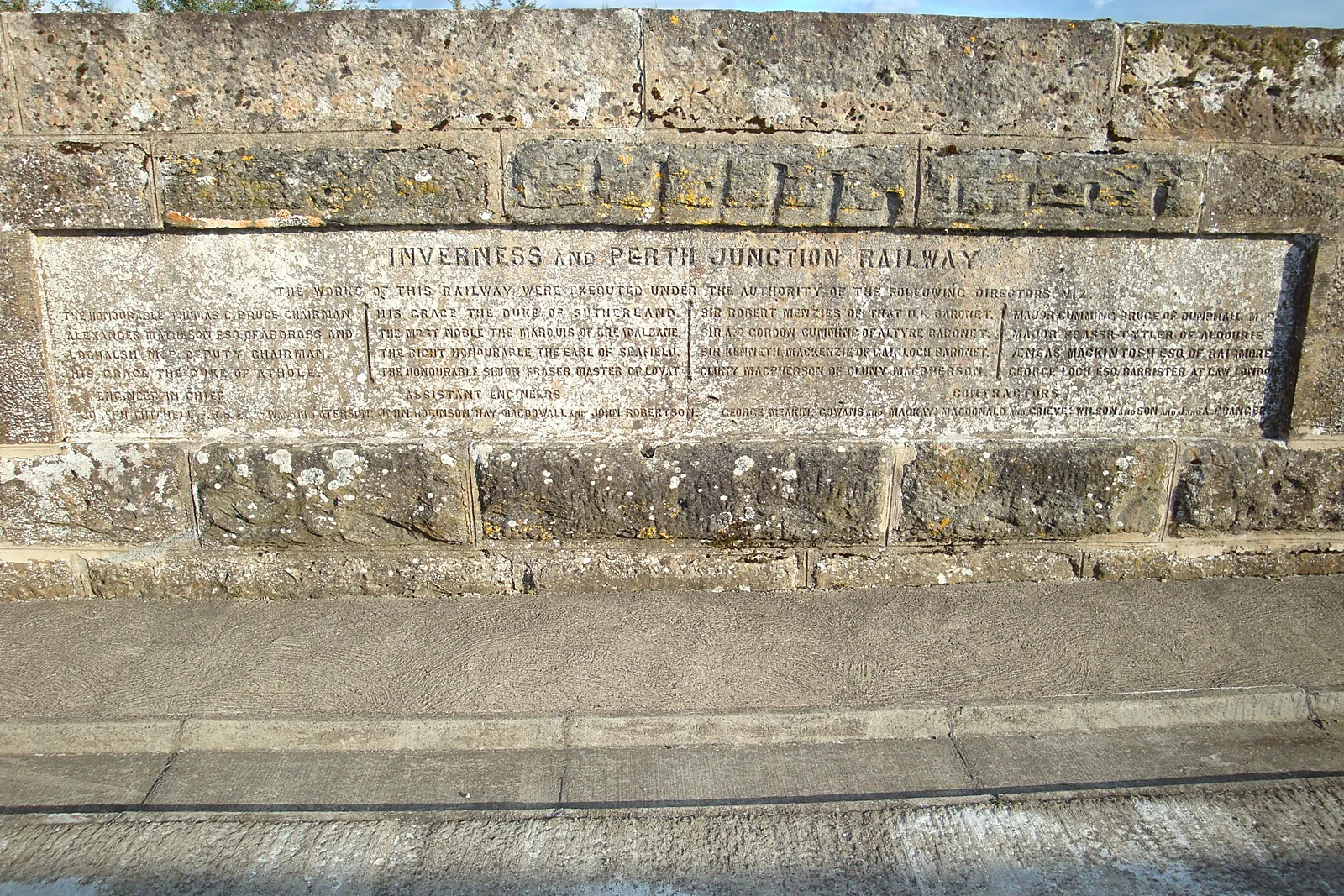
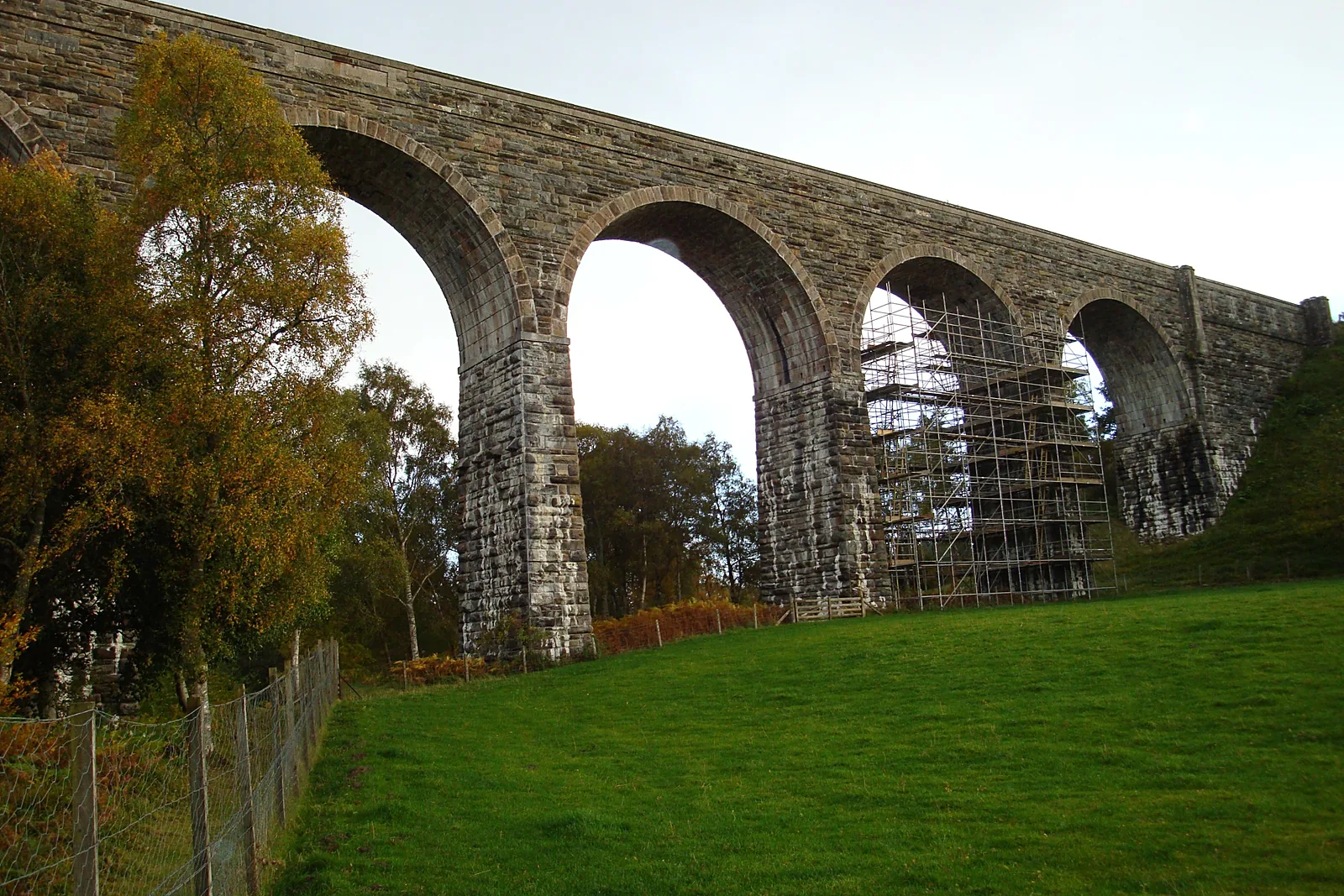
Edinkillie Viaduct, also known as the Divie Viaduct, carries the former Inverness and Perth Junction Railway across the valley of the River Divie near Dunphail in Moray. Built between 1861 and 1863, it has seven arches of about 13 metres span, rubble piers and spandrels and dressed sandstone voussoirs, and stands around 14 metres high. The line closed in the 1960s. We were appointed by the trust that owns the structure, working to the consulting engineer's design under a Historic Scotland grant scheme, to repair the worst affected arch and the parapets.
The challenge
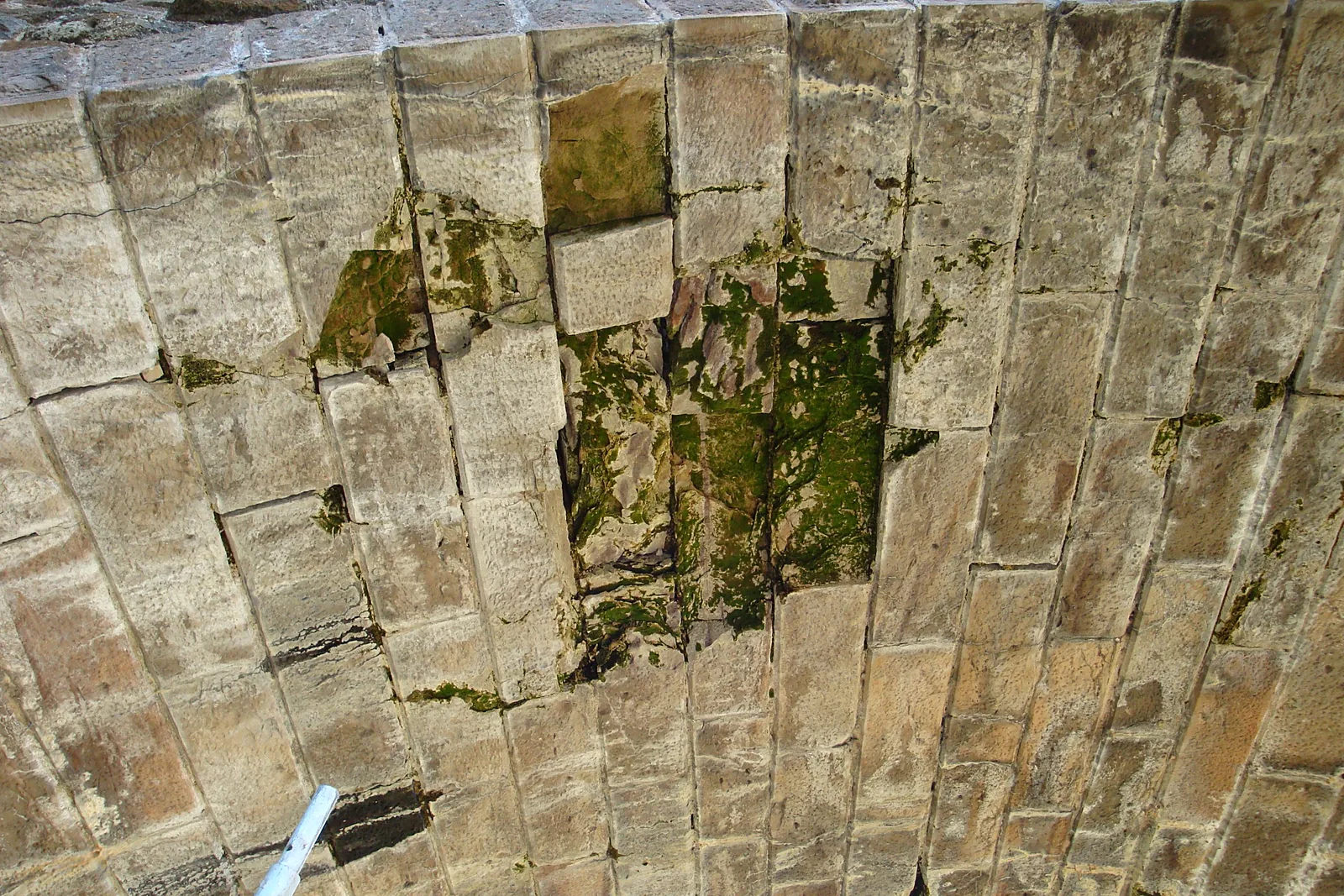
The viaduct had leaked from its track bed for most of its life. Water draining through the granular fill had washed lime out of the mortar beds and redeposited it as thick calcite streaks across the arch soffits and piers, and the sandstone voussoirs of the second arch from the south were cracking, splitting along their bedding planes and spalling, with blocks falling from the soffit. The dense, almost impermeable rubble of the piers meant the masonry could only dry through its joints. Access was the other difficulty: the arch is 14 metres above a steep, wooded riverbank, with no ground from which a conventional scaffold could reach the soffit.
Our solution
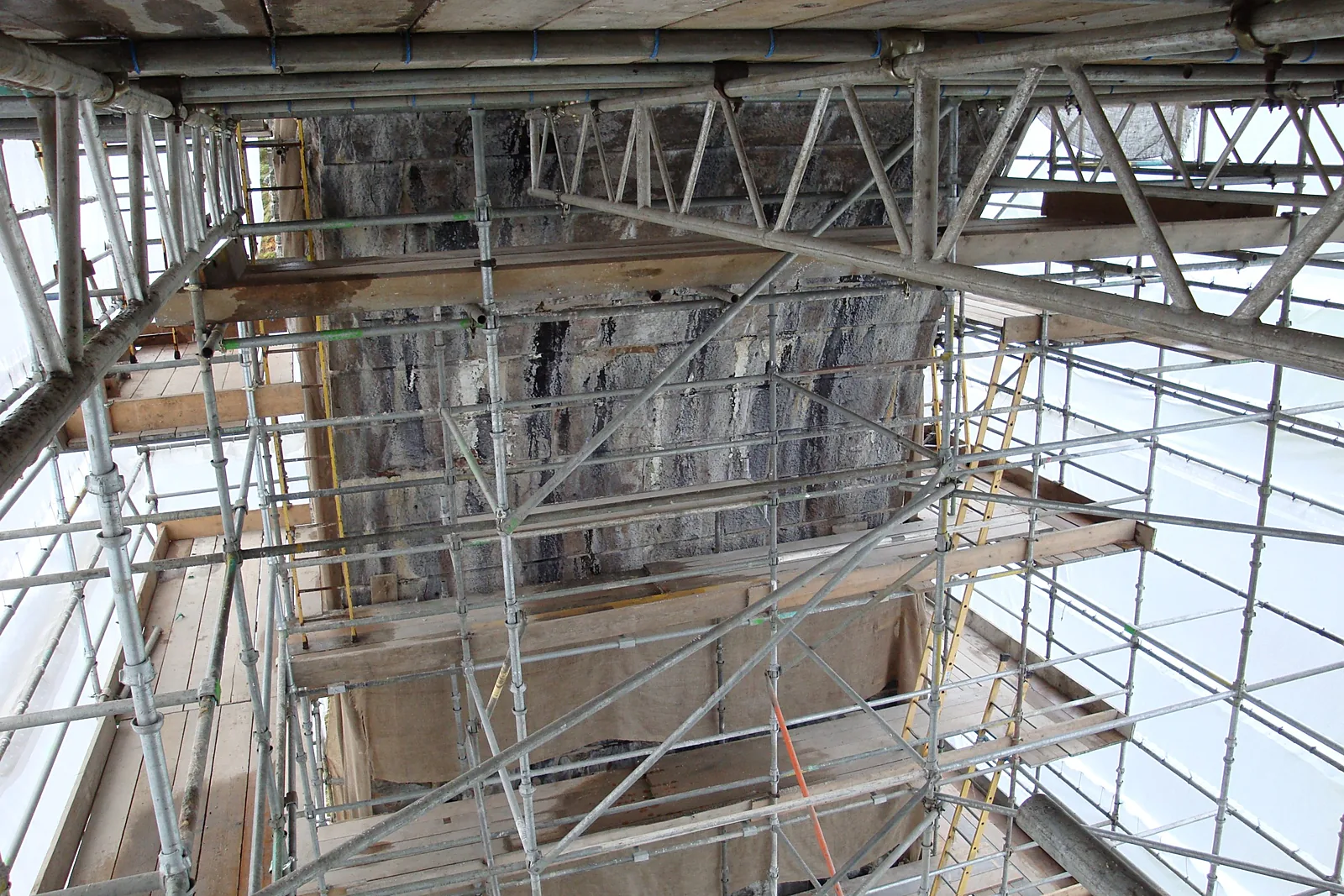
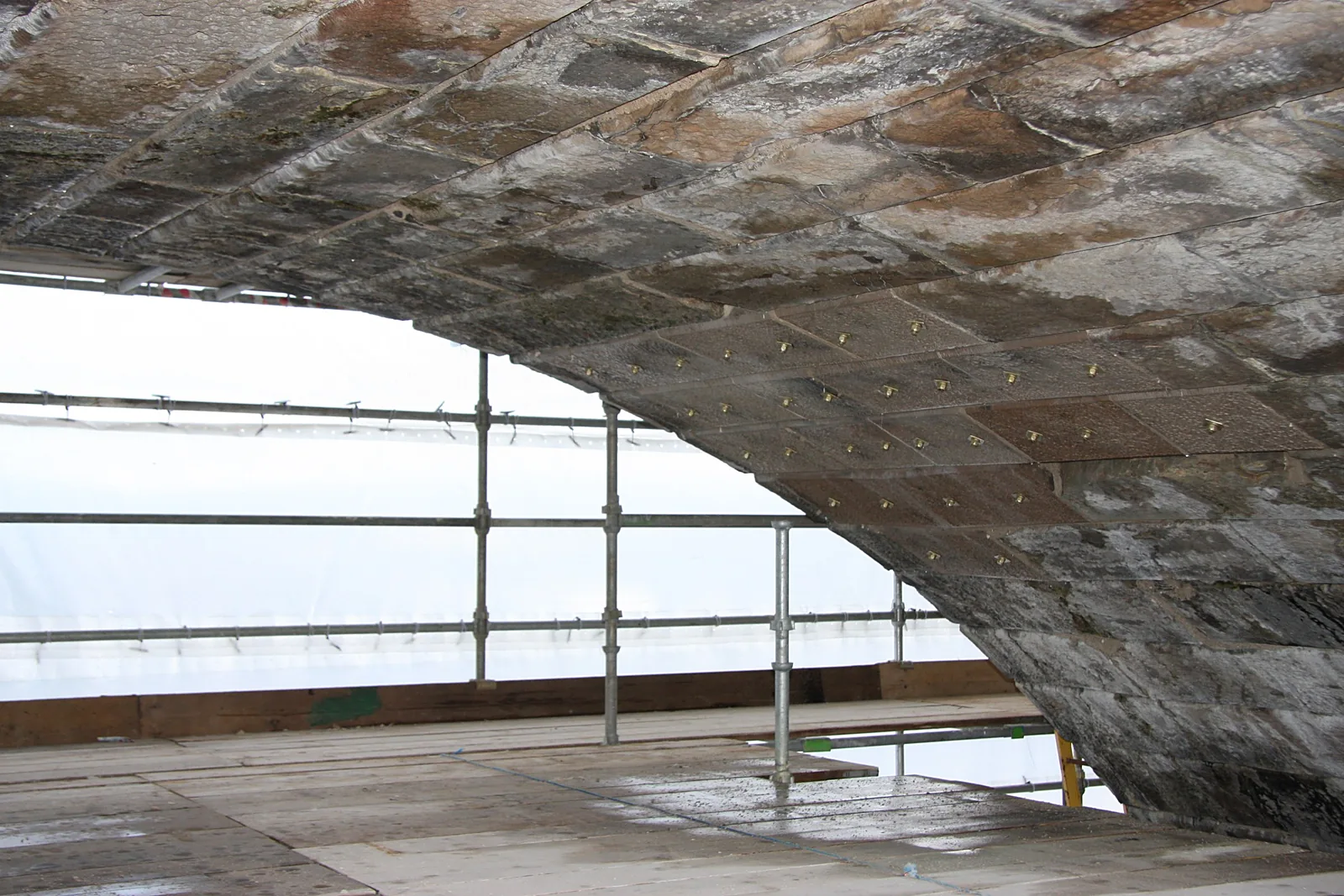
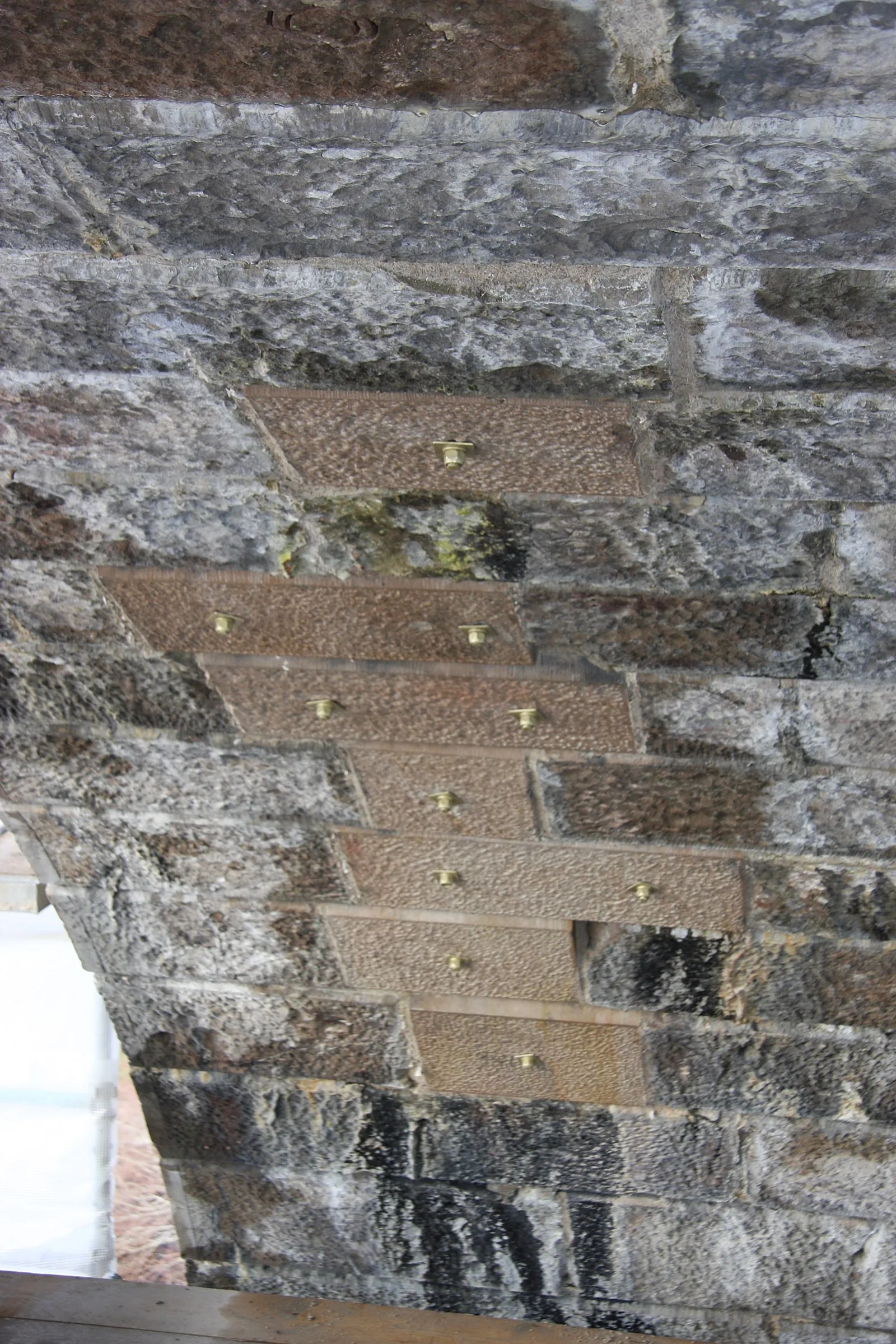
The arch was reached from an engineer designed suspended scaffold hung from an anchor scaffold built on the viaduct deck, with the parapets protected in hessian while materials were passed over the wall. From the platform we raked out the eroded joints across the arch soffit and spandrels to a minimum depth of 50 millimetres and repointed them in lime mortar, cleaning the calcite deposits from the stone as we went. The delaminated voussoirs were cut back and faced with new sandstone indents, each dowelled to the sound stone behind with a stainless steel resin anchor, washer and nut, then bedded and pointed in lime to the engineer's detail. A temporary timber support system held the intrados while the indents were set, and two delaminated stones were cross stitched rather than replaced. A fabric assessment with core sampling identified the voussoirs as a Hopeman type sandstone and confirmed that water from the deck, not driven rain, was the main cause of decay. The works were therefore extended to the top of the structure: the expansion and drainage channel joints in the concrete running slab were cut out and sealed with a two part polysulphide sealant, the parapet to deck junction was sealed, and the parapets were repointed with fallen stones rebuilt.
Outcomes
Failing arch stabilised
Spalled and delaminated voussoirs indented, dowelled and stitched, with the soffit repointed in lime from edge to edge.
Water ingress addressed at source
Investigation traced the decay to the leaking deck, and the running slab joints and parapets were resealed to cut the flow through the masonry.
Safe access at height
A designed suspended scaffold gave safe working over the river valley without disturbing the ground below.
Have a similar building?
Tell us about it and we’ll come back to you with how we’d approach it.
One of 1,000+ projects
More bridges & monuments
- Brig of Balgownie, Old AberdeenCase study →
- Crathes Castle BridgeCase study →
- Elgin Feature SculptureCase study →
- Elgin's Bridge, HuntlyCase study →
- Fettercairn Monument ArchCase study →
- Firbush Harbour Wall, Loch TayCase study →
- Garvamore BarracksCase study →
- Kildrummy Castle BridgeCase study →
- Mary Slessor MemorialCase study →
- New Elgin DoocotCase study →
- Portree War MemorialCase study →
- Powis Gate, King’s CollegeCase study →
Next project
Wallace Bandstand
Nairn